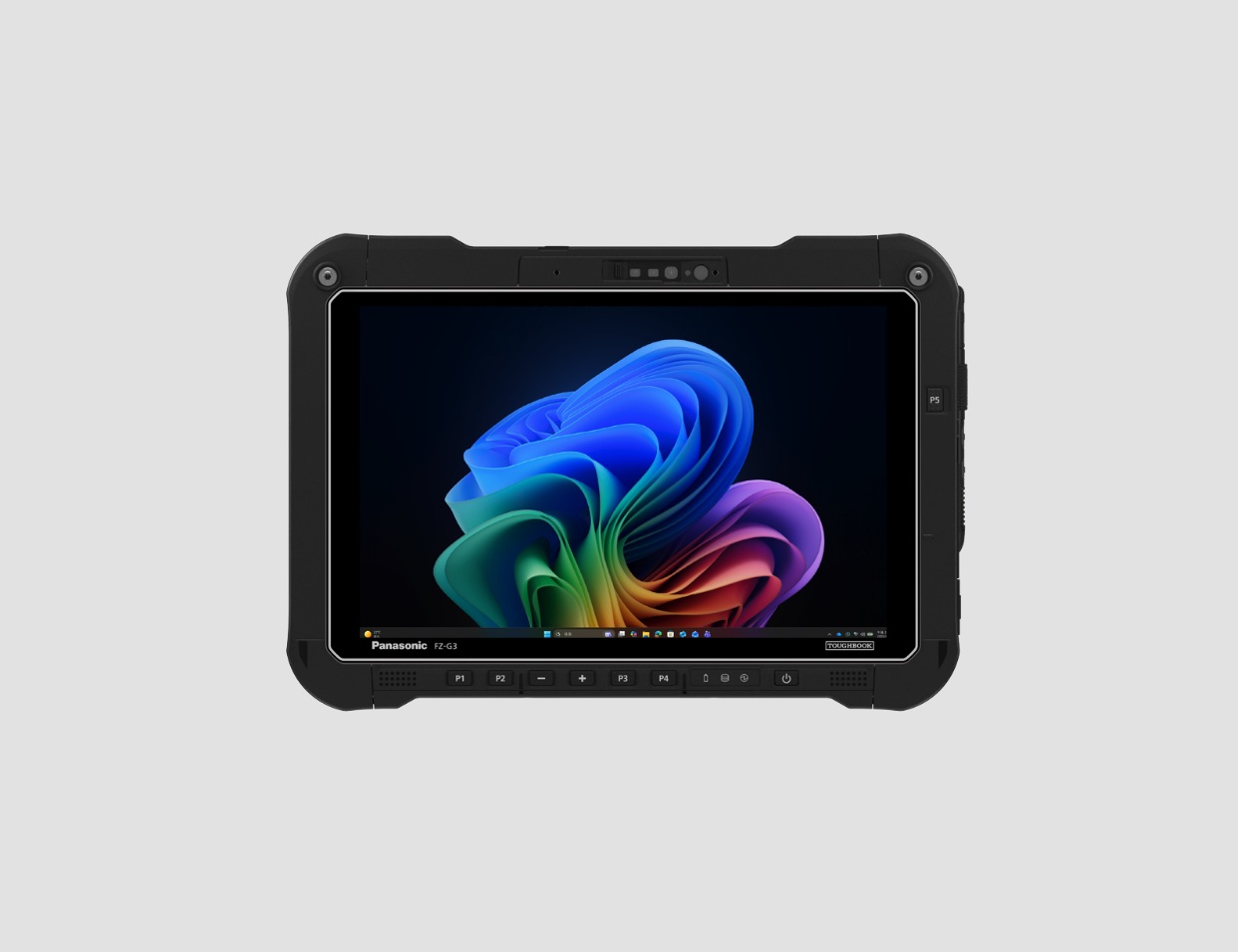
Panasonic ToughBook FZ-G3 rugged tablet launches with Intel Panther Lake power and a 1000-nit display
Panasonic has introduced the ToughBook FZ-G3 in Japan, a new rugged tablet built for demanding workplaces where ordinary devices are unlikely to survive. Designed for industrial, field service, logistics, public safety, construction, and outdoor operations, the ToughBook FZ-G3 combines a compact 10.1-inch screen with modern Intel performance and a heavily reinforced body.
The standout feature is its processor. Panasonic has equipped the ToughBook FZ-G3 with Intel’s Core Ultra 5 335, an 8-core, 8-thread Panther Lake chip. It is paired with 16 GB of LPDDR5X memory and a 512 GB SSD, giving the tablet enough performance for business applications, data entry, field diagnostics, mapping tools, inventory systems, remote support, and other professional workloads.
While rugged tablets are not usually purchased for entertainment or content creation, the hardware inside the FZ-G3 is capable enough for more than basic tasks. The Core Ultra 5 335 should deliver strong everyday responsiveness, while the integrated Intel graphics with 4 Xe3 cores can handle light visual workloads, occasional photo or video edits, and casual lightweight gaming if needed.
The tablet features a 10.1-inch WUXGA display with a 1920 x 1200 resolution, multi-touch support, and up to 1000 nits of brightness. That high brightness rating is especially important for outdoor workers, as it should make the screen easier to read in direct sunlight or bright job-site conditions.
As expected from Panasonic’s ToughBook line, durability is a major focus. The FZ-G3 is built with a shock-resistant, dust-resistant, splash-resistant, and vibration-resistant enclosure. It is rated to survive drops of up to 1.8 meters onto wood and up to 1.2 meters onto steel, making it suitable for rough handling in warehouses, vehicles, factories, and outdoor environments.
Connectivity is another strong point. The ToughBook FZ-G3 includes two USB 4 Type-C ports, two USB 3.2 Type-A ports, Gigabit Ethernet, Wi-Fi 7, and Bluetooth 5.4. Panasonic is also offering standard and cellular models, with 5G and LTE support available for users who need reliable connectivity away from Wi-Fi networks.
For video calls, inspections, and documentation, the tablet includes a 5 MP front camera with face-recognition support and a 12 MP rear camera. Stereo speakers and dual microphones are also included, which should help with voice calls, remote assistance, and communication in professional environments.
Panasonic will also offer a swappable keyboard accessory for the ToughBook FZ-G3. This can turn the device into a more laptop-like setup while adding extra input flexibility, which could be useful for workers who need to type reports, complete forms, or manage field data.
The ToughBook FZ-G3 is not a slim consumer tablet. Its rugged construction makes it noticeably thicker and heavier than mainstream models. It measures 27.9 x 18.8 x 2.35 cm, or about 11 x 7.4 x 0.93 inches. The standard version weighs around 1.07 kg, while the standard model with cellular connectivity weighs about 1.25 kg.
Panasonic has not confirmed the exact price yet, but the ToughBook FZ-G3 is expected to be expensive due to its rugged build, enterprise-focused features, modern Intel processor, and specialized design. The tablet is scheduled to go on sale in Japan in January 2027. Given Panasonic’s international presence and the global demand for rugged tablets, a wider release in other regions appears possible.
For regular consumers who simply want a tablet for streaming, browsing, gaming, or schoolwork, the ToughBook FZ-G3 will likely be more device than they need. But for professionals who require a tough, bright, connected, and performance-ready rugged tablet, Panasonic’s latest ToughBook could become a strong option in the industrial tablet market.