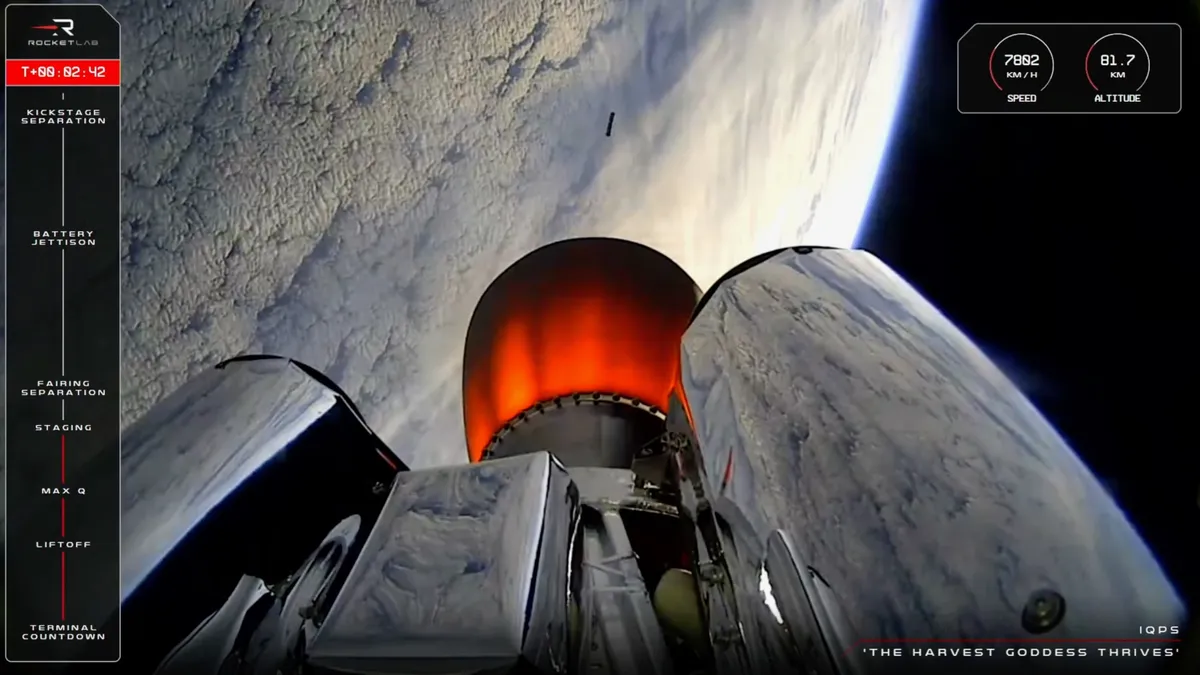
A Japanese company, iQPS, has expanded its constellation of Earth-monitoring satellites with the successful launch of Kushinada-I on August 5. This Synthetic Aperture Radar (SAR) satellite lifted off from Rocket Lab Launch Complex 1 in New Zealand. Appropriately, the mission was named “The Harvest Goddess Thrives,” paying homage to Kushinada, the Japanese goddess of harvest and prosperity.
Kushinada-I promptly established communication within 30 minutes after its separation and deployed its antenna on the same day. Officially known as QPS-SAR-12, it marks the twelfth satellite launched by iQPS since their inaugural launch in 2019. The company recently sent the 11th satellite into orbit in June 2025. Their ambitious plan includes a fleet of 36 satellites delivering near-real-time data, allowing observations of nearly every point on Earth approximately every 10 minutes.
What sets these QPS-SAR satellites apart is their ability to capture images regardless of weather conditions or lack of daylight. Utilizing microwave-emitting radar systems, they can penetrate smoke, clouds, and darkness. When these microwaves reflect off surfaces on Earth, the radar receives the signals, creating detailed images.
This satellite constellation promises significant benefits, particularly in natural disaster management. It aims to enhance urban safety and provide predictive analytics for agriculture, national economies, and regional markets. By integrating this data with weather and economic information, it could offer insightful predictions and improve decision-making processes.


