Bitchat Removed From Apple and Google App Stores in India After Government Blocking Order
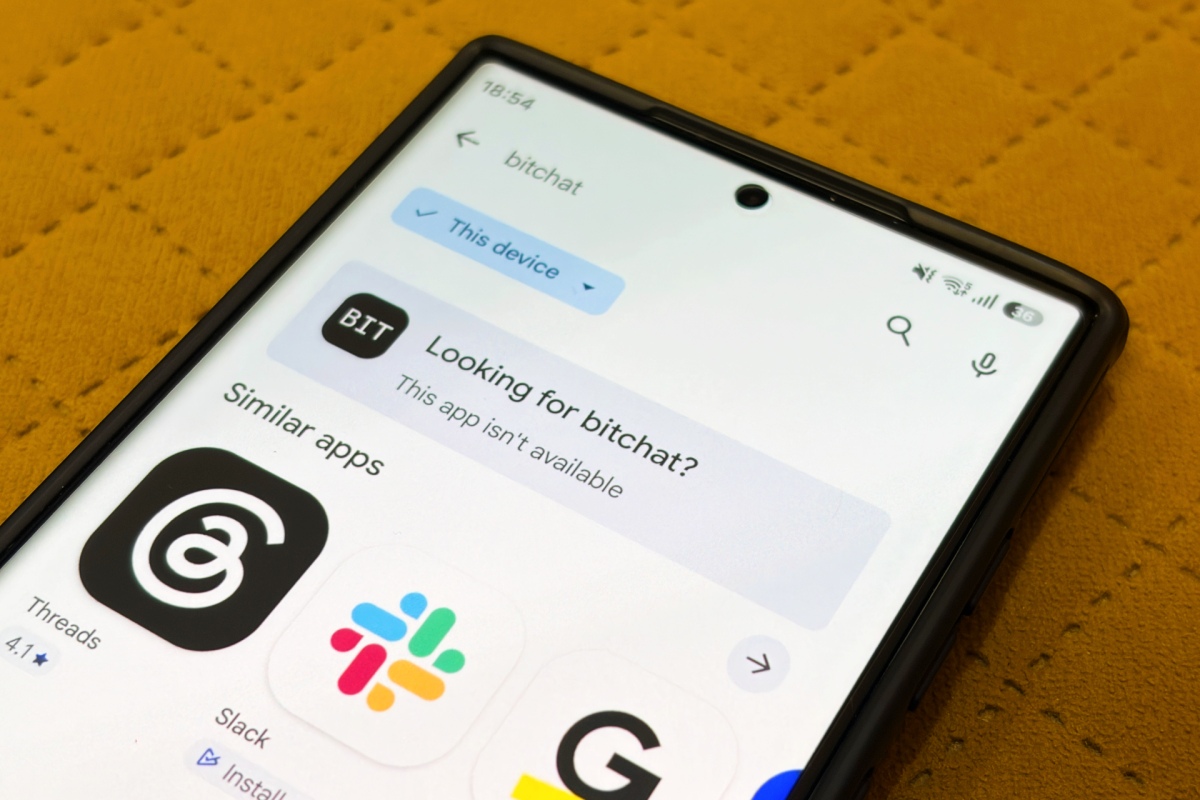
Bitchat, the decentralized messaging app backed by Jack Dorsey and designed to work without an internet connection, is no longer available through Apple’s App Store or Google Play in India. The removal comes months after Indian authorities first moved to restrict access to the open-source communication tool.
Dorsey said that the Indian government directed Apple to remove Bitchat from the App Store in the country. According to a notice he shared publicly, India’s Ministry of Electronics and Information Technology issued the order under Section 69A of the Information Technology Act, a legal provision commonly used by the government to block online content and services.
Apple’s notice stated that Bitchat would continue to be available outside India. However, the app would also be blocked in India through TestFlight, Apple’s beta-testing platform.
Bitchat was also unavailable for download on Google Play in India, and the app’s official website could not be accessed through several internet service providers in the country. It remains unclear whether Google and internet service providers received separate government instructions to block access.
Apple, Google, and India’s IT ministry did not provide immediate public responses to the situation.
Bitchat has attracted attention because it works differently from traditional messaging apps. Instead of relying on mobile networks, Wi-Fi, centralized servers, or internet access, the app uses Bluetooth mesh networking. This allows nearby devices to pass encrypted messages between one another, creating a local communication network even when internet services are down.
That feature has made Bitchat popular among users looking for private, resilient messaging during network disruptions. It has also raised concerns among authorities, particularly because messages sent through decentralized systems can be difficult to monitor or trace.
Earlier in July 2026, Dorsey said Indian authorities had ordered GitHub to remove repositories linked to Bitchat’s open-source software. That move sparked criticism from digital rights advocates and legal experts, who questioned whether the government had a clear legal basis to restrict access to software based on how it functions.
At the time, the Indian government reportedly argued that Bitchat’s design made it harder for law enforcement agencies to intercept communications and identify users. Officials also pointed to the app’s ability to keep operating during internet shutdowns. That earlier order relied on a different part of India’s information technology law related to online intermediaries and liability for third-party content.
The latest action, however, cites Section 69A, which is typically used to block access to specific online information. Digital rights groups have questioned whether that provision can legally be used to restrict an entire messaging app simply because it can function without internet access.
The Internet Freedom Foundation, a digital rights organization based in New Delhi, described the latest blocking order as unconstitutional. The group argued that Section 69A allows the government to block unlawful information, not to ban a communication tool because it may remain useful during internet shutdowns. It also criticized the lack of transparency, noting that neither the blocking order nor the specific allegedly unlawful content had been made public.
The removal of Bitchat comes amid renewed youth-led protests in India over changes to voter rolls. Demonstrations in New Delhi have focused on allegations of manipulation in electoral lists, with protesters demanding the resignation of India’s chief election commissioner. Police detained several people during demonstrations, and authorities suspended internet services near Jantar Mantar in New Delhi for 12 hours during the protests.
During earlier protests in July, some demonstrators reportedly turned to offline messaging tools such as Bitchat and Briar after internet services were suspended. That period also saw a sharp rise in interest in Bitchat across India.
Market intelligence data showed that India accounted for roughly 85% of Bitchat’s global downloads between July 17 and July 23, compared with about 1% during the previous 30 days. The surge suggested that users were actively seeking communication tools capable of working during internet restrictions.
The blocking of Bitchat in India highlights a growing conflict between governments seeking greater control over digital communications and users demanding privacy, open-source access, and reliable messaging during shutdowns. As decentralized apps become more popular, legal battles over encryption, internet freedom, and state surveillance are likely to intensify.