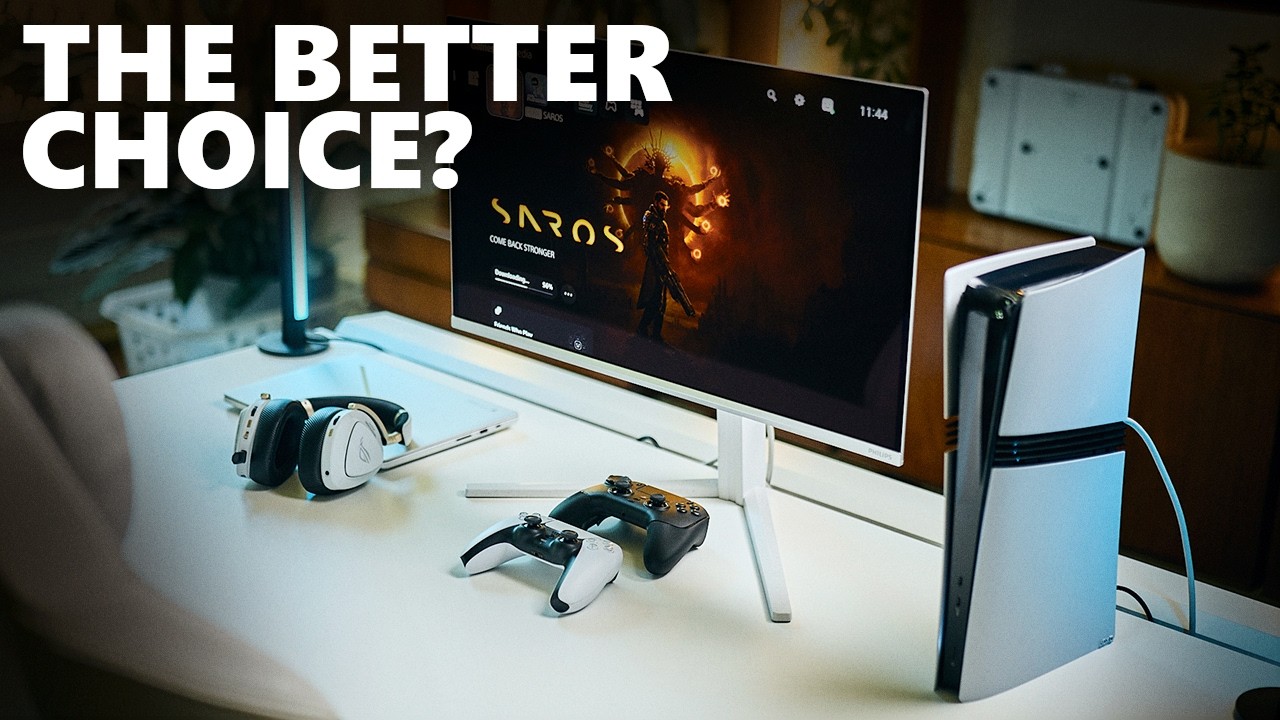
Is the PS5 Pro Worth $900 in 2026 Compared to a Gaming Laptop or Desktop PC?
The PS5 Pro is one of the most powerful gaming consoles Sony has ever released, but its current price raises a serious question for players: is it really the smarter buy compared to a gaming laptop or a desktop PC?
At around $900 or €900, the PS5 Pro is no longer sitting in the same easy-to-recommend price range as a traditional console. Instead, it enters territory where many gamers start looking at PCs, especially gaming laptops that offer portability, productivity features, and access to a massive library of games.
For console fans, the PS5 Pro still has a strong appeal. It is designed for simplicity. You connect it to a TV, install your games, and start playing without worrying about graphics settings, driver updates, component compatibility, or Windows-related issues. For players who want a streamlined living room gaming experience, that convenience matters.
The PS5 Pro also benefits from Sony’s console ecosystem. Exclusive titles, optimized performance modes, and a controller experience built specifically for PlayStation games help it stand out. If your main priority is playing PlayStation exclusives in the best possible quality on a big screen, the PS5 Pro makes a compelling case.
However, the price changes the conversation. At $900, many gamers will naturally compare it to a gaming laptop or desktop PC. While a high-end gaming laptop can cost more, there are often mid-range models that deliver strong 1080p or 1440p performance while also serving as a work, school, or content creation machine. A desktop PC may also offer better long-term upgrade options, allowing users to replace individual components over time instead of buying an entirely new system.
From the perspective of a gaming laptop enthusiast, the PS5 Pro has both strengths and weaknesses. Its biggest advantage is optimization. Console hardware is fixed, meaning developers can tune games specifically for the system. This often results in impressive visuals and stable performance without the user needing to tweak anything.
A gaming laptop, on the other hand, offers flexibility. It can play games from multiple storefronts, run emulators, handle productivity software, support mods, and travel with you. For players who want one device for gaming and everyday use, a laptop may feel like the better value.
A desktop PC brings another advantage: upgradeability. While the upfront cost can vary, PC users can improve performance over time by upgrading the graphics card, adding memory, expanding storage, or replacing the processor. The PS5 Pro is more limited in that regard. Once you buy it, the core performance remains fixed.
That does not mean the PS5 Pro is a bad purchase. For gamers who prefer a console experience, own a 4K TV, enjoy PlayStation exclusives, and want reliable performance without technical hassle, it can still be an excellent machine. The appeal is not just raw power; it is the ease of use, the polished ecosystem, and the ability to play from the couch with minimal setup.
But for buyers who are focused purely on value, the decision is more complicated. At $900 or €900, the PS5 Pro must compete with systems that can do more than just gaming. A gaming laptop can double as a daily computer. A desktop PC can evolve over time. Both offer wider software support and more customization.
Ultimately, whether the PS5 Pro is worth it in 2026 depends on what kind of gamer you are. If you want the most powerful PlayStation experience available and prefer console convenience, the PS5 Pro remains an attractive option. If you want flexibility, portability, productivity, or upgrade potential, a gaming laptop or desktop PC may be the smarter investment.
The PS5 Pro is not simply competing against other consoles anymore. At its current price, it is competing against full gaming systems. That makes the choice less about brand loyalty and more about how you play, where you play, and what else you need your device to do.