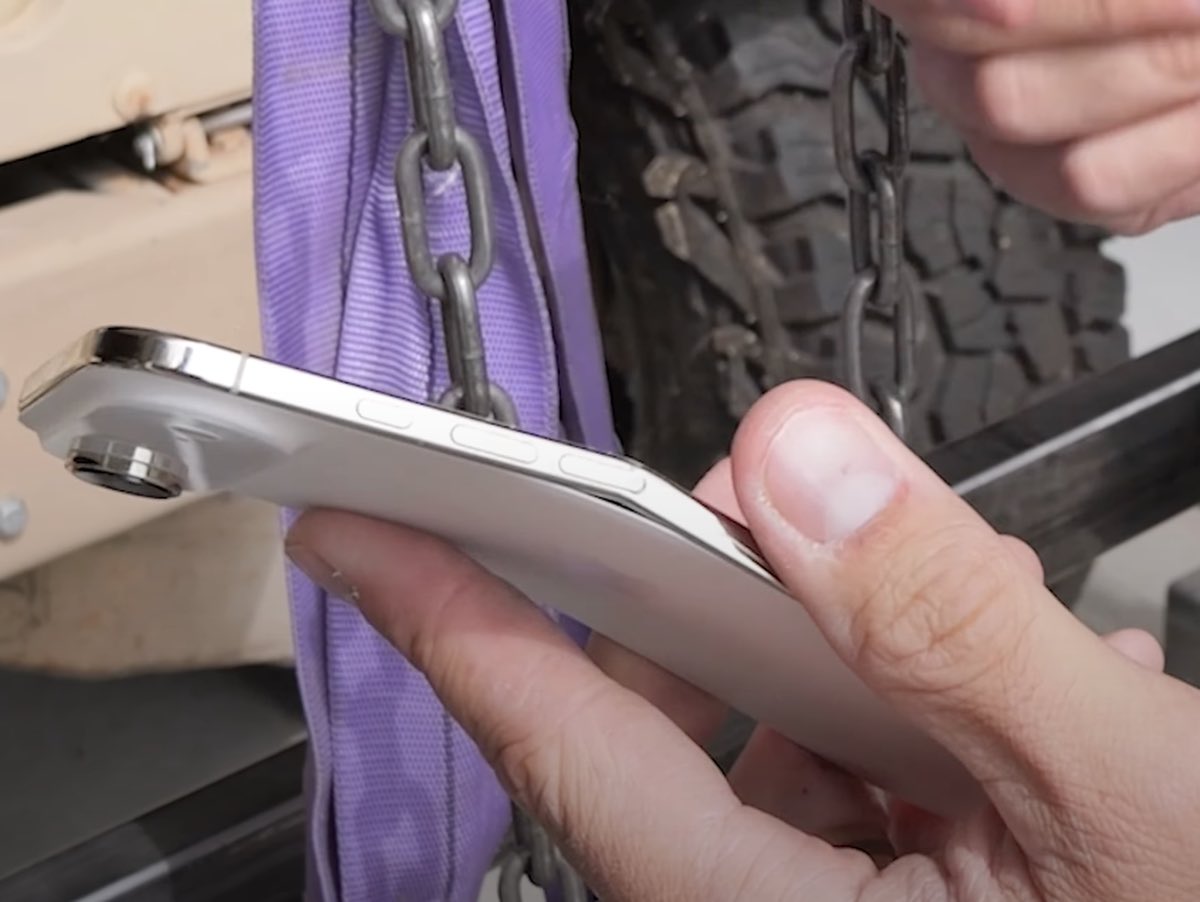
The thinnest iPhone ever just faced the internet’s toughest bend test—and came out looking surprisingly strong. Apple’s new 5.6 mm iPhone Air went through Zack Nelson’s signature torture routine and shrugged off most of it, easing fears of a Bendgate 2.0 despite its ultra-slim profile.
In scratch tests, Apple’s new Ceramic Shield 2 impressed. Most phone glass shows marks at level 6 on the Mohs hardness scale, but Nelson’s picks barely left anything even at level 7. He noted it as a clear step up from last year’s iPhones and stronger than other recent flagships he has tested, which showed visible scratches earlier at level 6. If you hate micro-abrasions, this is a meaningful upgrade.
Where the shine fades a bit is glare. Apple touts a new in-house anti-reflective coating this year, but under bright lighting it didn’t cut reflections as effectively as some competing phones, including a two-year-old flagship from Samsung. Outdoors or under harsh lights, you may still see more reflections than you’d like.
The real headline is structural strength. The iPhone Air uses a grade 5 titanium frame, which Apple claims is twice as rigid as aluminum and roughly 60% more elastic. In hand-applied bend attempts, pushing from the back barely moved the frame. Pushing from the front introduced a slight curve, but the phone immediately snapped back to its original shape. Only when Nelson escalated to a measured stress test with a crane scale did the Air finally yield. It took about 216 pounds (roughly 98 kg) of force focused at the center to crack the front glass and flex the titanium past recovery. Even then, the back glass remained intact and the phone stayed powered on and usable.
What this means for real life is encouraging. Everyday mishaps—like sitting down with the phone in a pocket—are unlikely to catastrophically bend or break the iPhone Air. As Nelson quipped, your jeans might give out before the phone does.
Key takeaways:
– Slim but sturdy: At just 5.6 mm, the iPhone Air resists hand bends and springs back to shape.
– Tougher glass: Ceramic Shield 2 showed resistance up to Mohs level 7, reducing the risk of micro-scratches.
– Glare control lags: The new anti-reflective coating isn’t the best against bright reflections compared to some rivals.
– Titanium advantage: Grade 5 titanium adds rigidity and elasticity that help prevent permanent bends.
– Extreme threshold: It took around 216 pounds (98 kg) of force to crack the front glass; the back glass stayed intact and the phone kept working.
Bottom line: Apple’s iPhone Air pairs ultra-thin design with real-world durability. If you’ve been worried about pocket bends or everyday wear, this test suggests the Air can handle far more than its slim frame implies.