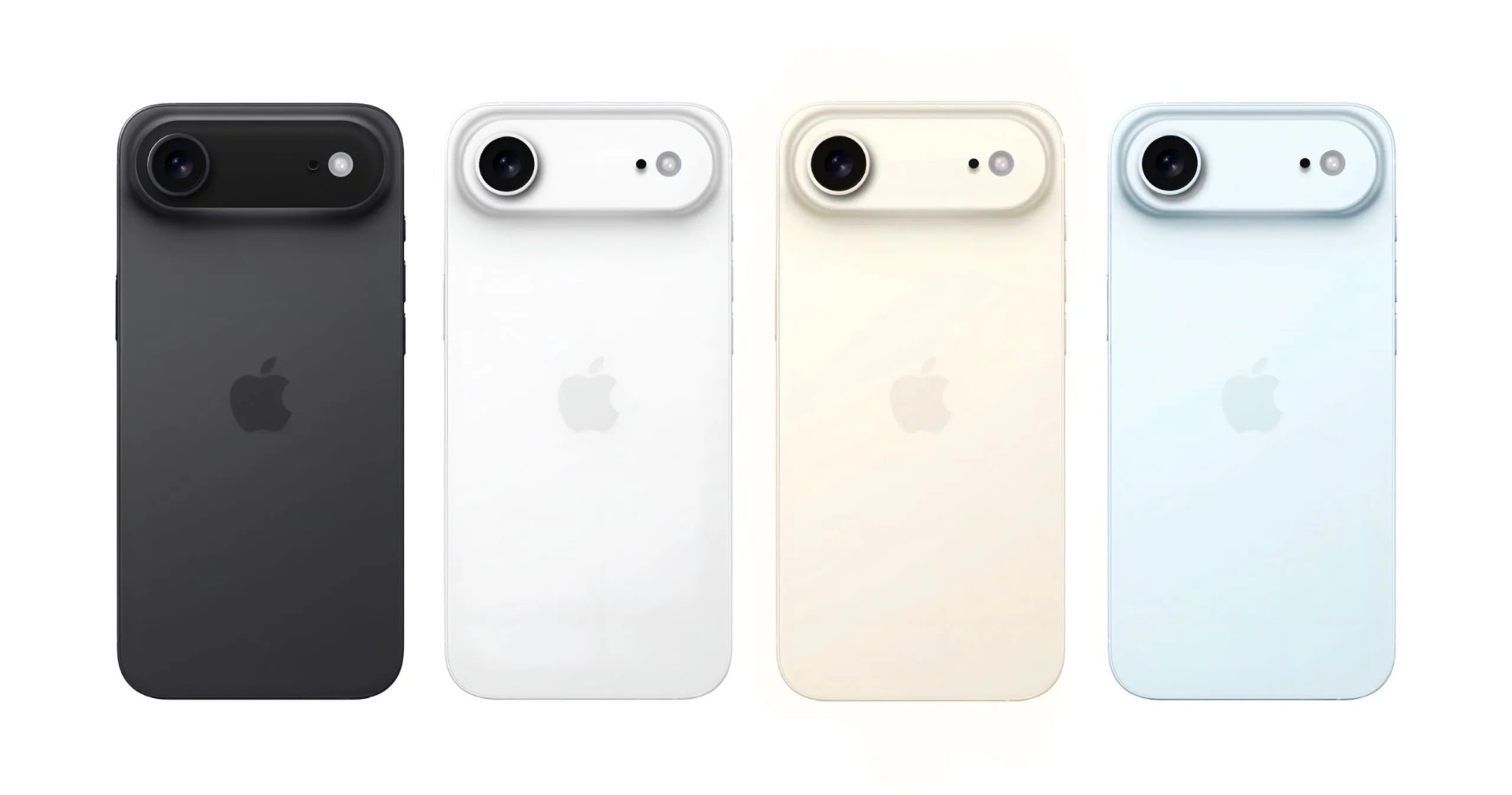
Apple is reportedly preparing its thinnest smartphone yet. At just 5.5mm, the iPhone 17 Air is said to push design to new extremes. That kind of slim profile typically comes with trade-offs—think smaller batteries and tighter thermal limits that can force the processor to slow down under sustained load. A new report suggests Apple plans to counter those issues with a packaging breakthrough called Copper Post, potentially allowing the phone to maintain higher performance despite its ultra-thin chassis.
According to Joongang, Copper Post is a semiconductor substrate miniaturization technology developed by LG Innotek, and the iPhone 17 Air would be the first Apple flagship to use it widely. Traditional designs connect the logic board and semiconductor substrate with an array of solder balls. Copper Post changes that structure by erecting copper posts and placing semi-circular solder balls on top, shrinking the area needed for connections. The result is the ability to mass-produce substrates up to 20 percent smaller, freeing up internal space and improving thermal pathways.
Why this matters: a thinner body leaves less room for cooling. That’s why very slim phones often experience thermal throttling, where the CPU and GPU reduce speed to keep temperatures in check. If Copper Post can lower heat buildup and reduce the footprint of critical components, the rumored A19 Pro chip in the iPhone 17 Air could sustain higher performance for longer, even in a 5.5mm enclosure. It won’t magically erase the realities of physics—battery capacity and heat dissipation will still be carefully managed—but it could meaningfully improve the balance between design and speed.
The technology isn’t entirely new to Apple’s lineup. It reportedly debuted earlier this year on the communication chip inside the iPhone 16e, and now appears set for a broader role. Extending Copper Post to the iPhone 17 Air indicates Apple’s growing confidence in the approach as it chases thinner devices without the usual performance penalties.
There’s also a forward-looking angle. The same miniaturization method may be applied to Apple’s first foldable iPhone, expected to need clever thermal solutions because of its dual-sided, foldable structure. Copper Post could help keep that device slim while maintaining heat dissipation across the hinge and panel areas.
Cooling will likely differ across the 2025 lineup. The iPhone 17 Pro and iPhone 17 Pro Max are expected to rely on advanced cooling like vapor chambers, while the iPhone 17 Air leans on Copper Post to manage heat at the packaging level. Which approach delivers better sustained performance remains to be seen, but the strategy signals Apple’s focus on matching cooling solutions to each model’s design goals.
Key takeaways:
– iPhone 17 Air is rumored to measure just 5.5mm, making it Apple’s slimmest smartphone to date.
– New Copper Post packaging from LG Innotek could shrink semiconductor substrates by up to 20 percent.
– The goal is to mitigate thermal throttling so the A19 Pro chip can run closer to its full potential in a thin chassis.
– Copper Post has already appeared on the communication chip in the iPhone 16e.
– The same technology may support a future foldable iPhone, while Pro models reportedly use vapor chamber cooling.
If the reports prove accurate, the iPhone 17 Air could be a rare blend of ultra-thin design and sustained performance—while still acknowledging the realities of battery size and heat in a device this slim.