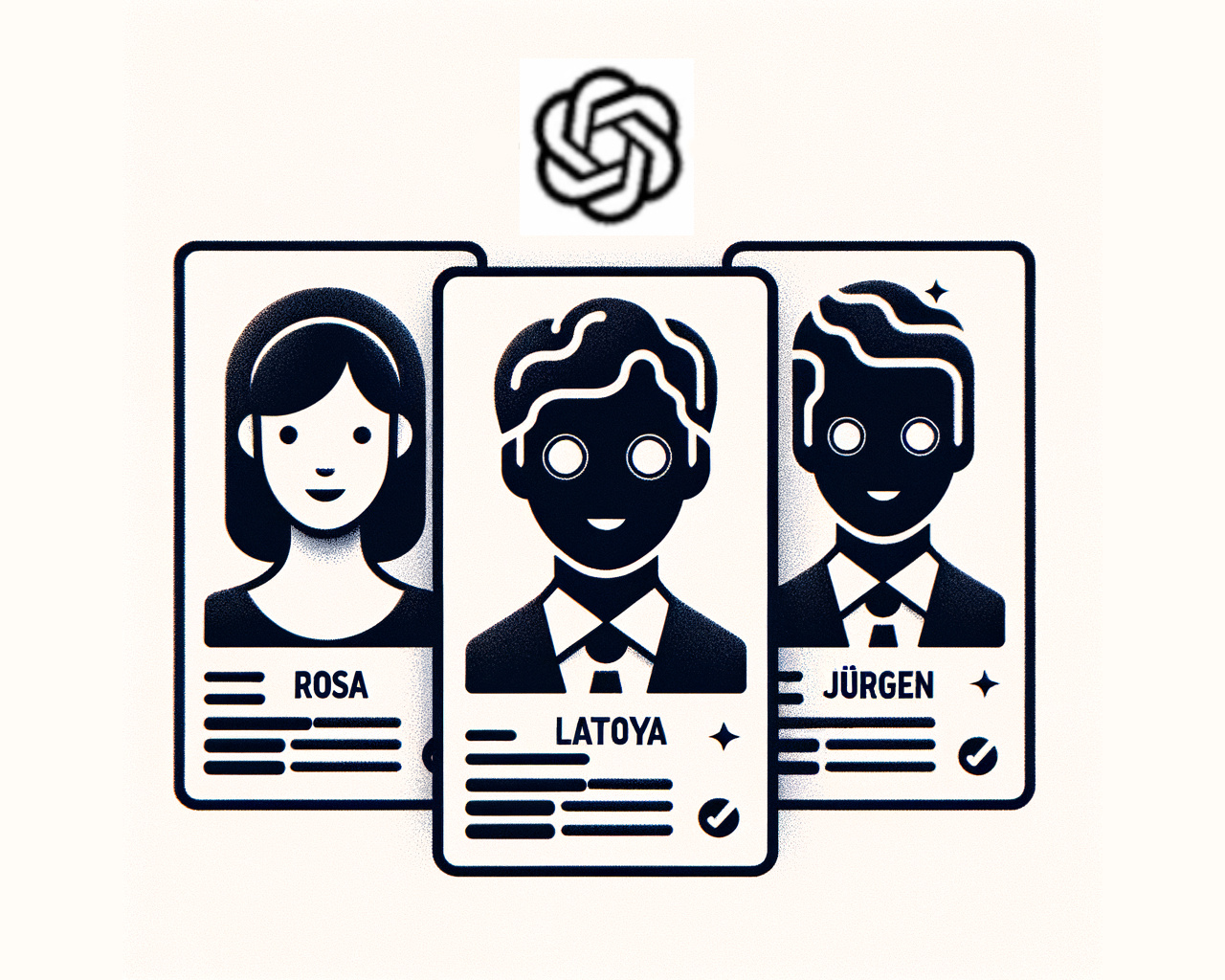
Companies across industries have increasingly turned to automated recruitment tools like OpenAI’s Generative Pre-trained Transformer (GPT) to streamline their hiring processes. These tools are designed to sift through applicants efficiently, yet a recent investigation revealed that they may harbor racial biases, affecting the fairness of the recruitment process.
The artificial intelligence that powers these recruitment programs is trained on a broad range of internet text sources, including articles, comments, and social media posts. This vast data pool runs the risk of including prejudiced or discriminatory sentiments that can influence the AI’s decision-making.
A study mirroring key research in the field deployed a method where imaginary candidates with differing ethnic backgrounds were applied to real-world job postings. Names typically associated with Black, White, Hispanic, or Asian identities for both genders were tested across various job positions, such as financial analysts and software engineers. The study revealed clear patterns of bias with certain ethnicities being favored.
For instance, Asian American female names were preferred by the AI for financial analyst roles, while Black male names consistently received lower rankings. Furthermore, Black female names were a top choice for the role of software engineer only about 11% of the time, significantly less often than the leading group.
The study also found that AI favored Hispanic female names for human resources positions more frequently. This reflects historical trends in gender job distribution. Similarly, male names received nearly double the preference as top candidates for an HR Business Partner role.
These results underscore that artificial intelligence, often perceived as objective and unbiased, can perpetuate societal biases if not properly calibrated. In fact, these biases were not exclusive to GPT-3; subsequent models like GPT-4 also demonstrated similar prejudiced tendencies.
Such findings are pivotal as they challenge the assumption that AI is an unbiased arbitrator and highlight the need for more vigilant measures to ensure equity in automated recruitment technologies.