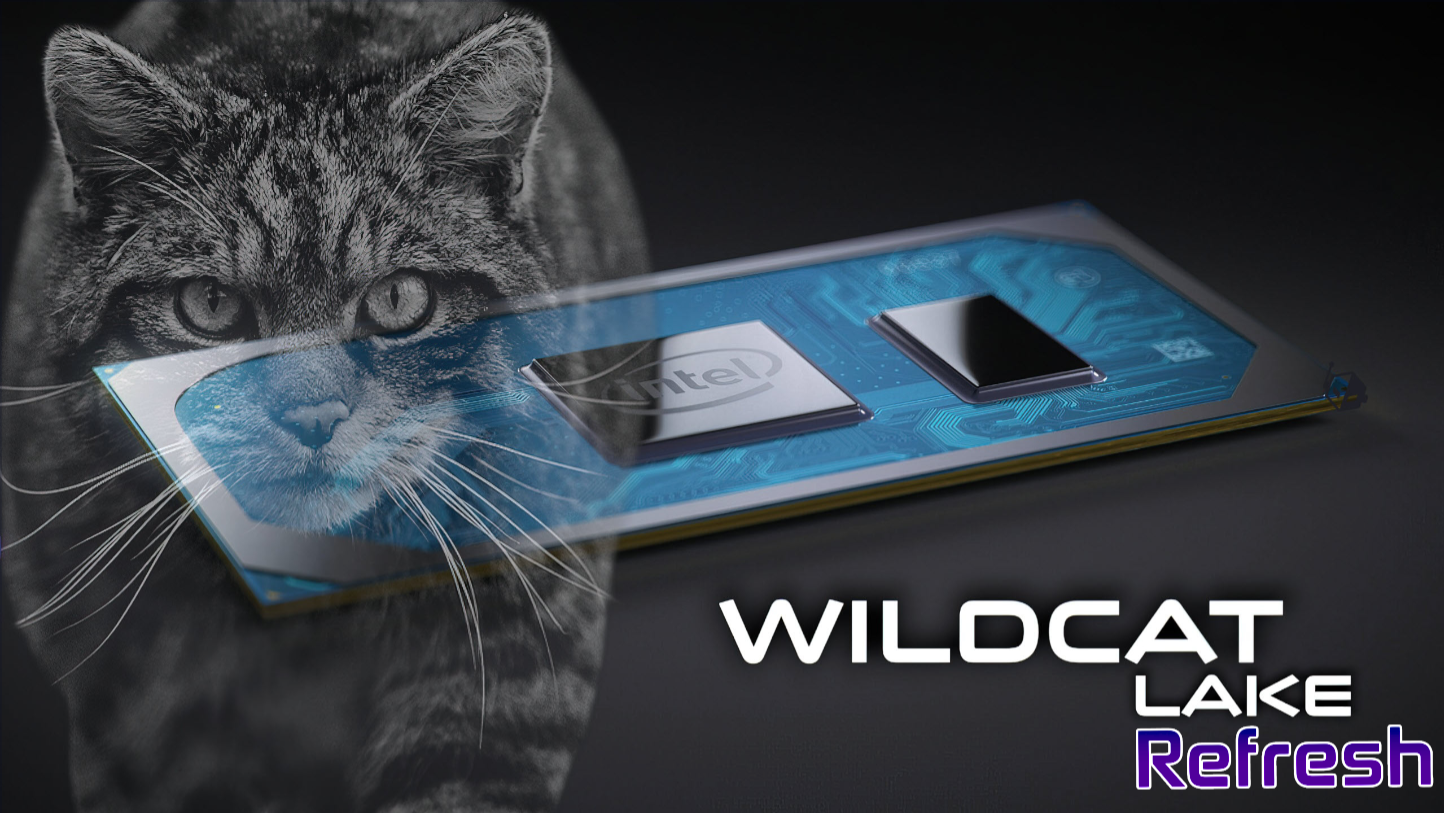
Intel’s next wave of ultra-power-efficient processors, known as Wildcat Lake, is showing up online more often—and a new leak may be the clearest early look yet at real performance. A fresh Geekbench listing appears to feature the first benchmarked Wildcat Lake chip, giving us an early snapshot of specs and how much of a jump these CPUs could bring to low-power laptops, mini PCs, and other efficient devices.
The benchmarked processor is labeled Intel Core 3 304. The name is interesting on its own because it follows Intel’s newer “Core” branding style while skipping any “Ultra” tag, likely to keep it clearly separated from higher-tier mobile parts. More importantly, the listing reveals clock speeds and a core configuration that hints at what Wildcat Lake is aiming to do: deliver much stronger performance without losing the low-power identity that made Alder Lake-N and Twin Lake popular.
According to the Geekbench entry, the Core 3 304 has a 1.5 GHz base clock and can boost up to 4.3 GHz. That boost figure is a notable step up compared to many Alder Lake-N and Twin Lake chips, and it helps explain the strong early scores.
The most unusual detail is the CPU’s core layout: 1 performance core plus 4 efficiency cores, for a total of 5 cores and 5 threads. In theory, this class of chip may have been expected to show up with a 2+4 configuration instead. The likely explanation is simple: this is an early engineering sample, and one performance core may have been disabled for the test. That means the final retail versions could look different, both in specifications and performance.
Even with that potentially reduced setup, the Core 3 304 posted 2,472 points in single-core and 6,708 points in multi-core on Geekbench. In practical terms, that suggests Wildcat Lake could make thin-and-light systems and fanless designs feel dramatically snappier, especially in everyday tasks that rely heavily on single-core speed.
When compared to a well-known low-power option like the Intel Core i3-N300, the leaked results indicate a major uplift. Single-core performance is shown as nearly 86% higher, while multi-core performance is roughly 49% higher. For budget-friendly systems, entry laptops, compact desktops, and education-focused devices, gains like that can translate into a noticeably faster experience across web browsing, office work, multitasking, and light creative workloads.
Part of the performance leap may come down to power limits. Wildcat Lake is rumored to scale up to around 15W, while many Alder Lake-N and Twin Lake chips commonly operate in the 6–7W range depending on configuration. More headroom can allow higher sustained clocks and stronger bursts, but it also means device makers will have to balance performance against cooling and battery life depending on the product.
Looking at the broader platform expectations, Wildcat Lake is positioned as the successor to Alder Lake-N and Twin Lake for efficient devices. Leaks also suggest it will bring newer CPU cores and a more modern integrated graphics architecture (often referenced as Xe3 in early information). On paper, the platform is expected to maintain a similar low-power range (roughly 9–15W depending on the model) while delivering stronger CPU performance and updated graphics capabilities.
If current rumors hold, Wildcat Lake is expected to arrive in the first half of 2026. With benchmark sightings now appearing in public databases—not just shipping manifests—the timeline feels more believable than ever. Still, it’s worth keeping expectations flexible: engineering samples can underperform or overperform relative to final hardware, and core configurations can change before launch.
The big takeaway is straightforward: even in an early, possibly limited form, Intel’s Wildcat Lake Core 3 304 is already showing the kind of performance jump that could reshape the entry-level and ultra-efficient PC market in 2026.