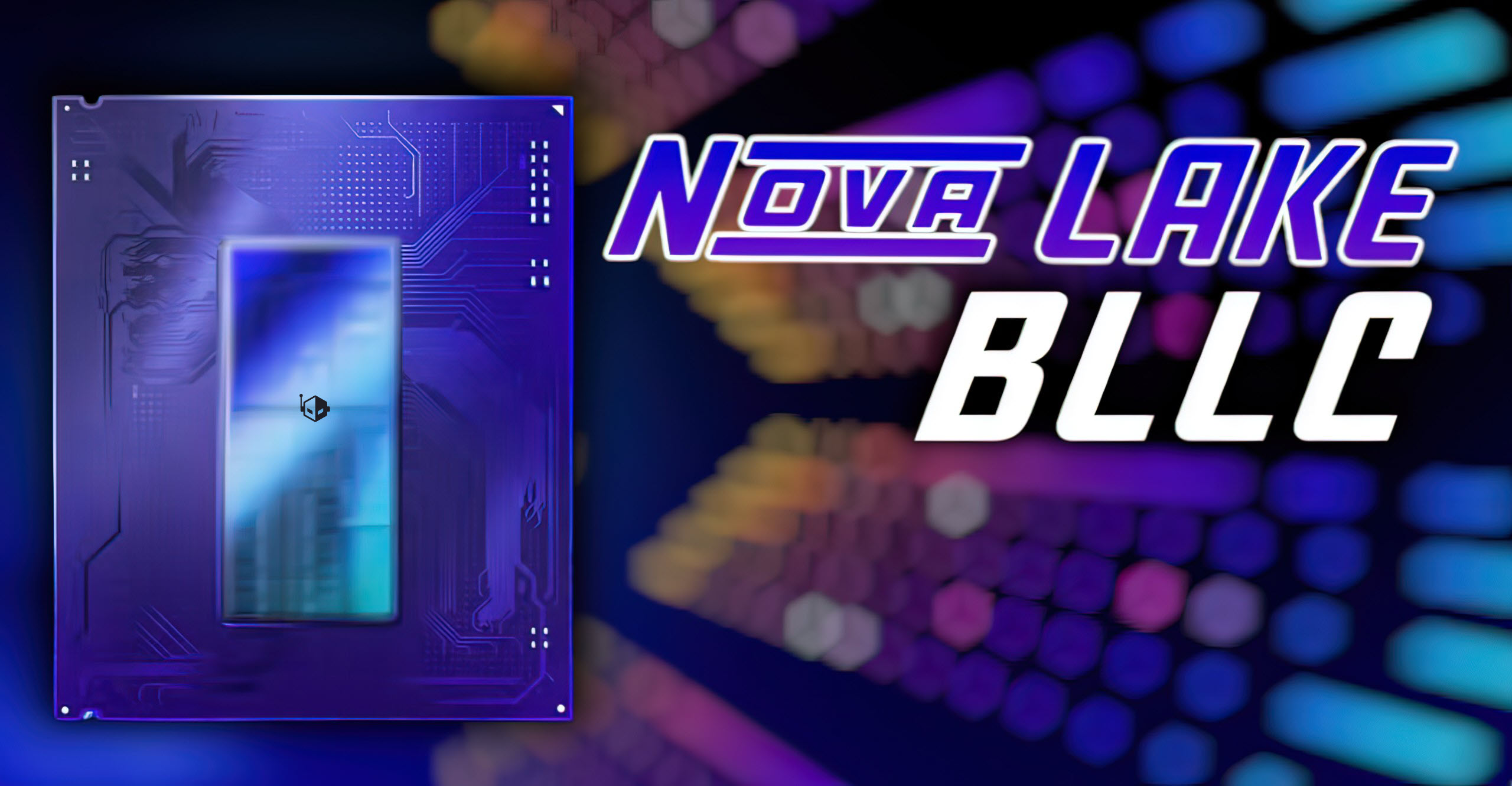
Intel is gearing up for a major desktop comeback with its next-generation Nova Lake-S processors, and early details suggest the company is going all-in on higher core counts and a new “big cache” approach designed to boost performance where it matters most—especially for enthusiasts who care about gaming, responsiveness, and high-end multitasking.
After a rocky stretch that included underwhelming gaming results for Arrow Lake and widespread concern around 13th and 14th Gen stability, Intel has strong motivation to make Nova Lake-S a clear turning point. The goal appears simple: deliver noticeably stronger desktop chips, introduce fresh platform upgrades, and win back mindshare in the DIY PC market.
Four unlocked Nova Lake-S desktop CPU options, with bLLC “Big Cache”
Current rumors point to four unlocked (K-series style) Nova Lake-S desktop SKUs, and the key takeaway is that only these unlocked models are expected to include Intel’s bLLC configuration—often described as a “big last-level cache” designed to improve cache-sensitive workloads. If this holds true, bLLC could become a major differentiator between enthusiast-focused chips and the rest of the lineup.
The four reported configurations also include LP-E cores (low-power efficiency cores), which would handle background and lighter tasks more efficiently.
Here’s how the rumored lineup breaks down, including core layouts and the suggested bLLC cache ceilings:
1) Dual compute tile models (expected to sit in the Core Ultra 9 tier)
– 52-core configuration: 16 P-cores + 32 E-cores + 4 LP-E cores, with up to 288 MB bLLC
– 42-core configuration: 14 P-cores + 24 E-cores + 4 LP-E cores, with up to 288 MB bLLC
2) Single compute tile models (expected to sit in the Core Ultra 7 tier)
– 28-core configuration: 8 P-cores + 16 E-cores + 4 LP-E cores, with up to 144 MB bLLC
– 24-core configuration: 8 P-cores + 12 E-cores + 4 LP-E cores, with up to 144 MB bLLC
In practical terms, Intel seems to be scaling Nova Lake-S two ways at once: by adding more total cores at the top end (including a massive jump in E-core counts), and by pairing those designs with unusually large cache pools intended to keep cores fed with data more efficiently.
Nova Lake-S platform changes: new socket, more PCIe, faster DDR5
Nova Lake-S is expected to move to a new desktop socket, LGA 1954. That matters for builders because it signals a new motherboard platform and potentially new upgrade paths. In contrast, LGA 1851 is expected to cover Arrow Lake and an Arrow Lake Refresh, but not much beyond that.
There are also rumors that Intel wants to improve socket longevity going forward, taking a page from AMD’s playbook. Longer socket support has been a major selling point for DIY buyers, and Intel appears to be exploring how to extend platform lifespan beyond the usual 1–2 generations.
On the specs side, Nova Lake-S is rumored to bring notable platform upgrades versus Arrow Lake-S, including:
– Up to 52 cores (versus 24 max on Arrow Lake-S)
– Much higher maximum cache totals (bLLC reportedly in the 144–288 MB range on select unlocked SKUs)
– Faster DDR5 support, with rumors pointing to DDR5-8000 (in specific configurations)
– More PCIe 5.0 lanes (up to 36 versus 24)
– A higher max TDP figure reported at 150W (versus 125W)
Separate chatter also suggests future LGA 1954 motherboards could use a “900-series” chipset, and that chipset manufacturing may involve Samsung’s 8nm process. That part remains unconfirmed, but it’s being discussed alongside the broader platform transition.
Release window and what it means for the DIY desktop CPU race
Nova Lake “Core Ultra 400” desktop CPUs are currently expected in the second half of 2026. Intel has indicated it intends to reclaim performance leadership once this generation arrives, and the rumored specs show why expectations are building: a potential flagship with 52 total cores and up to 288 MB of bLLC cache would be a dramatic shift in ambition compared with recent desktop generations.
Of course, all of this is based on early leak and rumor information, and final clocks, pricing, thermals, and real-world gaming results will ultimately decide how big the impact is. Still, if Intel delivers even close to these rumored Nova Lake-S specs—especially with bLLC appearing on enthusiast SKUs—the desktop CPU market could become far more competitive in 2026, which is exactly what PC builders want.