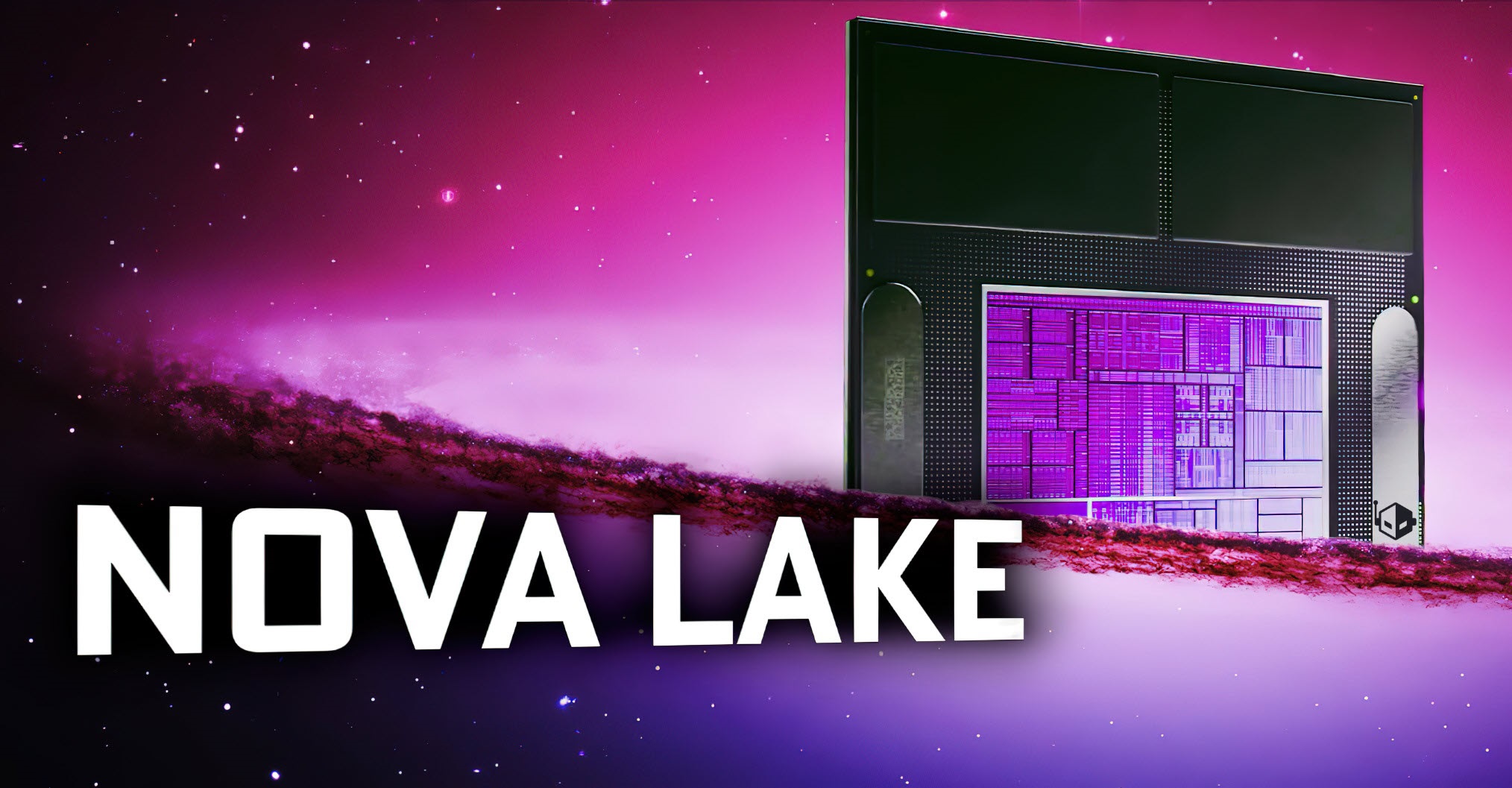
Recent insights into Intel’s roadmap for future CPUs have revealed significant strategy adjustments, with an emphasis on differentiating desktop and mobile processors. According to leaks from a source identified as Jaykihn, Intel’s future CPU lineup will undergo some segmentation, with Nova Lake-S slated to succeed Arrow Lake-S in the desktop arena, while Panther Lake will be exclusively targeting mobile platforms.
Intel’s direction took a turn with its Tiger Lake CPUs, which marked a division in the company’s once-unified approach by focusing on mobile platforms, whereas its Rocket Lake iteration was a desktop-oriented architectural update. The streamlining continued with Alder Lake and Raptor Lake CPUs, though the announcement of Meteor Lake being mobile-only introduced a new separation. The current scenario positions Raptor Lake as the top performer for enthusiast laptops and standard desktop PCs.
The launch of next-gen Lunar Lake CPUs designed specifically for slim “AI PC” laptops is imminent, with Arrow Lake expected to power a broad spectrum of desktop and laptop computers. While Arrow Lake’s own successor is being developed for a release in the latter half of 2025, desktop users may have to wait until 2026 to witness the debut of Intel’s next desktop CPU update, Nova Lake.
Intel’s move to confine Panther Lake CPUs to the mobile space signifies a broader coverage within that segment compared to Lunar Lake. Whereas, for desktop upgrades, Nova Lake is projected to enter the scene after Arrow Lake, potentially bridging a gap until then with an Arrow Lake refresh, although no confirmation on an interim solution has been given.
The specifications for Panther Lake include the adoption of new Cougar Cove P-Cores, refined E-Cores, and the integration of Celestial “Xe3” GPUs. In contrast, available details on Nova Lake are scant, as official confirmation from Intel remains pending. Early speculation points to Intel possibly leveraging TSMC’s node and its own 14A process technology for Nova Lake’s production and implementing the advanced Xe4 architecture, codenamed Druid.
A significant change will accompany the Arrow Lake CPUs, introducing a new socket and 800-series platform with LGA 1851. It’s expected that Nova Lake will be compatible with this socket, continuing Intel’s trend of supporting a socket type for three generations, with another planned in 2025 known as Bartlett Lake. However, the necessity for changes could potentially lead to another new socket type. Meanwhile, Intel’s competition has pledged to support its AM5 socket beyond 2027.
The comparison of past and future Intel desktop CPU generations showcases progression in process and architecture technologies, core/thread counts, platform support, memory compatibility, and PCIe capabilities. The transition from Alder Lake with its Intel 7 process to the anticipated Nova Lake hints at future enhancements in CPU features, although specifics such as core counts, processor architecture, and graphics integration remain under wraps until further official details emerge.