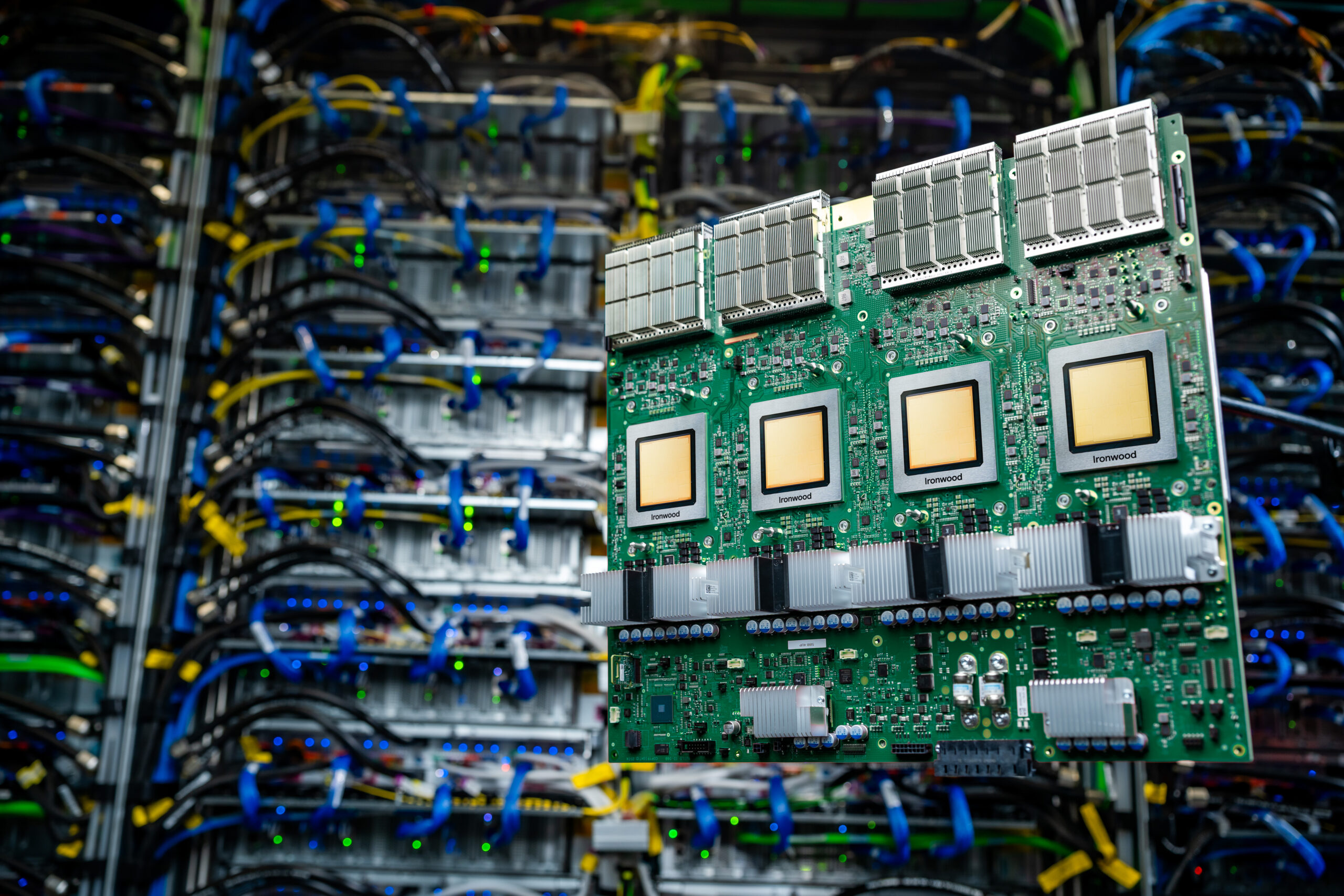
Rumors around Intel’s advanced chip packaging are picking up speed, and a fresh industry report suggests Intel could land major packaging business from Google for future AI hardware. The big idea: as demand for AI accelerators explodes, advanced packaging has become one of the most important—and most limited—resources in the entire semiconductor pipeline.
Intel’s EMIB (Embedded Multi-die Interconnect Bridge) is increasingly being viewed as a serious alternative in the same general arena as TSMC’s CoWoS, especially for customers building custom AI chips and ASICs. According to TrendForce, Intel may be positioned to provide advanced packaging technology for Google’s next-generation TPU v9, which is currently expected to arrive in 2027. The same report also points to Meta potentially using Intel’s advanced packaging solutions for its MTIA AI accelerators.
What’s driving this interest is a mix of timing, capacity, and geography. Advanced packaging is a well-known bottleneck for high-performance AI hardware, and the U.S. has limited domestic options compared to Asia. Intel stands out because it can offer these services within the United States, making it an attractive choice for major tech companies looking to strengthen and diversify supply chains.
Intel isn’t new to this. Since launching its standalone foundry strategy in 2021, the company has continued investing in advanced packaging, with EMIB already deployed inside Intel’s own data center products. Server-class platforms such as Sapphire Rapids and Granite Rapids have used EMIB, demonstrating that the technology isn’t just theoretical—it’s proven in high-volume, high-performance CPUs.
Even if Intel picks up more external foundry and packaging customers, CoWoS is still expected to dominate in the near term for the biggest high-bandwidth AI products—particularly the kind used broadly across the market. Major GPU vendors have also consumed a large share of existing advanced packaging capacity, which can make it harder for custom silicon projects to secure the volume they want on the timelines they want. That reality alone makes Intel’s packaging offerings more compelling for ASIC-focused customers who need an alternative path.
Beyond EMIB, Intel’s broader packaging roadmap is also part of why the company is getting attention. Technologies like Foveros and Foveros Direct (including 3D stacking approaches) are widely viewed as key building blocks for next-generation AI chips that need better performance per watt, faster chip-to-chip communication, and more efficient integration of compute and memory.
The most important takeaway is that Intel’s push doesn’t necessarily “replace” existing leaders—it helps expand options. If Google, Meta, and others increasingly adopt Intel’s advanced packaging, it could reduce pressure on a strained supply chain and create more resilience across the AI hardware ecosystem. Over time, that kind of diversification is generally good news for chip availability, pricing stability, and the pace of AI infrastructure growth.