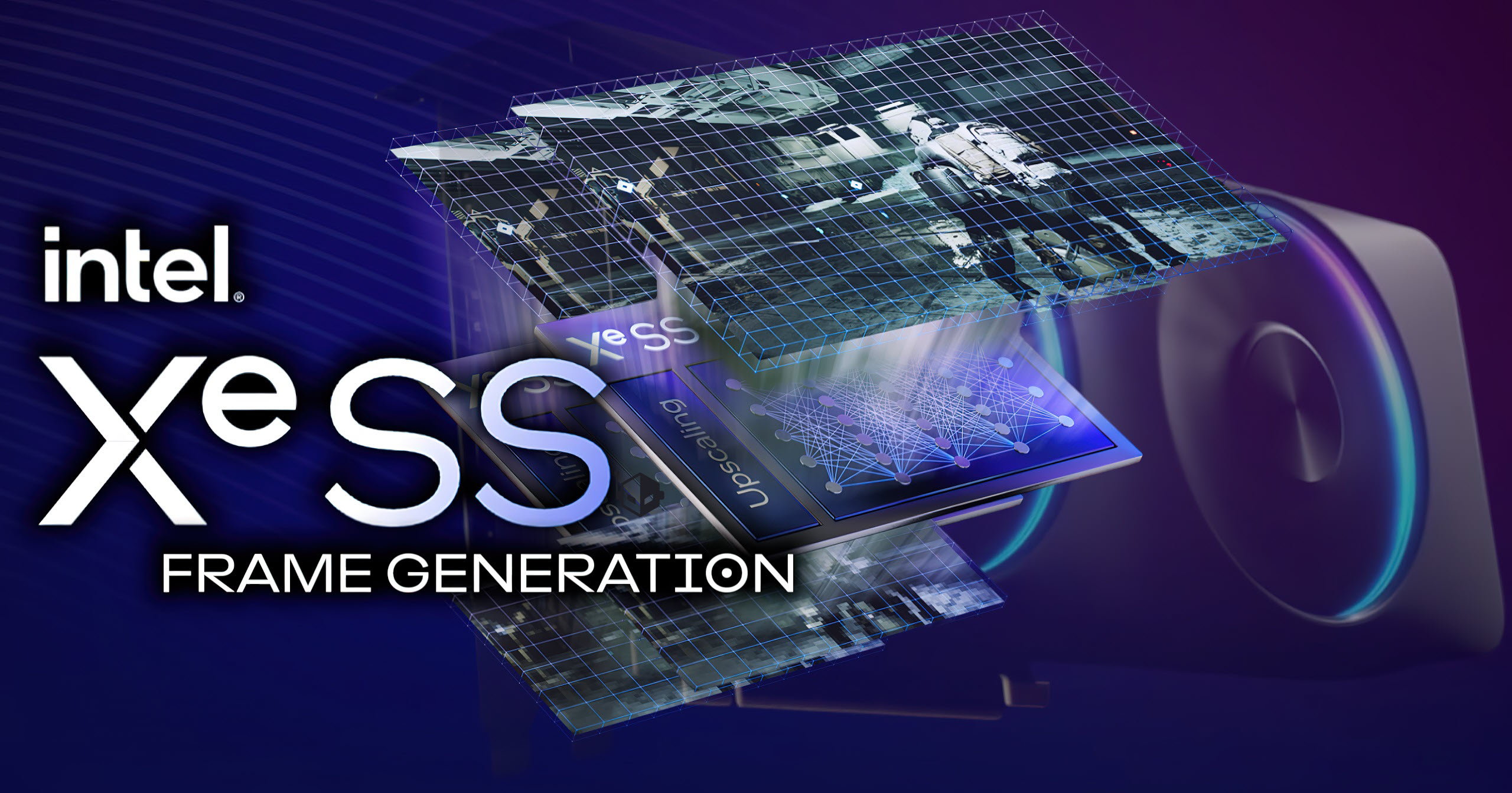
Intel’s latest XeSS SDK 2.1.1 unlocks XeSS Frame Generation on Meteor Lake, bringing smooth-framerate tech to laptops and handhelds that previously couldn’t use it. The big change: the new SDK no longer requires full XMX tensor engines. Instead, it introduces a path tailored for Meteor Lake’s DPAS AI units—often referred to as XMX‑Lite—so games can generate interpolated frames even on iGPUs built on the Xe‑LPG architecture.
Why this matters
– Meteor Lake lacks the dedicated XMX tensor hardware found in Arc discrete GPUs and newer Xe2-based iGPUs. Until now, that meant no official Frame Generation support.
– XeSS SDK 2.1.1 adds lower-precision neural weights, a smaller frame-gen model, and DPAS‑optimized kernel paths. Together, these changes allow Frame Generation to run on Meteor Lake despite its lighter AI hardware.
– Developer documentation indicates the previous XMX requirement has been lifted. As a result, XeSS Frame Generation is designed to work across a wider range of GPUs that support Shader Model 6.4, not just Intel’s own.
What to expect on Meteor Lake
– Performance won’t match systems with full XMX acceleration, so don’t expect peak Frame Generation throughput. Still, the feature can noticeably improve gameplay fluidity and boost effective FPS in many titles.
– The iGPU’s Xe‑LPG architecture has some constraints compared to Arc A/B series GPUs, but the new SDK is specifically tuned to make the most of DPAS units.
– Visual quality and latency will depend on the game’s integration and your settings. Frame Generation improves perceived smoothness but does not add new “real” frames of simulation; competitive players may prefer to balance visuals and responsiveness accordingly.
Good news for laptop and handheld gamers
– Many Meteor Lake systems struggle to maintain high FPS at native resolution. XeSS Frame Generation can help smooth out dips, making gameplay feel more consistent without major visual compromises.
– Expect support to arrive through upcoming Intel iGPU drivers and game patches that integrate the new SDK. Once enabled, you’ll typically toggle XeSS Frame Generation in a game’s graphics settings.
Tips for gamers
– Update to the latest graphics drivers as they become available for your device.
– Look for game updates that mention XeSS SDK 2.1.1 or Frame Generation support.
– Start with balanced settings: pair Frame Generation with sensible quality options and consider enabling adaptive sync displays when available for the best experience.
– Monitor power and thermals on thin-and-light laptops; higher apparent FPS can increase GPU workload.
Notes for developers
– Integrate XeSS SDK 2.1.1 to enable the DPAS‑optimized path on Meteor Lake and broaden hardware compatibility.
– Use the smaller FG model and lower-precision weights to hit performance targets on XMX‑Lite hardware.
– Validate image quality and latency across a range of GPU configurations that support SM 6.4.
Bottom line
With XeSS SDK 2.1.1, Intel has opened the door for Frame Generation on Meteor Lake’s integrated graphics. While performance won’t rival systems with full tensor acceleration, the added smoothness is a welcome upgrade for modern laptops and handhelds—and a meaningful step toward broader, more inclusive Frame Generation support across the PC gaming ecosystem.