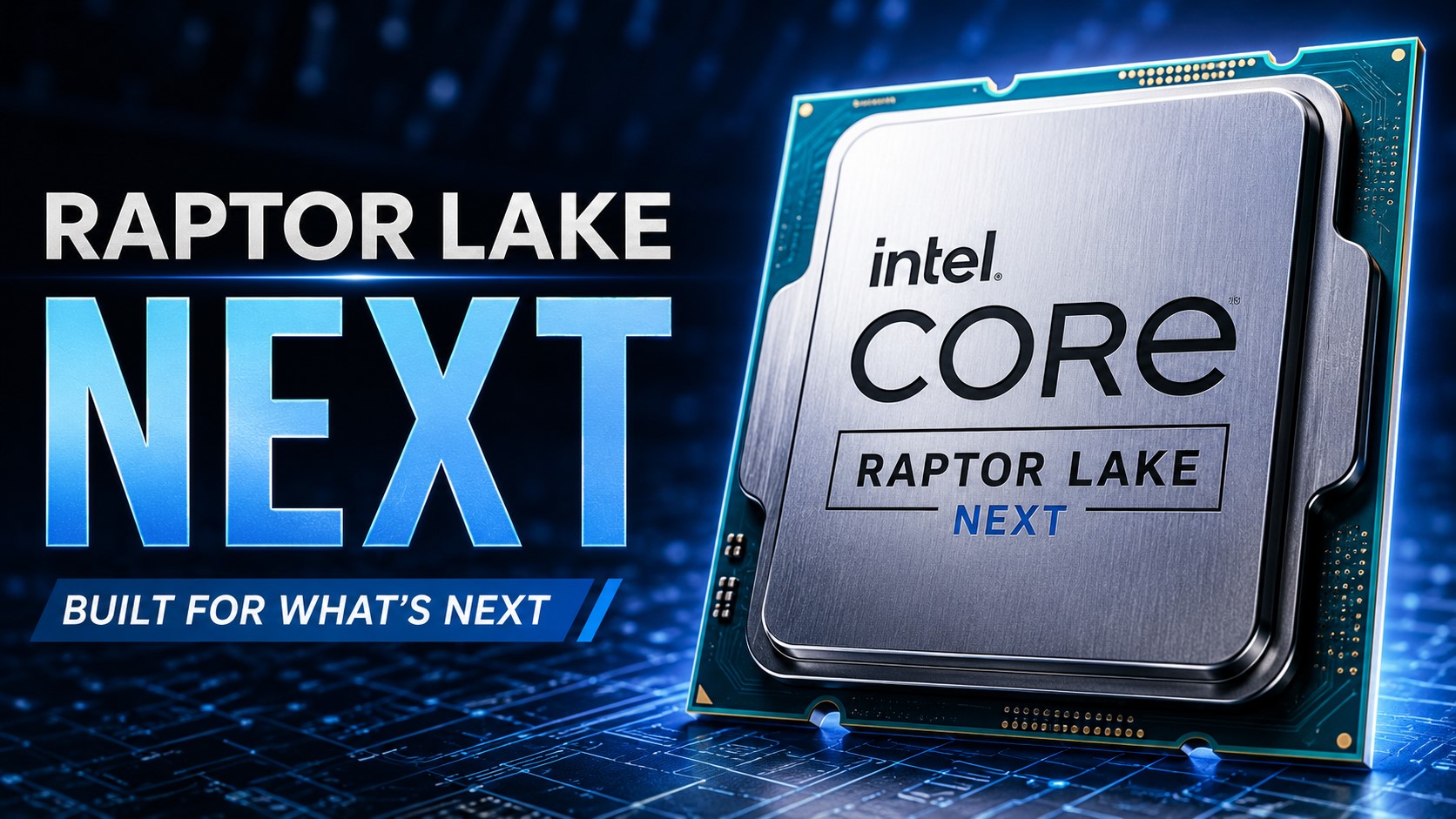
Intel Raptor Lake NEXT Leak Points to New LGA 1700 Desktop CPUs With Up to 33MB Cache
Intel appears to be preparing another round of desktop processors for the LGA 1700 platform, and a new shipping manifest has added more weight to earlier rumors. The upcoming lineup is reportedly known as Raptor Lake NEXT, a refreshed version of the existing Raptor Lake family aimed at extending the life of Intel’s current desktop socket.
The latest information comes from NBD shipping records, which list several unreleased Intel desktop processor samples shipped from Vietnam. The entries reportedly date to August 2026 and include early specifications such as base clock speeds, cache sizes, and possible core configurations.
While Intel has not officially announced these chips, the shipping data suggests that testing and preparation are already underway.
Four Intel Raptor Lake NEXT desktop CPUs appear in shipping records
The leaked manifest lists four part numbers: 99DLMV, 99DLMT, 99DLMW, and 99DLMX. These processors are described as FCLGA desktop parts, which strongly suggests compatibility with Intel’s LGA 1700 socket.
That detail is important for PC builders, because it means these upcoming CPUs may work with existing LGA 1700 motherboards, depending on BIOS support from motherboard manufacturers. If true, this could give users on 600-series and 700-series Intel boards another upgrade path without needing a completely new platform.
The most interesting model appears to be the 99DLMV. This chip is said to feature 30MB of L3 cache and a 3.5GHz base clock. Its expected core layout is 8 Performance cores and 8 Efficient cores, which would make it similar in structure to Intel’s Core i7-13700K. However, the chip is rumored to be positioned more like a replacement for the Core i5-14600K, potentially giving mainstream buyers a stronger core count than before.
Another model, the 99DLMT, may be a more efficient Core i7-class processor. It is listed with 33MB of L3 cache, a 2.1GHz base clock, and a possible 8 Performance core plus 12 Efficient core configuration. The expected power rating is 65W, placing it closer to non-K desktop CPUs such as the Core i7-14700.
The remaining two models, 99DLMW and 99DLMX, are both listed with 24MB of L3 cache and a 2.6GHz base clock. These may be lower-tier desktop chips, possibly with 6 Performance cores and 4 Efficient cores, though one of the configurations remains unclear. Both are expected to carry a 65W power rating.
Part number: 99DLMX
Base clock: 2.6GHz
L3 cache: 24MB
Expected core configuration: Not yet confirmed
Expected TDP: 65W
A longer life for Intel LGA 1700?
If these Raptor Lake NEXT processors launch as expected, Intel’s LGA 1700 platform could remain active longer than many users anticipated. The socket has already supported multiple generations, including Alder Lake, Raptor Lake, and Raptor Lake Refresh. A further refresh would give Intel more options in the mainstream desktop CPU market while offering existing users a potentially simple upgrade route.
This could be especially attractive for gamers and PC builders who already own compatible DDR4 or DDR5 motherboards. Instead of moving to a newer platform with a new motherboard and memory requirements, users may be able to upgrade only the processor, assuming motherboard vendors release the required firmware updates.
The rumored lineup also suggests Intel may be reshuffling performance tiers. A chip with 8 Performance cores and 8 Efficient cores in a Core i5 replacement role would be a notable upgrade for mainstream buyers, especially for gaming, streaming, productivity, and multitasking workloads.
Desktop first, mobile versions may follow
The leaked entries specifically point to desktop processors, but mobile variants could also appear later. Intel often adapts its architectures across both desktop and laptop segments, so it would not be surprising to see Raptor Lake NEXT-based mobile chips arrive for notebooks as well.
For now, the key takeaway is that Intel’s next refreshed Raptor Lake CPUs appear to be moving through early logistics channels. The specifications are not final, and details such as boost clocks, pricing, model names, and launch timing remain unknown.
Still, the leak gives a strong hint that Intel is not finished with LGA 1700 yet. If the final products match these early listings, Raptor Lake NEXT could become an appealing option for users who want better performance without rebuilding their entire PC.