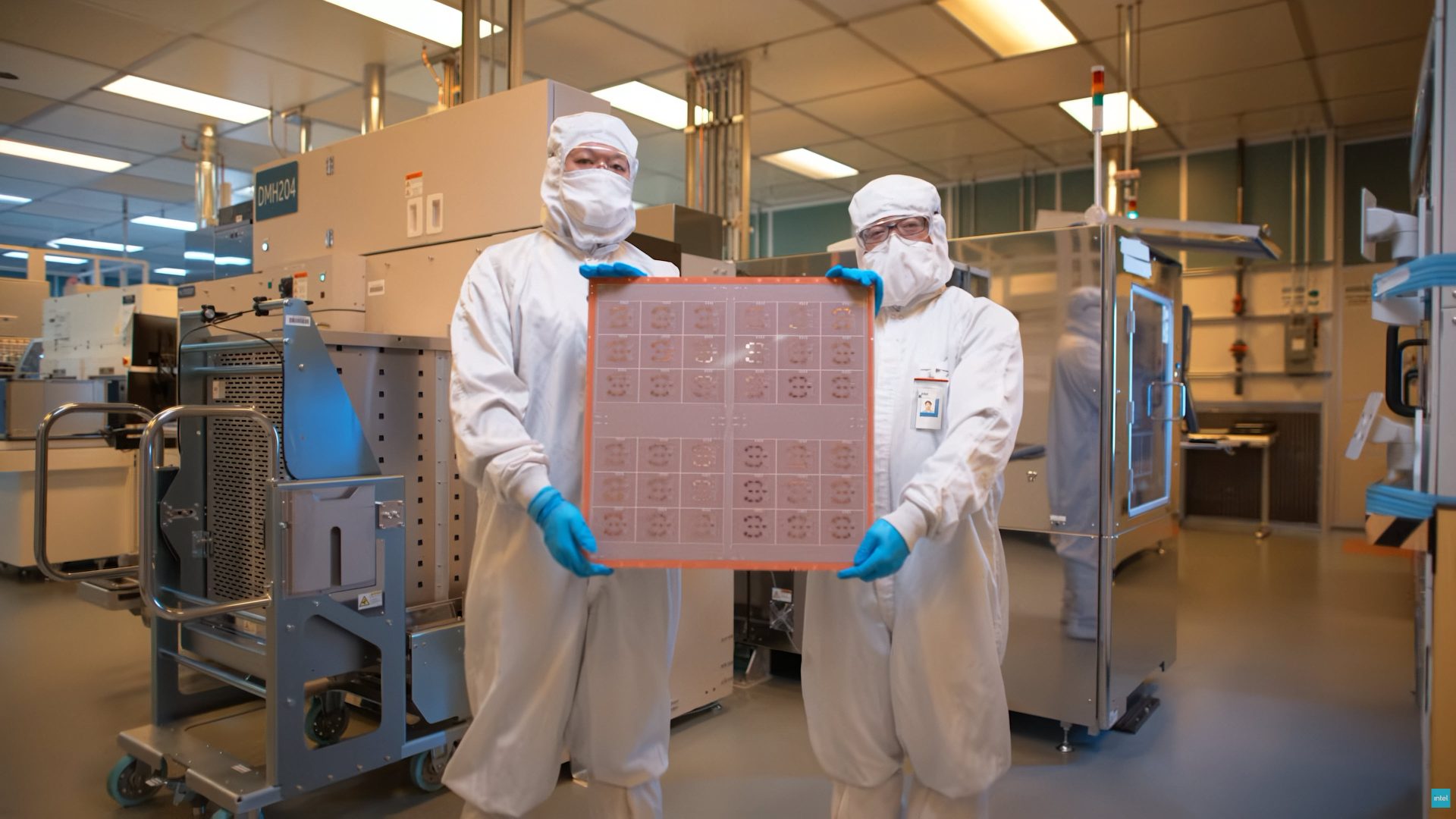
Intel Fab 38 expansion in Israel points to growing confidence in 14A foundry demand
Intel appears to be moving quickly to bring more chip manufacturing capacity online, and one of the clearest signals is coming from Fab 38 in Kiryat Gat, Israel. After previously slowing work at the site, new developments suggest the company is now preparing to make full use of one of its most important available cleanroom assets.
Fab 38 has drawn attention because it was believed to be one of Intel’s last major unfilled cleanroom opportunities. It is also located in a region with higher geopolitical risk and comparatively lower subsidy support than some other global semiconductor hubs. That makes Intel’s renewed momentum at the site especially noteworthy. If the company is willing to accelerate work there, it may indicate stronger demand expectations for its advanced manufacturing roadmap.
Construction activity at Fab 38 appears to be approaching a key milestone. Hoffman Construction, which has been involved in the project, has updated its Fab 38 project information to show 2026 as the expected completion year for its contractual work. This relates to the first of two planned clean rooms at the Kiryat Gat site.
The update is significant because Intel had paused portions of the Fab 38 project in July 2025. At that time, work was reportedly narrowed to focus on completing the structure for only one of the two planned clean rooms. Now, a little over a year later, the first cleanroom phase appears to be nearing completion.
Intel’s hiring activity adds another layer to the story. The company has recently opened a role for a Kiryat Gat Site Master Planner and Site Permitting Owner. That type of position suggests Intel may be preparing for broader site development and potentially the next phase of Fab 38, including the second planned clean room.
This comes at a time when Intel is also looking to strengthen its financial position. The company has been preparing to raise fresh capital through a new share offering, initially targeting around $15 billion before increasing the figure to roughly $20 billion. Intel has stated that the offering is meant to support future growth opportunities while preserving a strong balance sheet and maintaining its investment-grade credit profile.
The timing is important. Intel already holds a substantial cash position, so the decision to pursue additional capital has raised questions about where the money may be directed. One possibility is that the company sees enough confirmed demand to justify a more aggressive expansion of its foundry business.
Intel CEO Lip-Bu Tan has previously made it clear that large-scale foundry expansion would only move forward once the company had secured firm customer commitments for its most advanced process technologies. In that context, renewed activity around Fab 38 could be interpreted as a positive signal for Intel’s 14A process node.
Intel 14A is central to the company’s ambition to become a stronger force in contract chip manufacturing. If customers are committing to the technology, Intel may need additional production capacity sooner than expected. Expanding Fab 38 would help support that goal by giving the company more room to manufacture advanced chips at scale.
The broader message is that Intel may be entering a more aggressive phase of its turnaround strategy. Between construction progress in Israel, new planning roles at the Kiryat Gat site, and a major capital-raising effort, the company appears to be positioning itself for increased semiconductor demand.
For investors and industry watchers, Fab 38 is more than just another factory project. It may be a real-world indicator of how much confidence Intel has in its foundry pipeline, particularly around the 14A node. If the company is accelerating cleanroom capacity in a more complex and less subsidized region, it suggests Intel sees meaningful opportunities ahead.
Taken together, these developments point to a company preparing for growth rather than simply maintaining existing operations. Intel’s activity at Fab 38 could become one of the strongest signs yet that its advanced foundry strategy is gaining commercial traction.