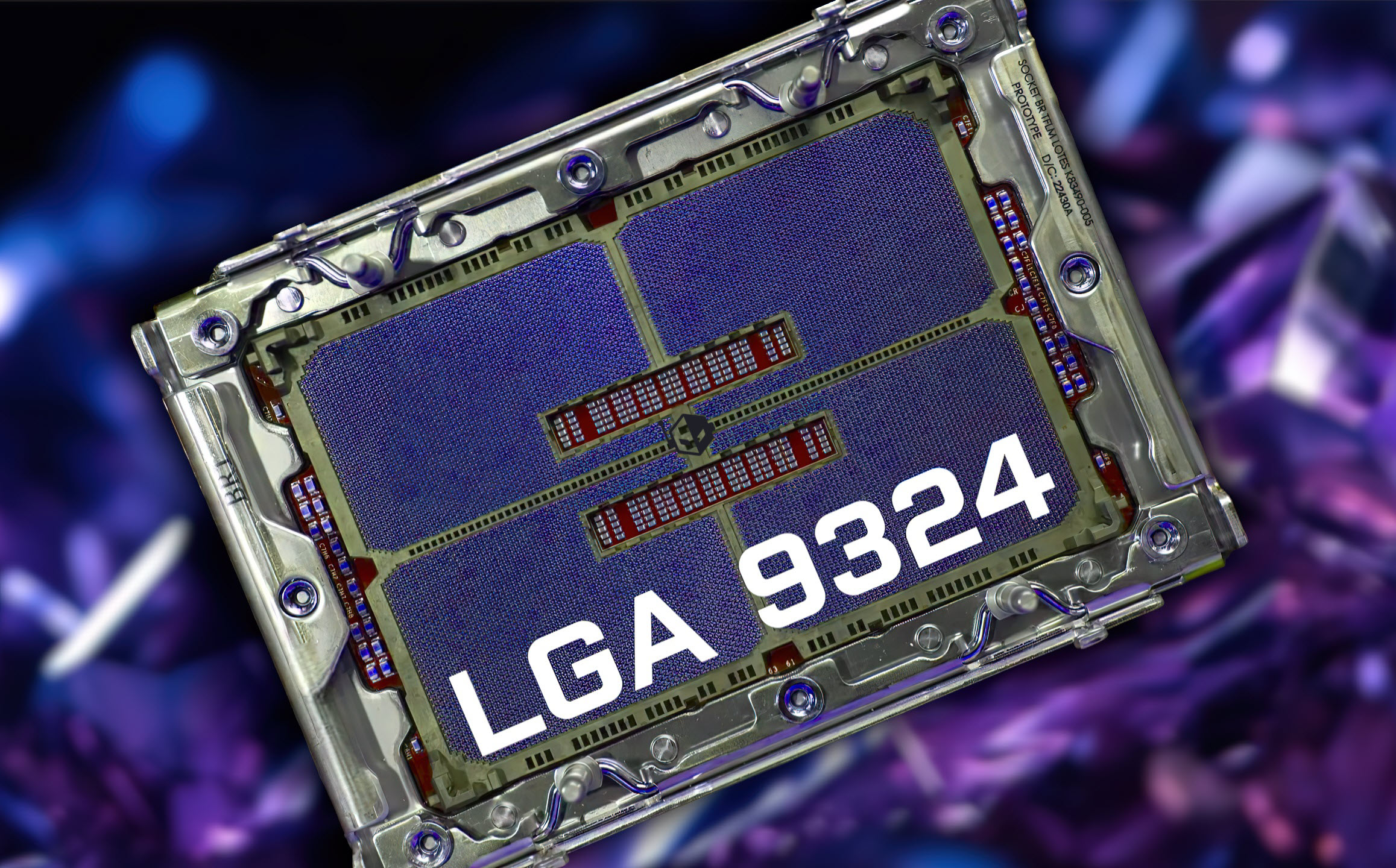
Intel is pushing the boundaries of CPU socket size with the upcoming launch of its gargantuan LGA 9324 socket, set to support the future Diamond Rapids series of ‘Xeon’ CPUs. Breaking away from the already impressive LGA 7529, the new LGA 9324 socket climbs near the 10,000-contact mark, encompassing a large surface area to cater for Intel’s advancements in processor technology.
The LGA 9324 socket, part of Intel’s Oak Stream platform, is expected to hold a significant place in their lineup, following the Birch Stream platform which includes two different socket segments: the LGA 4710 and the LGA 7529. The upcoming Oak Stream platforms, and their reference evaluation platforms, are yet to be confirmed but indications suggest they’ll be substantial in terms of size to accommodate anticipated high core counts and memory capabilities conducive to robust data center and high-performance computing applications.
While earlier speculation pointed toward the potential use of existing LGA 7529/4710 sockets for upcoming Diamond Rapids CPUs, it’s become clear Intel has more ambitious plans. Set for release around the 2025-2026 timeframe, the new processors are expected to intensify competition in the server CPU market, going head-to-head with AMD’s EPYC ‘Venice’ sporting a new SP7 socket and also offering up to 16-channel memory support. Intel’s development teases an impressive and powerful increase in core counts, further challenging competitors.
The dynamic landscape of server processors is also awaiting entrants from NVIDIA with its Vera CPU lineup, anticipated by 2026. This promises to make the upcoming few years particularly engaging for those invested in the data center and high-performance computing segments, as each tech giant brings forward their innovation to claim dominance.
Understanding Intel’s Xeon CPU Evolution
Intel’s roadmap includes a rich array of Xeon CPU families, where each introduces its own advancements and innovations. Diamond Rapids will follow an impressive lineup that includes Granite Rapids and Sierra Forest, driving forward with new core architectures and expanding the scope of server capacities.
These CPUs are structured to offer varying core counts, cache sizes, memory support types, and thermal design power (TDP) ranges to accommodate different computational needs. Memory support is progressing with each iteration, with the latest CPUs indicating potential for up to 16-channel DDR5, while PCIe generation support also advances, revealing possibilities for PCIe 6.0 in upcoming models.
As Intel progresses with each family, it’s clear the focus is on expanding capability while simultaneously amplifying performance, ensuring that server infrastructures can handle the growing data demands of modern enterprises.
Future Prospects and Market Dynamics
With anticipation building up for the grand unveiling of Intel’s Diamond Rapids and their competitors’ offerings, the upcoming changes in the server CPU market are suggestive of a fierce competition. As dense computing needs continue to develop and expand, innovations like Intel’s massive socket design and enhanced memory support will become key differentiators.
Intel’s strategic progressions with the Diamond Rapids-AP Xeon CPUs and the Oak Stream platform factor significantly into the ongoing competition with AMD, showing that Intel is committed to maintaining, if not strengthening, its position within the sector.
As these tech behemoths prepare for the next leap in server CPU technology, it becomes increasingly important for industry professionals and observers to stay updated on these developments. The implications of such advancements are widespread, affecting not only the immediate computing and data centers but also the broader scope of what’s possible in the realms of computing power and efficiency.


