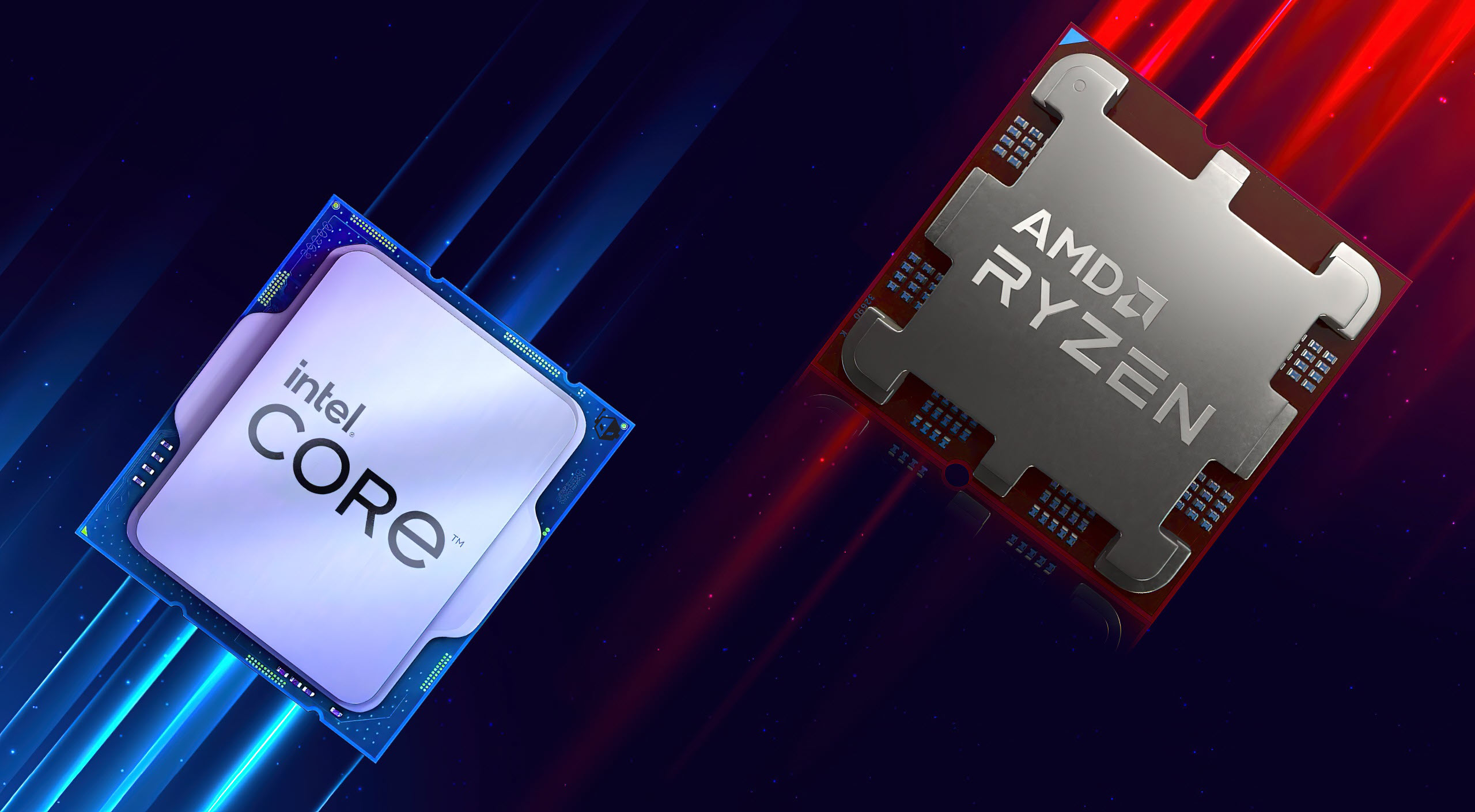
Intel has put its newest Arrow Lake desktop chips under the spotlight, stacking Core Ultra Series 2 against AMD’s Ryzen 9000 lineup to win over gamers and creators. The message is clear: more models, competitive frame rates, stronger productivity. The reality is more complicated.
Intel’s slide deck maps 12 Arrow Lake SKUs against nine Ryzen 9000 chips. At the top, Core Ultra 9 285K and 285 take aim at Ryzen 9 9950X3D, 9950X, 9900X3D, and 9900X. Core Ultra 7 265K, 265KF, 265F, and 265 square off with Ryzen 7 9800X3D and 9700X. The largest stack is Core Ultra 5, featuring 245K, 245KF, 245, 235, 225F, and 225 against Ryzen 5 9600X and 9600. AMD’s 9500F was added later and didn’t make Intel’s chart due to timing.
At the flagship end, Intel says the Core Ultra 9 285K trades blows with the Ryzen 9 9950X3D in gaming, trailing by about 9% in a small set of titles, while pulling ahead in content creation. Against the Ryzen 9 9950X, Intel presents parity at 1080p across five games, including Starfield, though independent results don’t consistently agree with that framing. Compared to the Ryzen 9 9900X, Intel’s slides show up to a 14% gaming lead in titles like STALKER 2.
The Core Ultra 7 265K is pitched as delivering similar 1080p gaming performance to the Ryzen 7 9700X. Intel also highlights value: a gaming performance-per-dollar win of roughly 15% at MSRP, based on $299 for the 265K versus $359 for the 9700X. That calculation gets shaky in the real world where street prices matter more than stickers. The 9700X is often found between $279 and $299, which largely erases the value advantage Intel claims at MSRP.
The 265K is additionally stacked against the Ryzen 7 9800X3D. Intel’s slides suggest about a 25% gaming perf-per-dollar edge at current MSRPs, but their own charts also show scenarios where the 265K only ties the 9800X3D at 1080p in titles like Starfield. The 9800X3D remains the premier gaming CPU by a comfortable margin, routinely posting double-digit leads over Arrow Lake in independent testing.
In the midrange, the Core Ultra 5 245K is set against the Ryzen 5 9600X. Intel’s numbers show the 245K swinging within about ±9% of the 9600X in gaming depending on the title. For creators, the 245K’s hybrid design—with more total cores than the 6-core 9600X—continues to pay off, a trend seen since Intel’s 12th-gen era, thanks to efficiency cores boosting multi-threaded workloads.
For value hunters, Intel also touts the Core Ultra 5 225 versus the older Core i5-14400, claiming up to a 43% uplift in gaming and around 20% on average. As always, the exact game settings and whether features like APO were enabled aren’t specified, which makes apples-to-apples comparisons tricky.
Stepping back, the bigger narrative hasn’t changed much since launch. Arrow Lake desktop didn’t land with the impact Intel hoped for, and AMD’s Ryzen lineup has continued to strengthen its position in the DIY PC market. Intel has acknowledged Arrow Lake fell short of expectations and is pointing to Nova Lake as the desktop reset intended to close the gap.
What shoppers should do right now:
– Focus on real-world pricing rather than MSRP when judging value
– Look for independent, game-by-game benchmarks at your target resolution and settings
– Consider your mix of gaming vs. content creation to pick the right core configuration