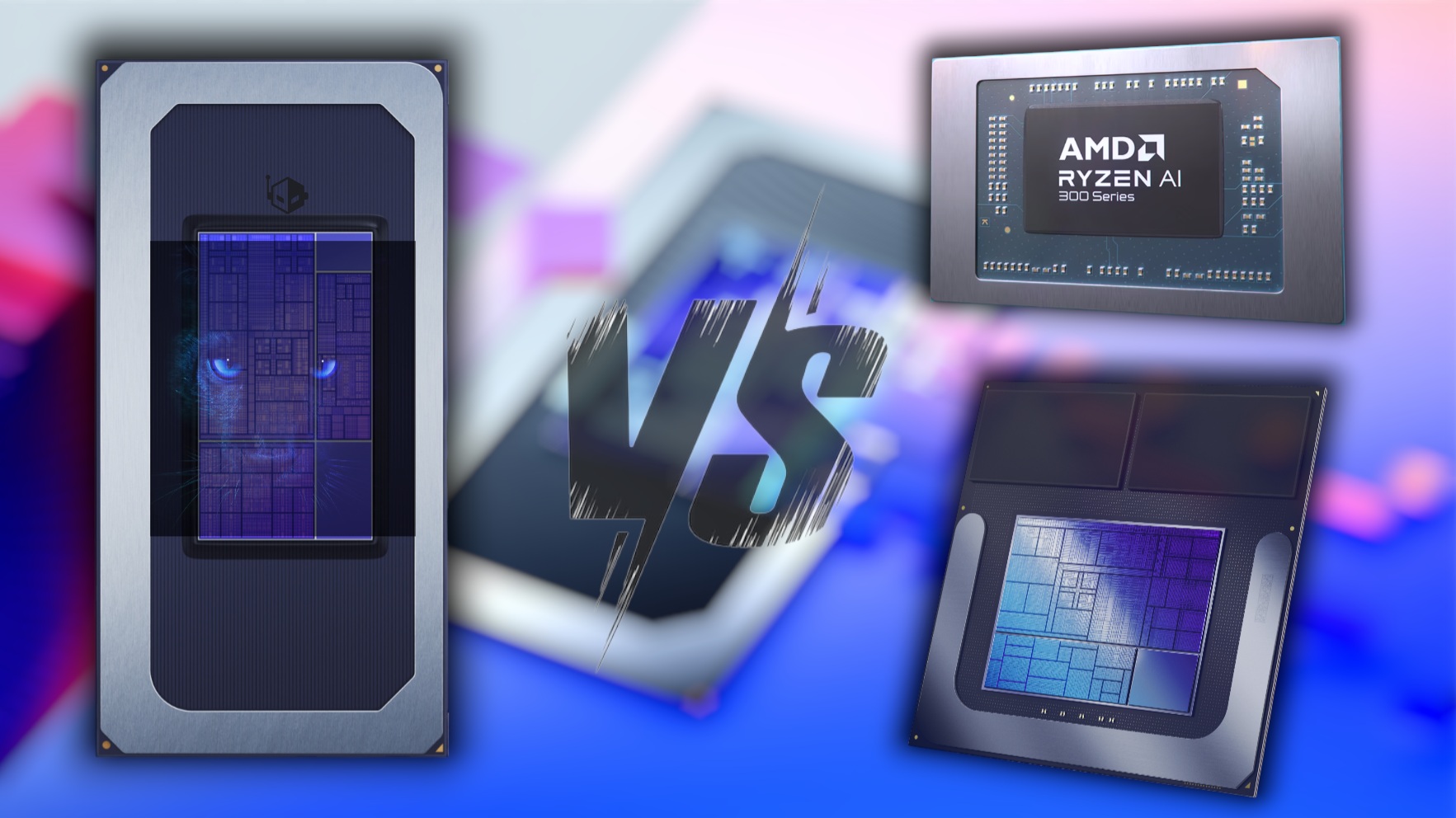
Intel’s Panther Lake SoCs are shaping up to be one of the most interesting PC processor launches in recent memory, especially for gamers and creators who care about both speed and efficiency. Built on Intel’s 18A process, Panther Lake has already impressed across synthetic benchmarks and real-world gaming tests. Now, new independent benchmark results are offering a closer look at the one detail many performance enthusiasts have been waiting for: how Panther Lake’s P-Cores and E-Cores compare in IPC (instructions per clock) performance against AMD’s latest designs.
A hardware reviewer on China’s Bilibili platform recently tested Intel’s Cougar Cove (P-Core) and Darkmont (E-Core) CPU cores using SPEC CPU 2017, one of the most respected benchmarking suites for evaluating CPU integer performance. SPEC CPU 2017 is often used to probe deeper CPU behaviors like branch prediction efficiency, memory latency handling, and overall architecture-level throughput—making it a strong tool for comparing IPC and microarchitecture efficiency rather than simply showcasing raw clock speed.
The testing setup used an LPDDR5-based platform along with WSL 2, and compared multiple P-Core and E-Core configurations drawn from Intel’s Arrow Lake and Panther Lake families. On AMD’s side, the comparison included Strix Halo configurations featuring Zen 5 and Zen 5c cores.
In the benchmark data, one of the key metrics highlighted was “int_rate,” which is commonly used as a throughput-focused measure and serves as a baseline indicator tied closely to IPC performance. Another major metric shown was IPC per GHz (IPC/GHz), which normalizes results to better reflect architectural efficiency—often the more meaningful value when you want to understand how capable a core design is independent of boost clocks.
According to the results shared, Intel’s Cougar Cove P-Core shows roughly a 10% IPC advantage over AMD’s Zen 5 and Zen 5c cores in this test set. Meanwhile, Intel’s Darkmont E-Core reportedly lands around a 6% IPC lead compared with AMD’s efficiency-focused counterparts.
These findings suggest that Intel’s Panther Lake microarchitecture changes aren’t just about power savings or hybrid core balancing—they’re also delivering measurable per-clock gains. Panther Lake’s overall design continues Intel’s modern hybrid approach, combining high-performance P-Cores with more efficient E-Cores (and low-power efficiency cores in certain configurations) to better handle a wide range of workloads, from gaming and content creation to productivity tasks where battery life and thermals matter.
Of course, IPC results alone don’t decide the full “Intel vs AMD” story. Real-world performance still depends on factors like clocks, power targets, memory configuration, scheduler behavior, and platform tuning. But these SPEC CPU 2017 numbers do point to one clear takeaway: Panther Lake’s core architectures appear to be highly competitive on efficiency per clock, and Intel’s latest CPU platform is showing meaningful architectural momentum.