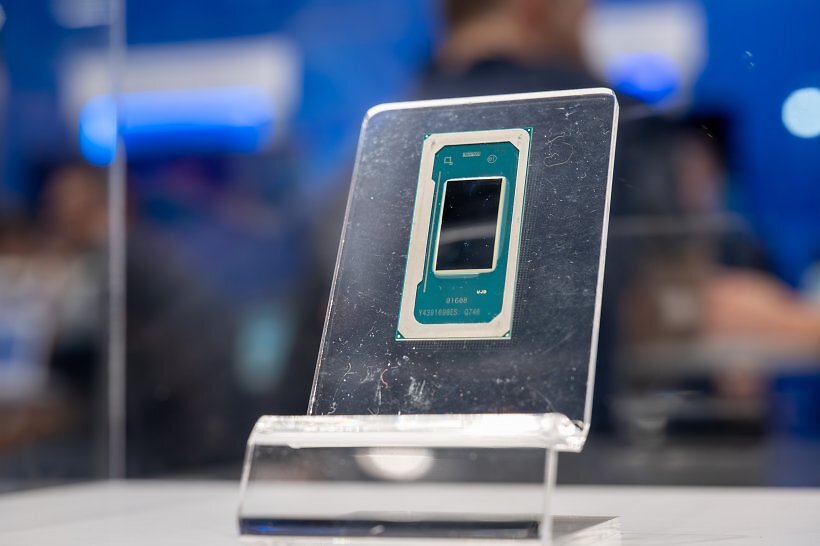
Intel’s next wave of high-performance laptop chips may arrive with yet another name change. A new leak points to a refreshed branding strategy for Panther Lake-H, suggesting Intel will introduce an “Ultra X” tiering system with Ultra X5, Ultra X7, and Ultra X9 models.
Panther Lake-H is shaping up to be a major release for Intel’s mobile lineup. It’s expected to debut on the Intel 18A process and roll in multiple architectural upgrades, including next-gen CPU cores, Xe3 “Celestial” graphics, and an enhanced NPU for AI workloads. While earlier reports covered core counts, graphics architecture, and the presence of an NPU, the exact model names were unclear—until now.
Positioning appears to follow a familiar good-better-best structure. The Core Ultra X9 388H is described as a high P-core variant, likely the flagship H-series part. Early chatter suggests up to 12 Xe3 GPU cores and potential boost clocks around 5.1 GHz, though those specifics remain speculative. The Core Ultra X7 368H is tipped to emphasize a stronger integrated GPU, while the X7 358H and X5 338H are said to target the mid-range.
There’s also confusion in the rumor mill about whether these chips belong to Nova Lake-H. Based on prior information, the models listed above fall under the Core Ultra 300 family and are tied to Panther Lake-H, whereas Nova Lake is expected to carry Core Ultra 400 branding later on.
Under the hood, Panther Lake appears to mix performance and efficiency with a hybrid architecture:
– P-cores: Cougar Cove
– E-cores: Darkmont
– LP-E cores: likely Skymont-based
– Graphics: Xe3 “Celestial”
– Integrated NPU for on-device AI acceleration
If the Ultra X naming lands as reported, Intel could be aiming for clearer tiering that’s easier to understand at a glance: X5 for mainstream, X7 for performance, and X9 for top-tier. The trailing numbers (such as 388H or 368H) would then differentiate generation, feature mix, and form factor class, though the exact decoding remains to be seen. The risk, as always with renames, is user confusion—something Intel will need to manage with consistent messaging and simple positioning.
An official announcement is reportedly targeted for this month. If that timing holds, we should soon learn where Panther Lake-H fits in Intel’s broader mobile roadmap, how the Ultra X tiers map to real-world performance, and whether the new branding strategy sticks. For laptop buyers and creators watching the AI PC and integrated graphics race, Panther Lake-H could mark a meaningful step forward in efficiency, graphics capability, and on-device AI acceleration.