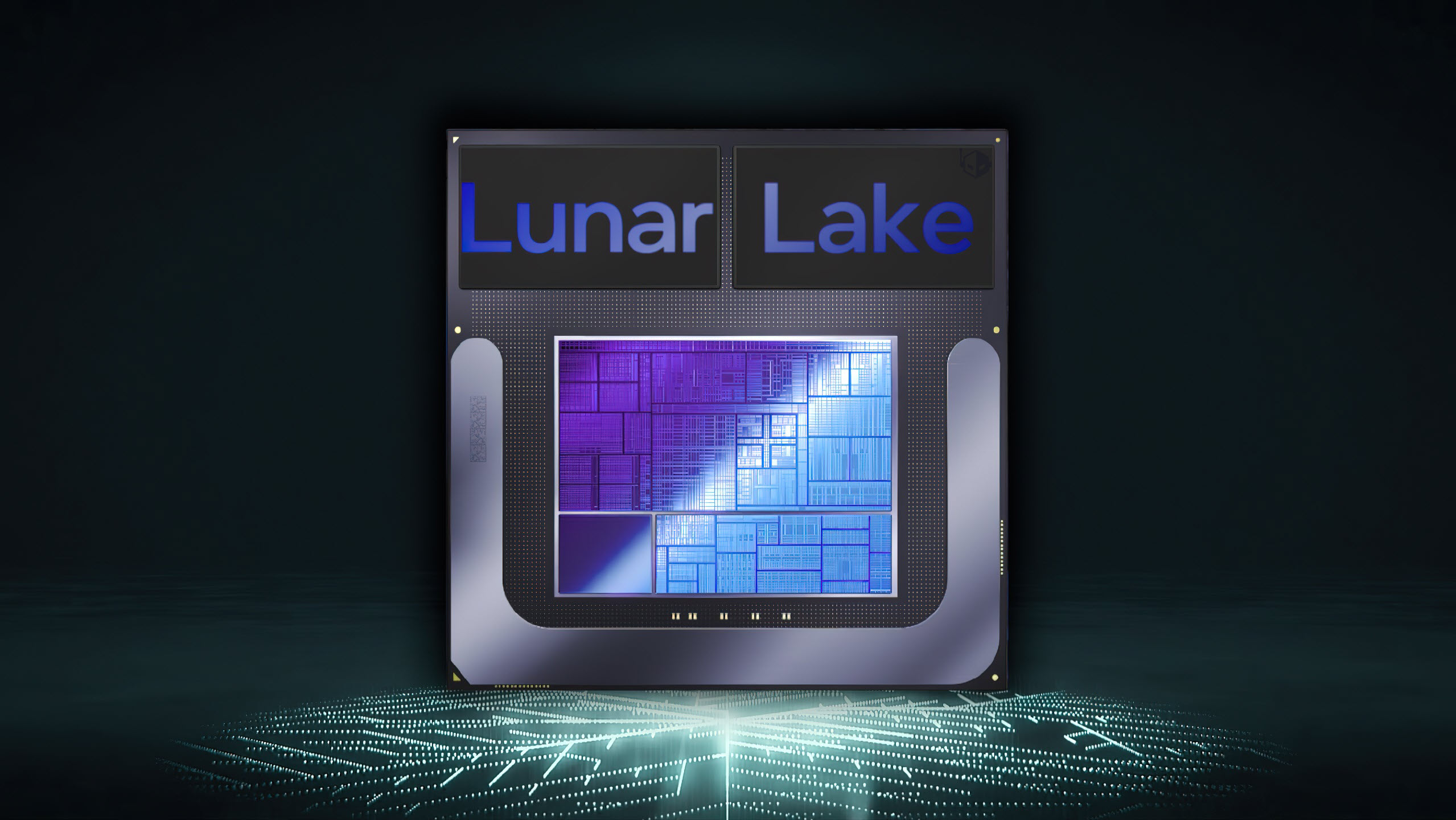
Intel has been making waves in the artificial intelligence (AI) computing segment, and its upcoming Lunar Lake “Core Ultra 200” CPUs are expected to significantly elevate this momentum. These next-gen CPUs are poised to deliver a staggering combined AI performance of over 100 AI Tera Operations per Second (TOPs).
Performance Breakthrough with Intel Lunar Lake CPUs
Intel’s Lunar Lake, which will succeed the company’s first-gen NPU embedded in the Core Ultra 100 series, stands as a transformative leap in AI performance. By introducing the next generation Lunar Lake CPUs under the “Core Ultra 200” branding, Intel is preparing to unveil a state-of-the-art SOC architecture enhanced with new IPs and technological innovations like the on-package LPDDR5 memory solution.
At the forefront of these advancements is the inclusion of up to 8 cores consisting of Lion Cove P-Cores and Skymont E-Cores on the compute tile, alongside a powerful Battlemage iGPU (Xe2-LPG) with up to 8 Xe cores. What’s particularly noteworthy is the newly developed NPU expected to yield up to three times the AI processing power compared to Intel’s existing Core Ultra 100 “Meteor Lake.”
The NPU Advantage and GPU Synergy
Intel’s pledge that the Lunar Lake CPUs will generate over 100 TOPs of AI performance can be largely attributed to the formidable union of CPU, GPU, and NPU capabilities. The NPU alone is projected to contribute approximately 45 TOPs. When you factor in the Xe2-LPG Battlemage iGPU, an additional 50 or so AI TOPs are forecasted. The Battlemage architecturally surpasses its predecessors, Alchemist and the enhanced Alchemist+ iGPUs, which were incorporated into the Meteor Lake and Arrow Lake CPUs. This aggressive upgrade is a testament to Intel’s commitment to a robust and integrated approach, mirroring strategies employed by competitors like AMD and Qualcomm.
Emerging AI PC Segment and Market Reception
The rise of the AI PC segment has been instrumental in guiding chipmakers to prioritise NPU development, although this has raised questions about the potential trade-offs in CPU and GPU enhancements. Despite this shift in focus, GPUs continue to dominate local AI processing tasks. However, the increased emphasis on AI means there could be implications for the rate of advancement in other CPU and GPU capabilities.
As the consumer market’s appetite for AI-optimized PCs matures, Intel anticipates selling around 40 million AI CPUs by the end of 2024, with forecasts suggesting a jump to 100 million units by 2025.
Comparison of 2024 AI PC Platforms
In the 2024 AI PC landscape, Intel’s Lunar Lake “Core Ultra 200” will be juxtaposed with competitors offering similar AI capabilities, albeit with various architectural designs, process nodes, and core counts. For instance, Intel’s CPUs will feature the NPU architecture and align with AMD’s Ryzen 9050 “Strix Point,” which also estimates around 100 TOPs of AI performance. Other contenders like Apple and Qualcomm are also expected to make their mark in this domain, each bringing their unique approaches and innovations to the table.
The Lunar Lake CPUs, powered by up to 8 Xe GPU cores and with support for LPDDR5X memory, will emerge in the second half of 2024. As the market gears up for this new era of AI-centric computing, Intel’s position appears promising, with potential ramifications across various sectors reliant on AI technologies.
Integrating such explosive computational power into everyday devices could accelerate advancements in fields such as machine learning, automation, and data analysis. For the end-user, this thrust could translate into more responsive and intelligent applications, streamlined workflows, and an overall enhancement in user experience with AI-powered personal computers.