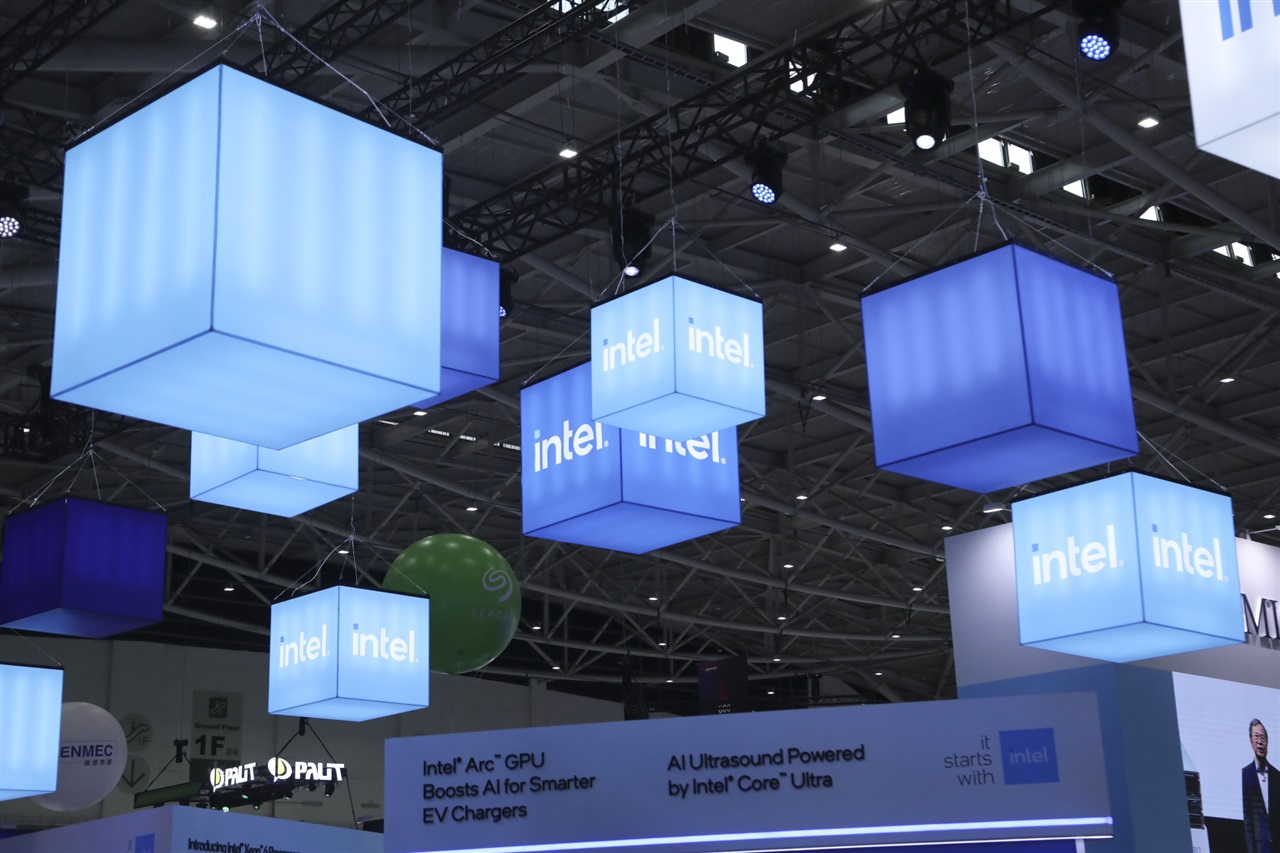
Intel has recently announced an important stride in the automotive industry with the introduction of a discrete graphics processing unit (dGPU), designed especially for automotive artificial intelligence (AI). Known as the Intel Arc graphics for automotive, this innovation is indicative of the tech giant’s commitment to advancing vehicle technology and AI integration.
### What the Intel Arc Graphics for Automotive Offers
The Intel Arc graphics for automotive is tailored to enhance the capabilities of in-vehicle systems. This specialized dGPU is engineered to process complex AI workloads which are essential in managing the vast amounts of data necessary to support advanced driver assistance systems (ADAS), autonomous driving, and in-car entertainment.
When it comes to automotive AI, robust processing power is crucial for real-time decision making. Intel’s offering is designed to deliver such power, ensuring that vehicles can make swift and accurate decisions in dynamic driving environments. This is particularly significant when negotiating complex road scenarios or reacting to unexpected events.
### The Timeline for Deployment
Commercial deployment of Intel’s discrete GPU for automotive AI is anticipated to begin around 2025. This timeline suggests that the company is on the verge of introducing a new era of AI-driven vehicles that offer advanced functionalities and potentially more robust safety features than ever before.
### The Impact on the Automotive AI Market
Intel’s foray into the automotive AI space with its discrete GPU is poised to have a notable impact on the industry. The integration of GPUs in vehicles has become increasingly important as manufacturers push for greater levels of automation and more sophisticated in-vehicle experiences. By offering a purpose-built dGPU for automotive applications, Intel could be setting a new standard for performance and capabilities within the industry.
### Practical Applications and Trends
For consumers and professionals alike, the arrival of Intel’s automotive dGPU will likely herald a host of new vehicle features and improvements. Increased processing power can lead to more responsive ADAS, enabling vehicles to navigate traffic with greater finesse, and make safer decisions on the road.
Furthermore, as in-car entertainment systems become more advanced, an automotive dGPU like Intel’s could significantly enhance the visual and interactive experiences for passengers. We could see a trend towards more sophisticated games, augmented reality features, and interactive interfaces that were previously not possible in a mobile environment.
For the automotive industry, embracing this technology means staying at the forefront of innovation. Automotive manufacturers can apply the advancements offered by the Intel Arc graphics for automotive to craft vehicles that are not only safer and more efficient but also provide a more engaging and futuristic user experience.
### Looking Towards the Future
The release of this discrete GPU suggests a significant leap toward a fully interconnected and autonomous automotive environment. Companies invested in the future of transportation can begin planning how to incorporate such technology into their vehicles and systems, while consumers can look forward to a new generation of smart vehicles with enhanced AI capabilities.
With Intel’s commitment to powering the next wave of automotive intelligence, it’s an exciting time to watch how this technology will unfold and influence the way we interact with vehicles. Keeping an eye on developments related to this technology and considering its implications for all aspects of vehicle design and functionality will be crucial as we approach 2025 and beyond.