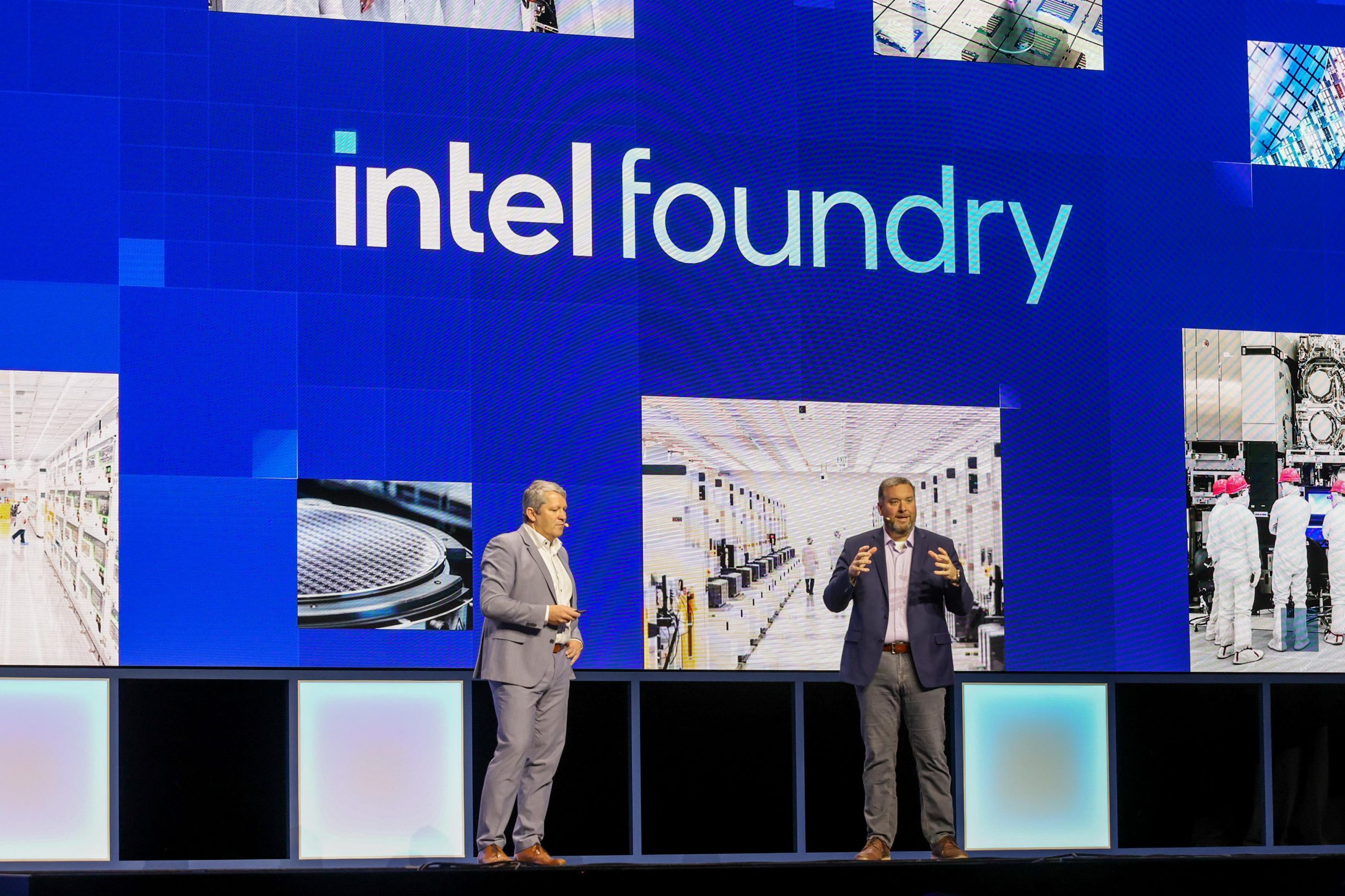
Intel has unveiled a significant milestone with its next-generation 18A process entering the “risk production” phase, signaling that the era of mass production is nearing. This news has sparked excitement and anticipation in the tech community, as it promises a massive leap in innovation and capability for the tech giant.
The 18A process is poised to make its debut in Intel’s upcoming Panther Lake SoCs, with broader adoption anticipated by 2026. Intel Foundry Services (IFS) has faced its share of challenges over the years. However, the promise of the 18A node offers a glimpse of hope and renewal. During the recent Intel Vision 2025 conference, the company’s announcement lifted spirits, indicating that after delays and uncertainty, Intel is back on track with a path to full-scale production by the end of the year.
But what exactly does “risk production” entail? It’s not quite mass production yet, but rather a crucial stage where small-scale production begins to test the manufacturability and performance of the new process. This phase is essential to identify and address any flaws before opening the floodgates to mainstream markets. In essence, it prepares the technology for the rigorous demands of mass manufacturing, ensuring that once fully validated, the scale-up to mass production can proceed smoothly.
Intel’s confidence in pushing the 18A process into risk production suggests that they have overcome previous hurdles and are on course for a successful market deployment. The anticipated introduction of the Panther Lake SoCs in the market by 2026 will be a significant moment to witness the practical implications and performance of the 18A technology.
The 18A process boasts noteworthy advancements, particularly its implementation of BSPDN (Backside Power Delivery), which revolutionizes how power is distributed across the chip. With high-density versions reporting a macro bit density of 38.1 Mb/mm², the 18A process showcases potential that could redefine industry standards and bolster Intel’s ambition to dominate the foundry landscape.
With burgeoning optimism and technological prowess, Intel is making strides to assert its position as a leading player in semiconductor innovation. As developments continue, all eyes will be on how this new process transforms the competitive landscape and delivers on its promising potential.