Intel says its graphics roadmap is staying the course, even as it teams up with NVIDIA on next‑generation x86 platforms. The companies announced a collaboration to build client and data center chips that marry Intel’s CPU expertise with NVIDIA’s GPUs, including RTX-class graphics for PCs and accelerators for AI/HPC. That naturally raised a question: does Intel still plan to make its own GPUs? The short answer is yes.
An Intel spokesperson clarified that the partnership complements Intel’s plans and that the company will continue to offer its own GPU products. That reassurance matters because Intel’s graphics portfolio now spans two fronts: Gaudi and the “Shores” family for enterprise AI, and Arc for client and commercial systems. After a bumpy start, those lines have carved out a reputation for strong value in their respective segments.
On the client CPU side, Intel’s 3rd Gen Xe architecture, Xe3 “Celestial,” is set to debut with Panther Lake. Given timing, it’s unlikely those chips will carry any NVIDIA DNA. Looking a step ahead, next‑year’s Nova Lake could be where we first see hybrid designs that pair Intel CPUs with NVIDIA GPUs in select SKUs.
Rumors around Nova Lake‑AX position it as a direct challenger to halo‑class SoCs like AMD’s top Ryzen AI offerings. Early chatter points to a larger iGPU, more cache, and packaging innovations, with some claims of up to 48 Xe3 iGPU cores under consideration. With NVIDIA now in the picture, Intel could explore variants that swap in an RTX GPU—potentially Blackwell‑based or a future client architecture—on premium models. Nothing is confirmed, but the opportunity is on the table.
If that sounds familiar, it’s because Intel once tried a similar approach with Kaby Lake‑G, which combined an Intel CPU with an AMD Radeon RX Vega GPU in a multi‑chiplet package. While Kaby Lake‑G struggled with driver cadence and didn’t become a long‑term fixture, it helped pave the way for today’s chiplet‑heavy designs. This time around, Intel can lean on advanced packaging like Foveros to stitch together compute, I/O, and GPU silicon more efficiently—an essential piece if Intel and NVIDIA co‑engineer high‑end PC and AI platforms.
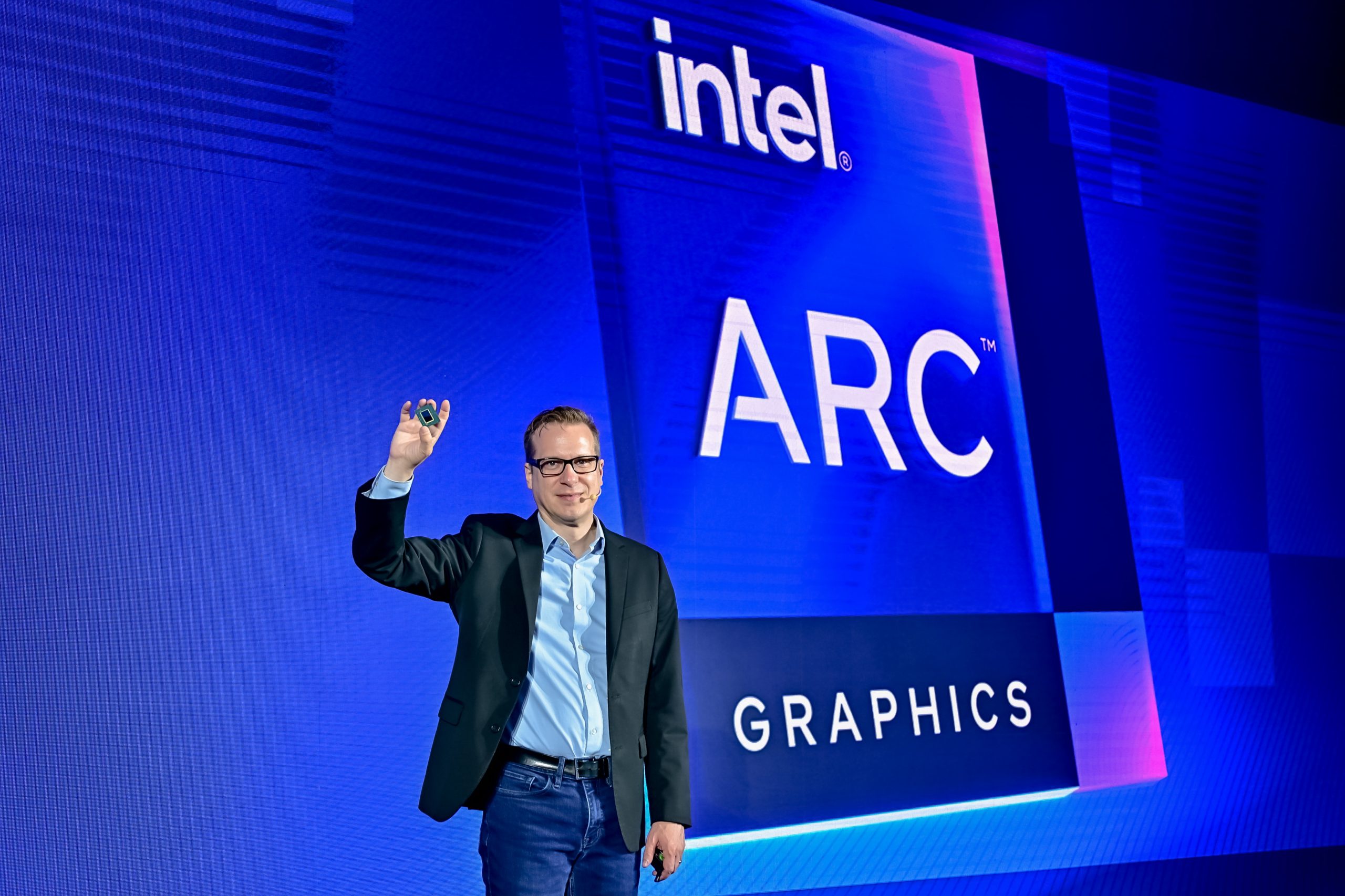
Expect a split strategy: flagship “halo” designs could feature NVIDIA RTX GPUs, while mainstream and performance‑centric models stick with Intel’s own Xe architectures (Xe3 and later Xe4). That naturally leads to the discrete question: what about Arc? Intel isn’t walking away from discrete graphics. Handing that space entirely to a direct rival would be a strategic misstep—especially with one competitor’s discrete market share reportedly around 94%. Intel continues to iterate on Arc, and rumors point to a larger Battlemage desktop/laptop GPU, the BMG‑G31, though official details remain under wraps. Intel has been known to keep its discrete family quiet until close to launch, so patience may be required.
On the AI side, NVIDIA’s CEO highlighted the role of interconnects like NVLINK in future systems. How those technologies intersect with Intel’s Jaguar Shores and broader AI accelerator lineup is still unknown, but the collaboration hints at ambitious multi‑chip architectures aimed at scale‑out AI and HPC.
Bottom line: Intel’s partnership with NVIDIA opens the door to some very intriguing hybrid PCs and AI platforms, without sidelining Intel’s own GPUs. Watch for Panther Lake with Xe3 to arrive first, followed by Nova Lake where co‑developed configurations could start to appear. Product unveilings are most likely to align with major milestones and trade shows such as CES, with broader rollouts expected into 2026. For now, the message is clear—Intel’s GPU efforts continue, from integrated Xe to Arc discrete, even as the company explores new territory with NVIDIA.