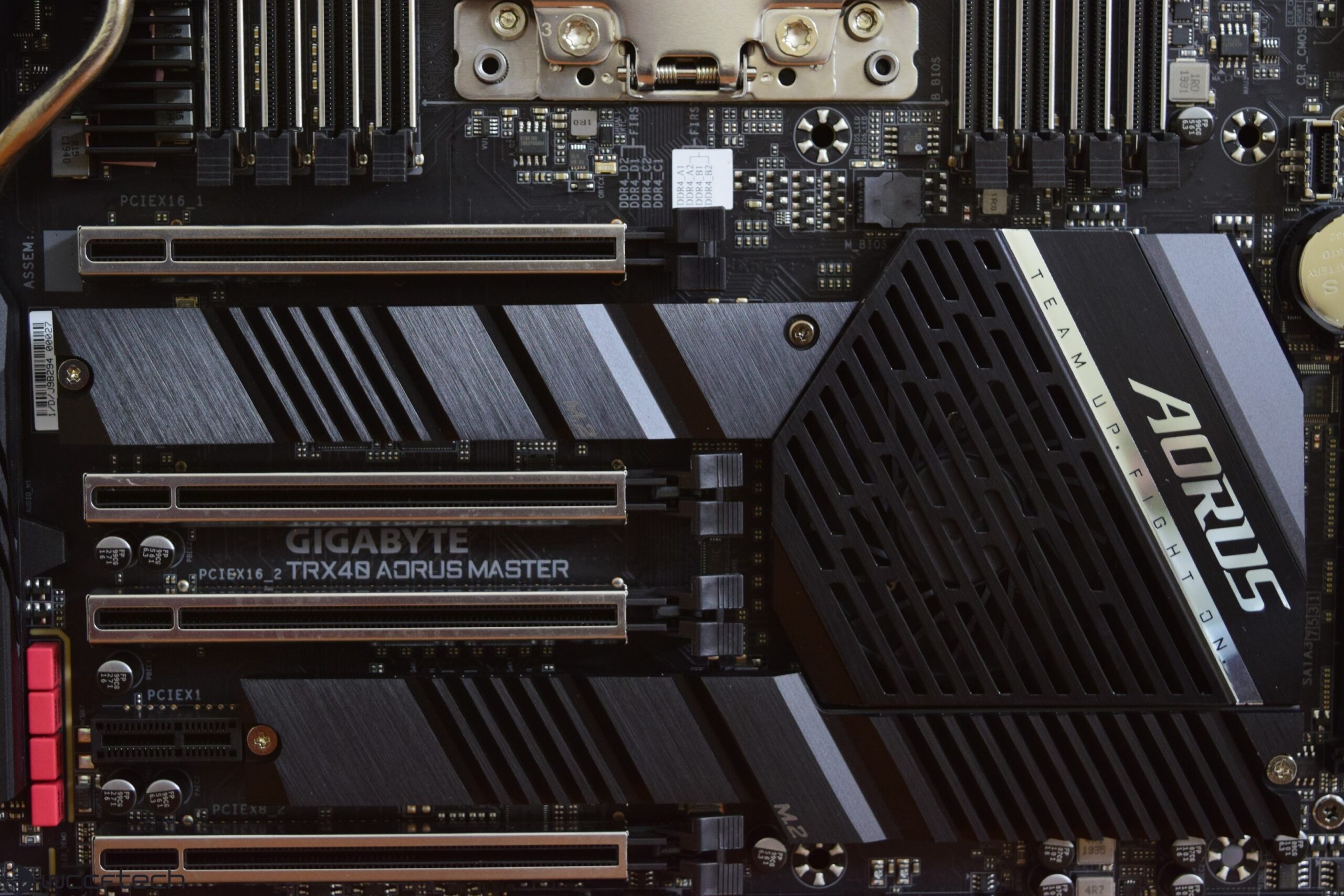
The progression of PCIe standards is headed towards faster data transfer speeds with the introduction of the PCIe 6.0 and PCIe 7.0 technologies. Yet, as these advancements continue, dealing with the heat generated by these increased speeds has become a critical challenge. To address this, Intel has introduced an innovative method to manage high temperatures affecting next-generation PCIe connections.
New Cooling Mechanism to Manage PCIe Heat
Intel’s latest approach, revealed through a Linux driver update, focuses on thermal management for PCIe interfaces that would be operational in Gen 6.0 and beyond. Unlike traditional cooling solutions which are not feasible for direct application on PCIe links, this method involves “thermal throttling” of the PCIe lanes.
An Intel engineer, Ilpo Järvinen, explained the update would involve a bandwidth controller and associated cooling driver built into the thermal core. These components are designed to monitor the temperature and, if necessary, scale down the PCIe link speeds to prevent overheating.
How Intel’s Solution Works
The updated driver functions by pairing each PCIe link with a “cooling device,” enabling it to control transfer speeds. This feature kicks in when temperatures reach levels that could threaten the stability or functionality of the hardware. The cooling device has the capability to reduce the link speed, thus moderating thermal conditions. While this concept is not currently applied to existing PCIe standards, it is intended for upcoming releases, targeting the management of much higher transfer rates and associated heat generation.
Performance Considerations and Future Impact
While some users might be concerned that this system could cause performance drawbacks due to reduced speeds, it’s notable that these changes are forward-looking and will not affect current hardware. There is still time for the technology to refine before its predicted implementation accompanying future PCIe generations.
Future PCIe Standards and Performance Expectations
Looking ahead, the PCI-SIG has announced specifications for PCIe 7.0, slated for launch around 2025, with widespread market adoption anticipated by the end of the decade. Servers are expected to be among the first systems to take advantage of the new standard. With the announced PCIe 7.0 set to deliver a staggering 512 GB/s bandwidth and a 128 GT/s raw bit rate — twice that of PCIe 6.0 and four times the current PCIe 5.0 — cooling innovations like Intel’s are poised to become increasingly significant. As the industry pushes the envelope on transfer rates, the demand for effective thermal regulation through intelligent mechanisms will undoubtedly rise.
In summary, Intel’s PCIe thermal throttling is advancing the conversation on how to sustain the reliability and performance of future high-speed PCIe connections while managing the inevitable increase in heat. This preventative measure is a hallmark of the tech industry’s proactive stance on addressing challenges before they become critical issues, ensuring that data transfer can continue to accelerate without compromising the integrity of the hardware involved.