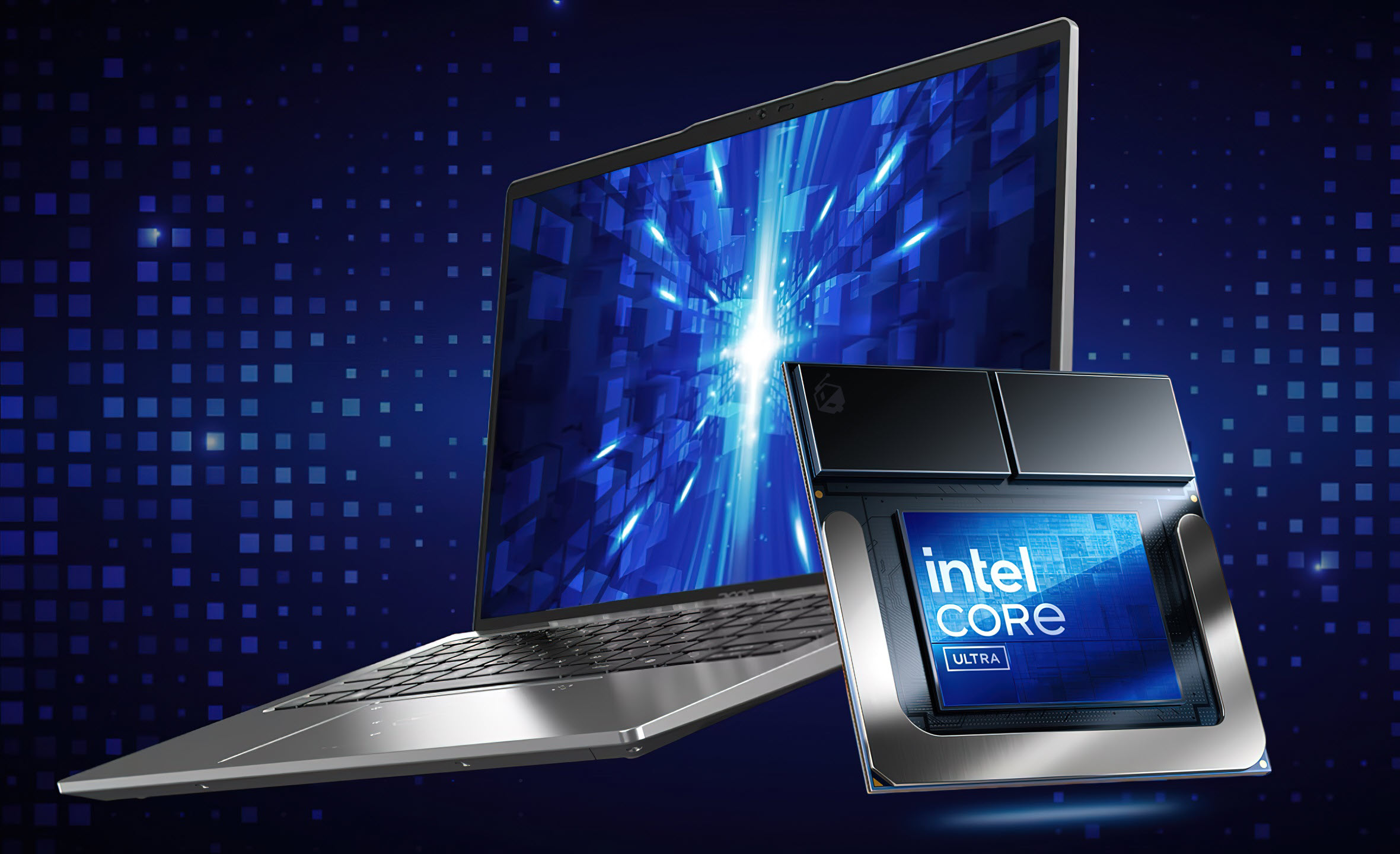
A Vietnamese YouTuber recently benchmarked the Intel Core Ultra 7 268V “Lunar Lake” chip, revealing its outstanding performance in various tests and its potential as an 8-core, 8-thread CPU. Launched on September 3rd, the Lunar Lake Core Ultra 200V CPUs are set to debut in laptops next week, featuring a combination of Lion Cove P-Cores and Skymont E-Cores designed for maximum power efficiency.
In a detailed review, the Vietnamese YouTube channel ThinkView tested the Intel Core Ultra 7 268V “Lunar Lake” CPU on a Dell XPS 13 laptop. This setup was pitted against its rivals from AMD and Apple, and the results were impressive. The 268V chip demonstrated superior single-core performance, surpassing AMD’s Ryzen AI 9 HX 370 and Apple’s M3, all while maintaining better power efficiency compared to the Ryzen AI 9 HX 370. However, Apple’s M3 still holds the crown for efficiency.
Here’s a snapshot of the benchmark performance in the Cinebench R23 Single-Core test:
While the Core Ultra 268V excelled in single-core tests, it didn’t quite match up to the multi-threaded performance of the Ryzen AI 9 HX 370 and Ryzen Z1 Extreme, which boast significantly more cores and threads—24 and 16, respectively, compared to the 8 threads of the 268V. Despite this, the Core Ultra 268V’s balanced performance makes it ideal for low to medium workloads.
In the TimeSpy graphics test, the Core Ultra 268V once again shined with a score of 3715, surpassing the Ryzen AI 9 HX 370’s 3562. The Arc 140V GPU in the 268V proves to be a strong competitor, capable of handling most games without issues. However, it’s important to note that while the Dell XPS 13 was limited to a 17W mode, competing laptops with the Ryzen AI 9 HX 370 could be configured to higher TDPs, affecting overall gaming performance.
For instance, the reviewer set a Vivobook S14 with the Ryzen AI 9 HX 370 to 55W, enabling it to achieve over 50 FPS in Far Cry 6 and 100+ FPS in Black Myth: Wukong, while the Dell XPS 13, operating at 17W, managed only mid-30s FPS and around 50 FPS, respectively. This underscores the importance of the CPU+GPU combination in determining overall performance.
The Core Ultra 268V, despite its impressive integrated GPU, is not a substitute for a high-performance CPU+GPU combo required for intensive tasks like gaming, 3D rendering, or video editing. However, the Lunar Lake chips are poised to be excellent for handheld devices, such as the upcoming MSI Claw 8, and one can anticipate further improvements in gaming performance with future driver updates for Core Ultra 200V’s Xe2 GPUs.
Battery life was also a key focus in the review. A Dell XPS 13 with a 55Wh battery managed to run for approximately 5.30 hours, which, while decent, fell short of Intel’s claims. Higher battery capacities, such as over 70Wh, would likely extend this runtime modestly.
To sum up, the Lunar Lake chips are exceptional for light to medium workloads, but users seeking to tackle more demanding tasks might find AMD’s Strix Point lineup to be a better fit for their needs at the moment.