After weeks of swirling rumors about potential solutions to bolster Intel’s faltering financial state, CEO Pat Gelsinger has officially communicated to all employees about the decisive steps needed to navigate through these turbulent times.
Gelsinger begins by sharing insights from a recent meeting with the company’s Board of Directors, which identified three critical areas to focus on for Intel’s recovery:
1. Capitalizing on the foundry business, especially leveraging the nearly production-ready 18A nodes.
2. Creating a more competitive cost structure and implementing a substantial $10 billion savings plan discussed earlier.
3. Streamlining the product portfolio to maximize the value of the X86 platform across client, edge, and data center markets, while integrating the AI accelerator segment complementary to the x86 platform.
Jumpstarting these initiatives, Intel has unveiled two major chip manufacturing deals touting the utility of the 18A nodes. A significant collaboration with Amazon Web Services will see Intel producing AI fabric chips for Amazon using 18A, 18AP, and 14A nodes, as well as more Xeon Scalable processors built on Intel 3. Additionally, Intel will receive up to $3 billion in direct funding under the CHIPS and Science Act to enhance the domestic chip supply chain for the U.S. government’s Secure Enclave.
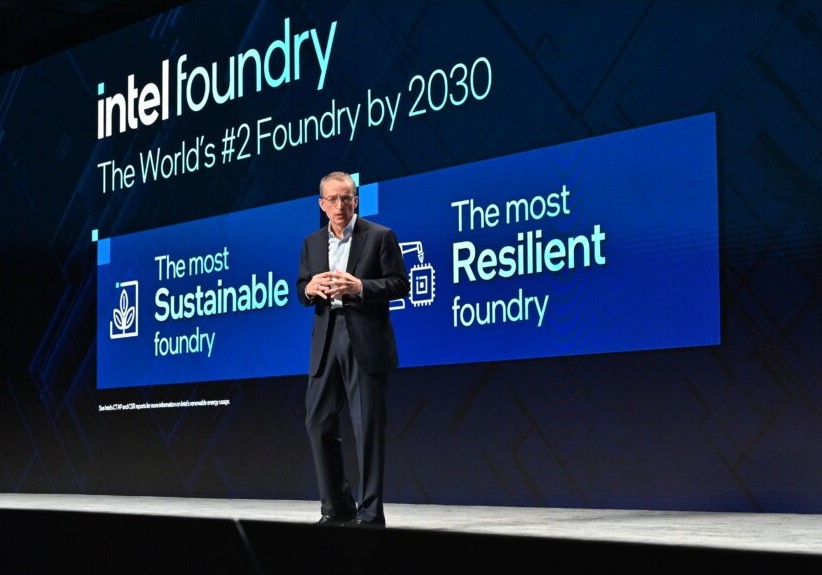
A monumental step towards financial stability is the announcement of Intel’s foundry division becoming an independent subsidiary. Since Gelsinger assumed the helm as CEO, there have been whispers of a foundry spin-off. Now, due to financial pressures, this rumor materializes into reality. This new subsidiary structure should confer vital benefits such as tax advantages, loss limits, and enhanced transparency for future foundry customers and suppliers. The foundry division, though independent, will retain its current leaders who will report directly to the CEO and will be overseen by a separate board of directors.
In light of current circumstances, Intel will delay the opening of new production plants in Poland and Germany by about two years. Meanwhile, the Irish fabrication facility will continue as the main European hub, and a new advanced packaging factory will be added to the Malaysian site. Planned expansions in Arizona, Oregon, New Mexico, and Ohio remain on schedule.
Furthermore, Gelsinger revealed a workforce reduction plan involving the layoff of 15,000 employees, aiming to save approximately $10 billion. This move, combined with the partial sale of the Altera stake, is intended to improve the company’s balance sheet and liquidity in forthcoming quarters.
The steps outlined by Gelsinger reflect a strategic and determined approach to steer Intel back to financial solidity and maintain its competitive edge in the tech industry.


