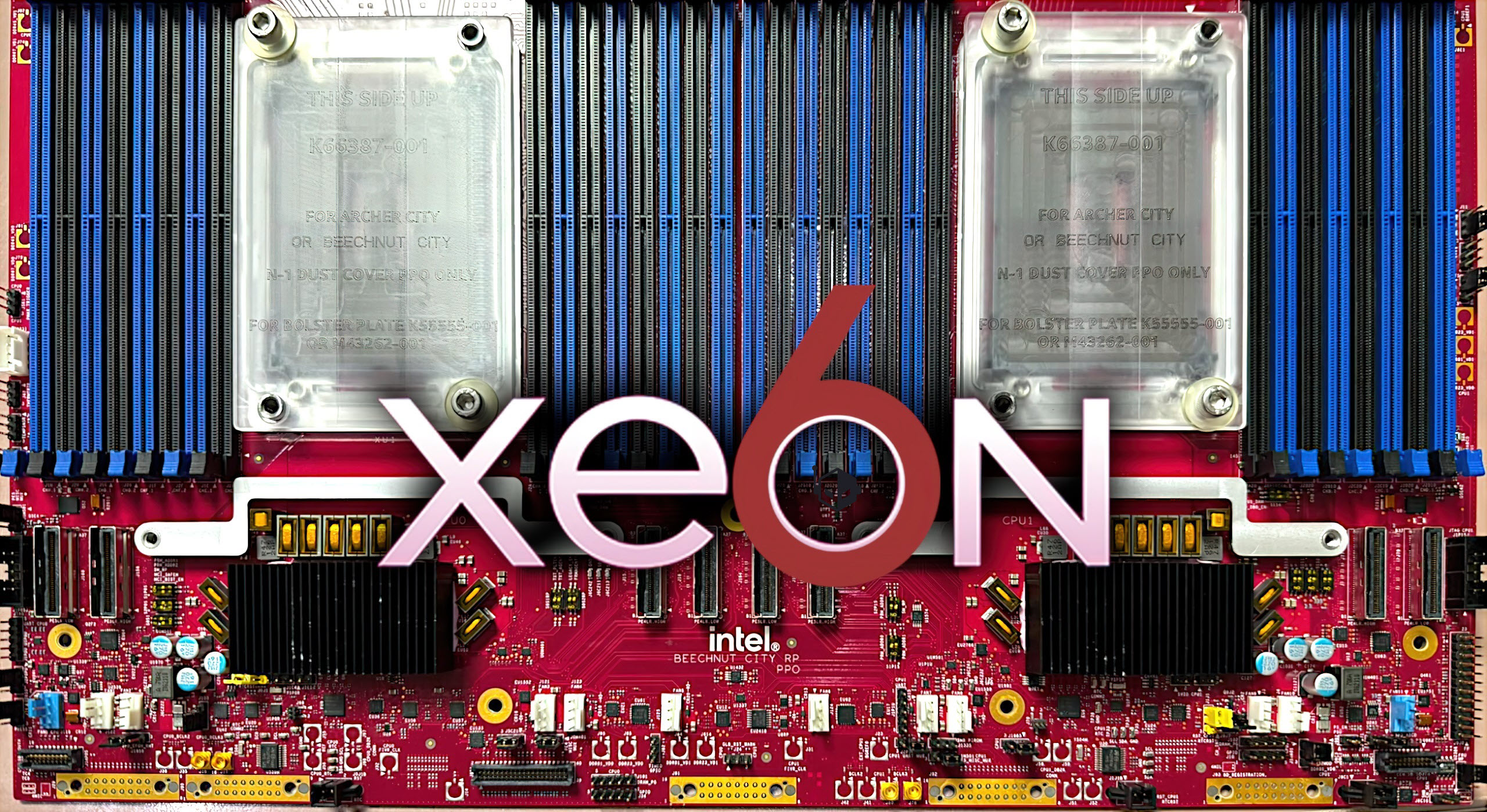
Intel is gearing up to launch its next-generation Xeon processors, and a recent leak has provided us with a glimpse of what to expect from these cutting-edge CPUs. The spotlight falls on the LGA 4710 socket reference platform, known as Beechnut City, which is set to support the upcoming Xeon 6 Granite Rapids and Sierra Forest CPUs.
These new Intel Xeon processors will be adopting a fresh “Xeon 6” family codename, divided into P-Core and E-Core configurations. Although specific model details are not yet revealed, we anticipate the Xeon 6000 series will include Platinum, Gold, Silver, and Bronze tier CPUs to cater to a range of performance and budgetary requirements.
Delving deeper into the Xeon 6 family, we can expect to see SKUs like:
– Xeon 6 6900E/P for the highest-end Platinum Series
– Xeon 6 6700E/P representing the Gold Series
– Xeon 6 6500P for the mid-range Silver Series
– Xeon 6 6300P as the entry-level Bronze Series
The Beechnut City motherboard, intended for evaluation and testing, showcases a dual-socket configuration surrounded by a substantial 32 DDR5 DIMM slots setup. This setup is not just about capacity but also about performance, with support for an impressive 4 TB and speeds up to 6400 MT/s – a boon for businesses that demand high-performance computing.
Additionally, the motherboard features two distinct sockets: the LGA 4710 and the larger LGA 7529 for XCC CPU SKUs. Sierra Forest CPUs are anticipated to offer a Multi-Chip Module (MCM) design with as many as 288 cores, while the top-tier Granite Rapids chips are expected to include three compute tiles.
The Beechnut City platform is set to deliver robust I/O capabilities, such as 8-channel memory support and a generous 88 PCIe Gen5 lanes. For those seeking more, the Avenue City platform will cater to even higher demands with 12-channel memory and 96 PCIe Gen5 lanes. Both platforms will also support MCR memory with speeds up to 8000 MT/s.
Intel’s rollout for these powerful processors will start with Sierra Forest later in the year, followed by Granite Rapids in the second half of 2024. While specifications for the upcoming Xeon generations are subject to change, the preliminary details suggest Intel is pushing the envelope in the data center and high-performance computing segments, rivaling AMD’s EPYC offerings and keeping pace with the evolving demands of modern enterprise computing.
For businesses and data centers, these advancements from Intel could mean significant boosts in processing power, efficiency, and scalability, driving forward the capabilities of cloud computing, AI, and complex data analysis. With the tech world eagerly awaiting the official release, these leaks paint an exciting picture of what the future holds for Intel’s Xeon lineup and enterprise computing technology as a whole.