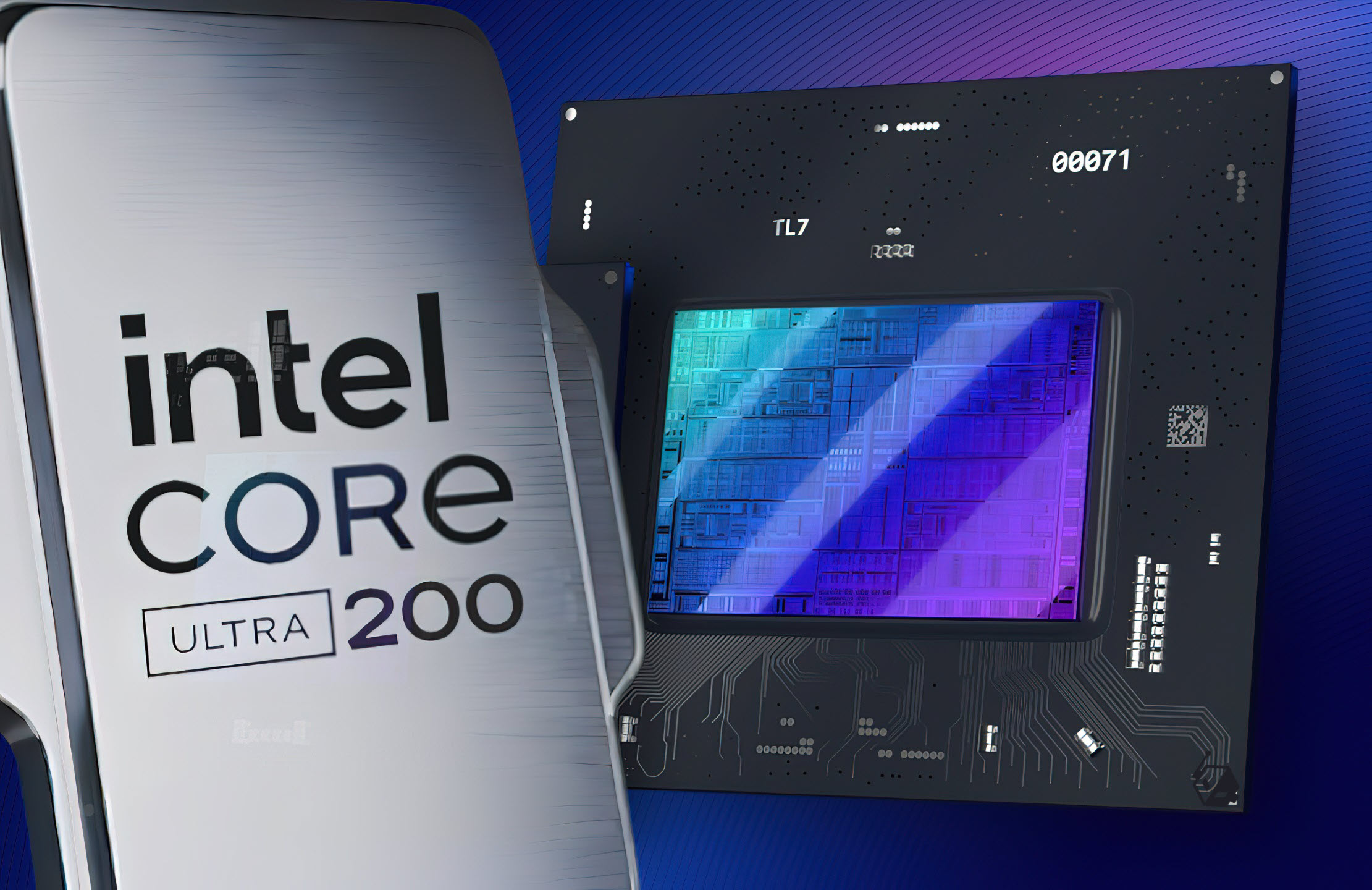
The buzz around Intel’s upcoming Arrow Lake Desktop CPUs is growing, especially with the first benchmarks of their integrated GPU (iGPU) now making waves. Intel’s Arrow Lake CPUs, set to feature the next-gen Lion Cove P-Core and Skymont E-Core architectures, are expected to elevate performance benchmarks. But there’s more excitement as these CPUs are also equipped with Alchemist Xe-LPG iGPUs boasting up to four Xe cores.
These entry-level iGPUs are designed not just for typical display functions but also to assist users with troubleshooting. This puts them in a comparable position to AMD’s Ryzen 7000 and 9000 series, which also sport iGPUs—two compute units modeled on the RDNA 2 IP (Radeon 710M).
Geekbench 6 has recently leaked the first benchmarks for these integrated GPUs, showcasing their potential. The tests were performed using an Intel Core Ultra 9 285K CPU, which, alongside the Core Ultra 7 265K, made headlines in recent benchmark reports.
The Arrow Lake iGPU is modest in scope, featuring just four Xe cores with a clock speed of approximately 1850 MHz. For these tests, DDR5-5600 memory was used, although performance could potentially improve with faster memory kits as memory bandwidth plays a crucial role in GPU performance.
In terms of benchmarks, the Intel Arrow Lake “Alchemist Xe-LPG” iGPU achieved 19,993 points in OpenCL tests and 19,551 points in Vulkan tests. This places its performance on par with the GTX 1050 Ti and close to the Radeon 760M, which has eight compute units. Although the Radeon 760M outperforms the Xe-LPG by about 30% in Vulkan tests, the Intel iGPU still shows impressive results considering its fewer compute units.
When pitted against the Radeon 710M iGPU found in Ryzen Desktop CPUs, Intel’s Xe-LPG demonstrated a 2.5-2.7x lead in performance. Even the Radeon 740M, with its four compute units, falls short in comparison. These early findings indicate that Intel’s Xe-LPG iGPUs in Arrow Lake Desktop CPUs could deliver solid performance, particularly appealing for those seeking effective yet relatively budget-friendly graphics solutions.
Bear in mind, however, that these results are likely achieved without final optimizations and drivers for the integrated graphics. Therefore, we can anticipate even better performance once the CPUs are officially launched next month.
Stay tuned as more information unfolds and prepare for what could be a game-changing release in the desktop CPU market.