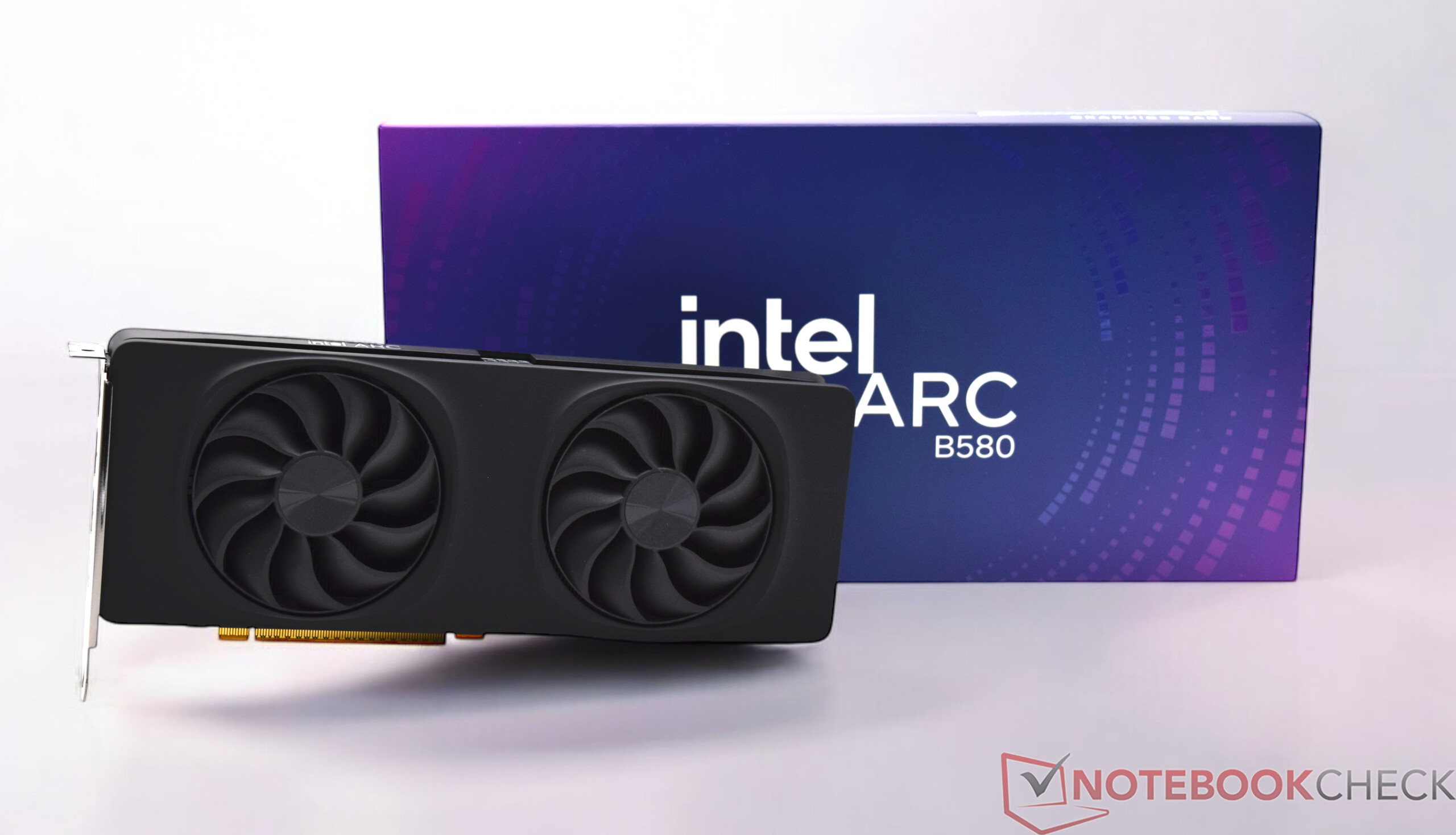
Intel Arc B580 Rumored to Face Uncertain Future as AI GPU Demand Surges
Intel’s Arc B580 graphics card may be heading toward an early exit from the consumer GPU market, according to a new rumor circulating in the PC hardware community. The speculation suggests Intel could shift focus away from its Battlemage gaming GPU and prioritize more profitable professional graphics cards designed for workstation and AI inference workloads.
The report claims Intel is considering moving the Arc B580 toward end-of-life status as demand grows for its Arc Pro series. The key reason appears to be simple: professional GPUs can deliver stronger margins, especially as businesses continue investing heavily in AI hardware.
The Arc B580 is based on Intel’s BMG-G21 silicon, the same chip family used in several professional-grade Intel graphics products. This creates a possible resource conflict. If Intel can use that silicon in workstation cards that sell for higher prices and appeal to AI customers, the company may have less incentive to keep pushing the consumer-focused Arc B580 at its original budget-friendly price point.
The Arc B580 launched in December 2024 with a suggested price of $249. At the time, it attracted attention as one of the most competitive graphics cards under $300, offering performance that challenged mainstream Nvidia GeForce RTX xx60 and xx70-class products in several gaming scenarios. With 20 Xe cores and 12 GB of GDDR6 memory, the B580 was positioned as a strong value option for PC gamers looking for solid 1080p and 1440p performance without paying premium GPU prices.
However, availability has been a problem almost from the beginning. Even before the latest wave of AI-driven demand put more pressure on the graphics card market, the Arc B580 was often difficult to find at its launch price. Recently, listings have shown the card selling for around $330 in the United States, while some models in the United Kingdom have reportedly climbed to roughly £500. That is a major jump from the value-focused pricing Intel originally promoted.
The professional side of Intel’s GPU lineup may now be the bigger priority. The Arc Pro B50 and Arc Pro B60 use related Battlemage silicon, with the B60 offering 20 Xe cores and 24 GB of VRAM. Some board partners have also produced versions with up to 48 GB of VRAM, making them more attractive for memory-heavy professional and AI inference tasks.
This rumored shift reflects a broader trend across the graphics card industry. AI workloads have dramatically changed how chipmakers allocate high-performance silicon. Gaming GPUs were once the main battleground for graphics card makers, but AI servers, workstation systems, and enterprise inference hardware now offer far greater revenue potential.
A similar situation has been rumored around Nvidia’s top-end gaming GPU supply. Industry chatter has suggested that some high-end chips may be redirected toward professional RTX products instead of consumer GeForce cards. Nvidia has denied discontinuation claims for its flagship gaming GPU, but limited availability and elevated prices have kept the discussion alive among PC enthusiasts.
For Intel, the situation is especially important because the Arc B580 represented one of the company’s strongest recent wins in the gaming GPU market. After a difficult start with its first-generation Arc graphics cards, Intel’s Battlemage lineup showed real progress in performance, efficiency, and driver maturity. The B580, in particular, helped Intel gain credibility among budget-conscious gamers who wanted an alternative to AMD Radeon and Nvidia GeForce cards.
If Intel does scale back or discontinue the Arc B580, it could disappoint gamers who were hoping for more competition in the affordable graphics card space. The sub-$300 GPU market has already been under pressure, with many current-generation cards either launching above that range or selling at inflated prices due to limited stock. Losing one of the few strong-value options would make the market even tougher for PC builders.
That said, the rumor remains unconfirmed. Intel has not officially announced that the Arc B580 is being discontinued, nor has it confirmed any production shift toward Arc Pro models. Until the company makes a statement, the situation should be treated as speculation.
Still, the market signs are hard to ignore. Prices are rising, stock remains inconsistent, and AI-focused hardware continues to command massive demand. If the same silicon can be sold in professional cards with more VRAM and higher margins, Intel may decide that enterprise and AI customers are a better business target than budget gaming buyers.
For now, anyone interested in buying an Intel Arc B580 may want to keep a close eye on pricing and availability. If the rumor proves accurate, remaining stock could become harder to find, and prices may continue to drift above the card’s original value-oriented positioning.
The bigger picture is clear: the AI boom is reshaping the GPU industry. Consumer graphics cards are no longer competing only against other gaming products. They are now competing against workstation and AI hardware for the same silicon, production capacity, and business attention. If the Arc B580 becomes another casualty of that shift, it will be a strong reminder that the future of graphics cards is being shaped as much by artificial intelligence as by gaming performance.


