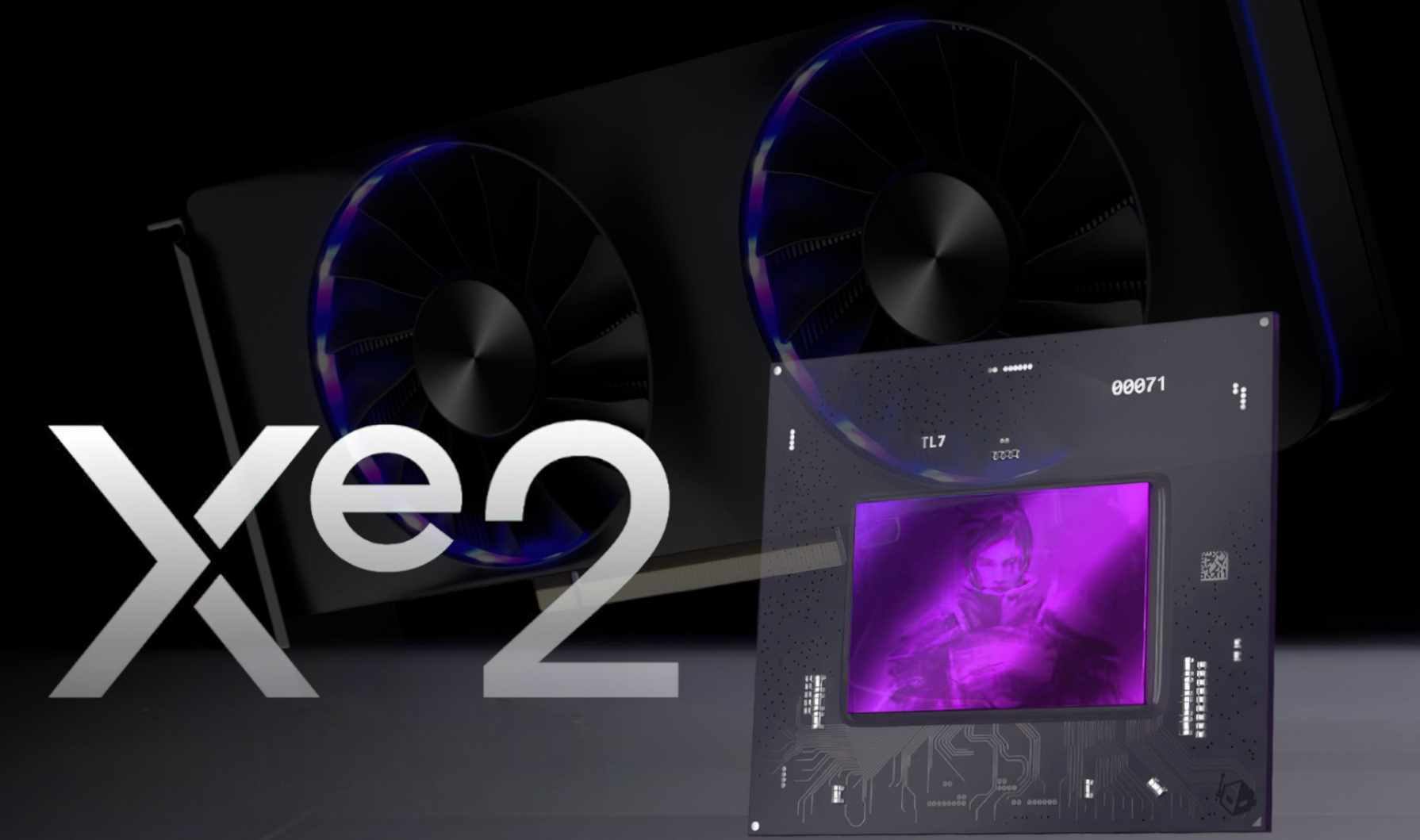
Intel’s eagerly anticipated Arc Battlemage product, the Arc B580 graphics card, has seemingly made its first appearance at a shipping depot, stirring excitement in the tech community. This sighting, noted in a shipping log from NBD.ltd, suggests that Intel’s efforts to penetrate the discrete GPU market are gaining steam, even if an official release date remains elusive.
The Arc B580, part of Intel’s next-gen Battlemage series, has been the subject of much speculation. While Intel has held its cards close to the chest regarding these graphics units, the recent leak offers a glimmer of confirmation for enthusiasts and industry watchers. The information was shared by an X user, who reported that the NBD shipping manifest listed an “INTEL BMG B580,” hinting at the forthcoming desktop-bound GPU powered by Intel’s Xe2 architecture.
Although details are sparse, it’s expected that the Arc B580 will cater to the mid-range market segment, potentially picking up where the Arc A580 left off. The Arc A580 was known for its competitive pricing under $200, offering an attractive price-to-performance ratio. This enhanced version, likely featuring Xe2-HPG architecture, promises to deliver improved capabilities compared to its predecessors.
Despite the strides Intel is making, the company faces formidable competition. NVIDIA’s high-end Blackwell cards dominate the market, and AMD plans to introduce its Navi 44 and 48 GPUs, targeting budget and mid-range requirements with its new RDNA 4 architecture. Intel, relatively new to the discrete GPU arena, still trails behind these giants after launching its first discrete line, the Arc Alchemist, just two years ago.
However, hopes are pinned high on the Battlemage series, which could potentially level the playing field. Currently, the Xe2 architecture is only implemented in the Lunar Lake series of mobile CPUs, providing them with Xe2-LPG integrated graphics. The upcoming standalone graphics lineup, building on the robust Xe2-HPG architecture, is expected to significantly outshine the existing Alchemist GPUs.
As Intel gears up for this new venture, speculation abounds about when they might publicly unveil more details. Rumors indicate that Intel could drop hints or make announcements toward the latter part of 2024 or early 2025. This timing aligns with the anticipated launch of new-generation GPUs from both NVIDIA and AMD. Enthusiasts will have to keep their eyes and ears open, particularly as the December 2024 timeframe draws nearer, to see if Intel is ready to introduce its latest desktop offerings to the market.