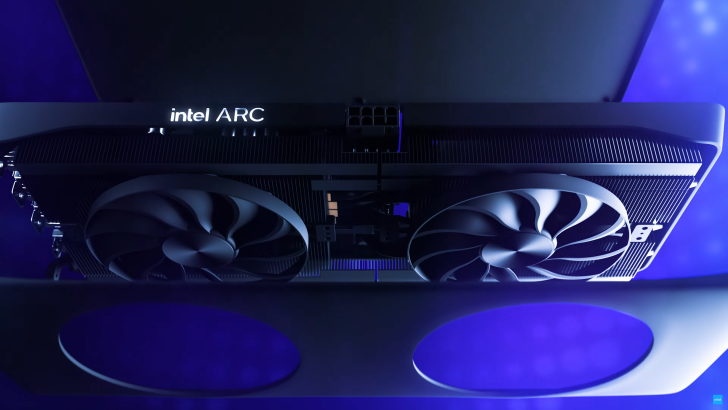
Intel appears to be stepping back from the high-end gaming GPU market with the apparent cancellation of its Xe2-based Arc Battlemage “BMG-G31” graphics cards. Initially, Intel had ambitious plans for these GPUs, promising configurations with up to 24 GB of VRAM. Reports had also flagged multiple variants in shipping manifestos, indicating the development of robust high-performance solutions.
However, recent insights from a reliable source, @Jaykihn0, suggest the future of Intel’s high-end GPU models has shifted dramatically. It seems that as of Q3 2024, Intel decided to discontinue the BMG-G31 series. Some dies may have shipped by late 2024, potentially for testing or evaluation, but plans for broader market release seem to have been shelved much earlier.
The BMG-G31 was anticipated to eclipse its predecessors, the B580 and B570, with a substantial die featuring 24-32 Xe2 cores, a 256-bit memory bus, and 16 GB of GDDR6 memory. Regarding the next-gen Celestial “Xe3” GPUs, no new developments have surfaced yet. The Xe3 architecture will eventually integrate into next-generation Intel CPUs, but as an integrated solution. The prospects for a discrete Celestial GPU remain unclear.
There’s still a glimmer of hope for enthusiasts that Intel could revive a high-end Battlemage GPU in the future. The case of the previously canceled, yet now forthcoming, Arrow Lake Refresh offers a precedent for such a possibility. Moreover, the insider suggests that both Xe3 “Celestial” and Xe4 “Druid” GPUs are slated for future discrete solutions, keeping the door open for more advanced Intel Arc GPUs.
In the meantime, Intel’s focus seems to be on delivering strong performance in markets where NVIDIA and AMD currently don’t have new offerings. The Arc B580 and B570 cards have gained attention for delivering substantial value in the absence of fresh competition from its rivals. The Battlemage architecture also ensures competitive integrated graphics options, holding its own against AMD’s latest RDNA 3.5 architecture.
While high-end enthusiasts might be disappointed by the current trajectory, Intel continues to aim for the broader gaming market with value-oriented offerings. Despite the uncertainty, there remains significant interest in Intel’s future releases, especially with the potential for new discrete gaming solutions in the coming years.


