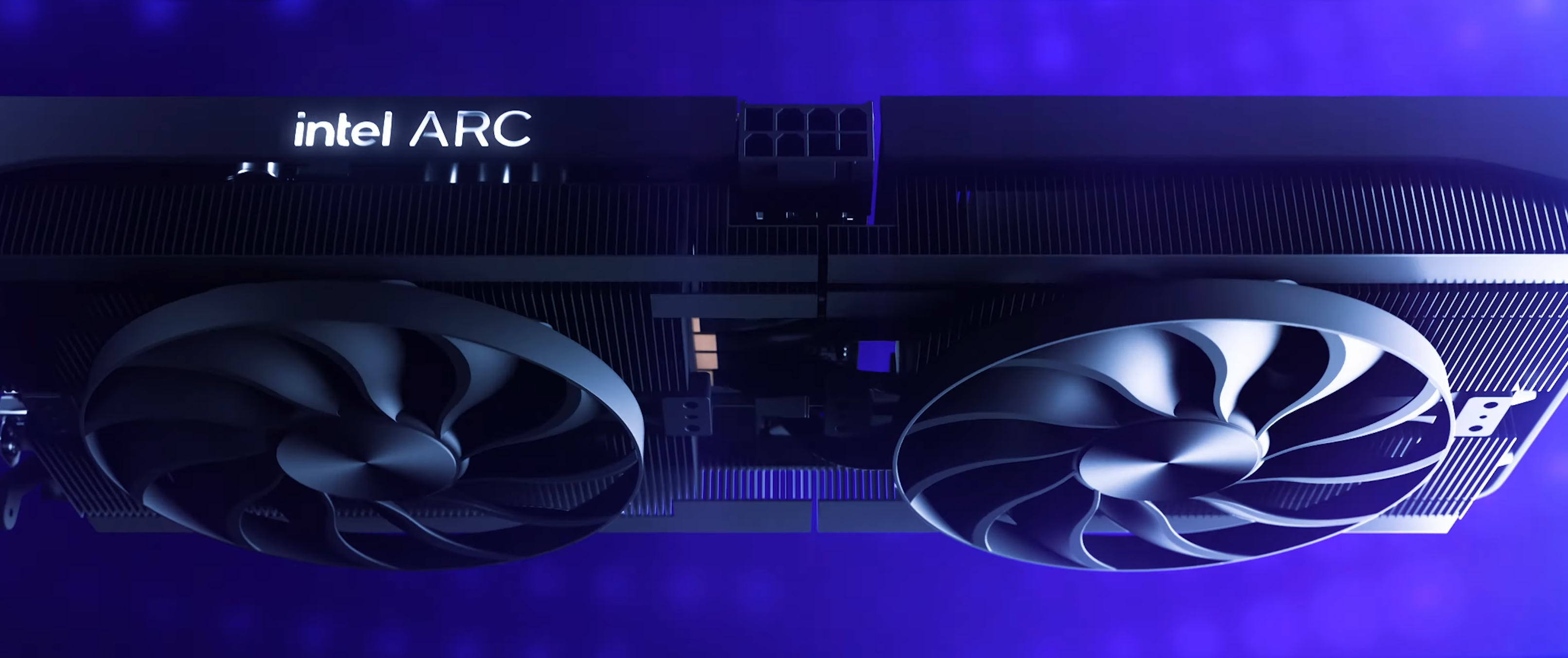
Intel’s next act for Arc graphics almost looked very different. Before budgets tightened and priorities shifted, the company mapped out an ambitious Battlemage roadmap with larger GPU dies, a radical 3D‑stacked “Adamantine” cache, and a high‑end Halo SoC strategy meant to push desktop and mobile gaming performance to new heights. Those halo products were ultimately cancelled, but recent prototype photos and insider chatter offer a clear picture of what could have been—and where Intel’s GPU plans are headed next.
The first-generation Arc Alchemist launch was rocky, but driver overhauls helped turn things around and set the stage for Battlemage. During Battlemage development, Intel designed a premium GPU die known as BMG‑G10, using a BGA 2727 package and targeting enthusiast-class cards. A prototype PCB that surfaced earlier this year clearly wasn’t built for the retail BMG‑G21 chip found in the Arc B580/B570. The board shows six GDDR6 memory pads, pointing to a 192‑bit memory interface, dual 8‑pin power connectors, a beefier VRM than shipping B‑series cards, and PCIe Gen5 readiness—hallmarks of a more power‑hungry, higher‑end design.
According to leaked details, the BMG‑G10 family was planned in two configurations:
– BMG‑G10 X4 (cancelled): up to 40 Xe2 cores
– BMG‑G10 X3 (cancelled): 28 Xe2 cores
For context, the launched Arc B580 tops out at 20 Xe cores using the smaller BMG‑G21 die, while another Battlemage die, BMG‑G31, is still expected with up to 32 Xe2 cores. The PCB’s BGA layout aligns with the larger G10 package, further supporting that this board was meant for a tier above the B580/B570 design.
Perhaps the most exciting piece of the original plan was Adamantine cache, a 3D‑stacked cache architecture placing a GPU die atop a base tile offering up to 512 MB of high‑speed cache. The approach is reminiscent of disaggregated, tiled designs seen in other Intel projects and was aimed at slashing memory latency, boosting effective bandwidth, and improving frame pacing in modern games. This Adamantine cache wasn’t just for discrete cards; it was also slated for Arrow Lake Halo SoCs, which would have paired advanced CPU and GPU tiles for top‑tier notebooks and compact systems. Both Adamantine cache products and Arrow Lake Halo were later shelved. Intel now plans to debut its first Halo‑class SoC with Nova Lake, integrating Xe3P graphics, and has left the door open for future Halo platforms that could mix GPU tiles from Intel and even NVIDIA.
If the high‑end Battlemage cards had shipped, we likely would have seen:
– A 192‑bit memory bus with higher pin speeds than current models
– Potential 24 GB configurations resembling workstation‑class capacities
– PCIe Gen5 support and stronger power delivery for higher clocks
Even with those halo parts off the table, Intel’s graphics push continues. Driver quality remains a highlight, with consistent performance gains and feature updates. The company recently announced XeSS 3 MFG, the latest step in its upscaling and frame‑generation roadmap. On the hardware side, a higher‑end Battlemage model—expected as Arc B770—has been rumored, while Nova Lake is set to bring Xe3P to next‑gen integrated and discrete solutions.
A quick look at Intel’s recent and upcoming GPU cadence helps frame the bigger picture:
– Arc Alchemist (Xe): 2022, mainstream discrete, TSMC 6 nm
– Xe+ refresh and Xe2 in iGPUs for recent mobile CPUs
– Arc Battlemage (Xe2): 2024–2025, extending into mainstream and upper‑midrange desktops
– Xe3 and Xe3P: targeted for Panther Lake and Nova Lake platforms, moving to advanced nodes and next‑gen features
– Longer‑term roadmaps: Celestial, Druid, and beyond, aiming at high‑end discrete gaming in later years
Bottom line: Intel was gearing up to challenge the upper tiers of the GPU market with a larger Battlemage die, up to 40 Xe2 cores, and a cutting‑edge 3D‑stacked Adamantine cache. Financial realities and leadership shifts forced a reset, cancelling those top‑end parts and the Arrow Lake Halo push. Yet the trajectory remains promising. Strong software momentum, ongoing Battlemage development, and Nova Lake’s Xe3P graphics suggest that the next wave of Intel GPUs could still deliver the performance leap enthusiasts have been waiting for.