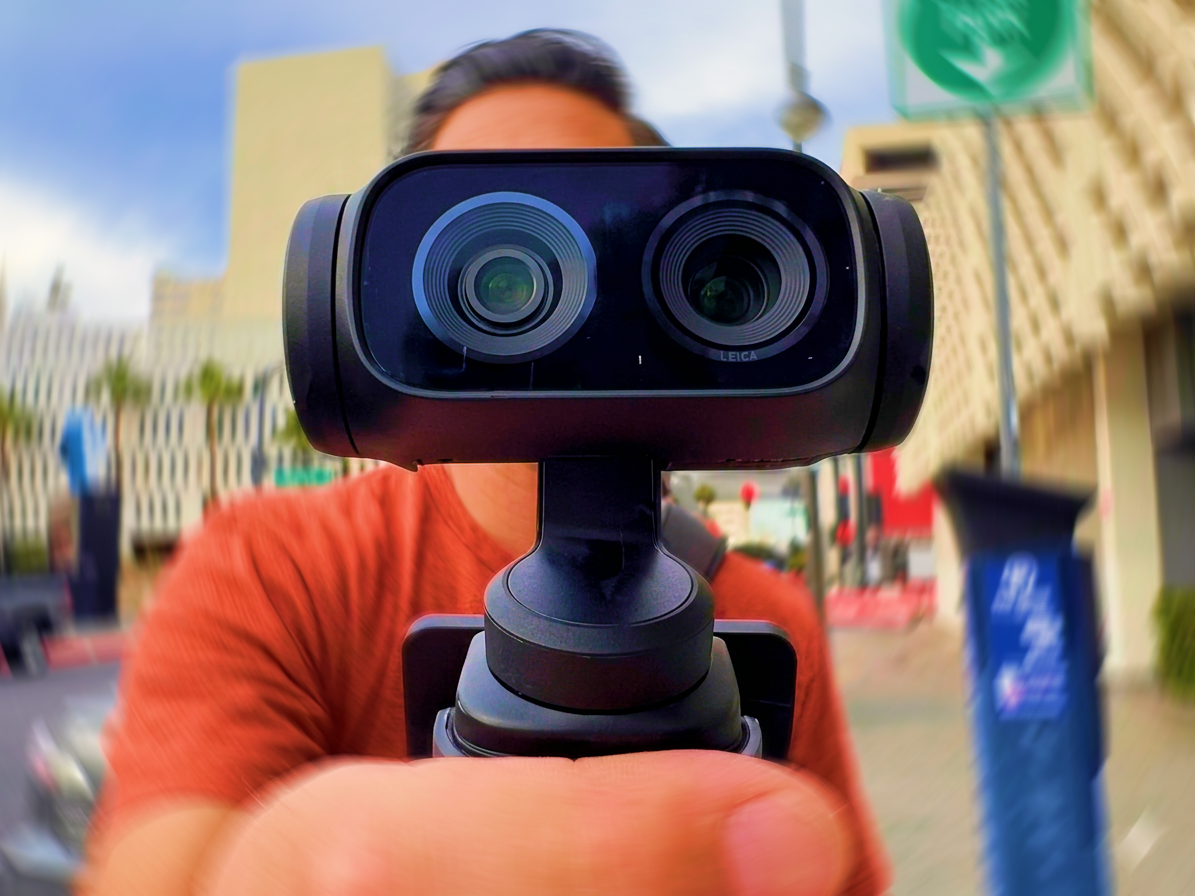
Insta360 is shaking up the handheld gimbal camera scene with its newly previewed Luna lineup, revealed at NAB 2026 in Las Vegas after months of steady leaks and speculation. Now that creators have shared official hands-on footage, it’s clear this isn’t a minor refresh meant to trail the competition. Insta360 is positioning the Luna series as a direct challenger to the DJI Osmo Pocket 4, with at least one feature that could become a major deciding factor for buyers.
Two models are in the works: the Insta360 Luna Ultra and the Insta360 Luna Pro. The Luna Ultra is the one shown in detail so far, featuring a dual-camera system. The Luna Pro is still being kept under wraps, but it has been confirmed as a single-camera model—putting it in the same product category as other compact gimbal cameras aimed at travel creators, vloggers, and everyday filmmaking.
Hands-on previews have confirmed several key Insta360 Luna Ultra specifications, and they’re built to appeal to anyone who cares about image quality as much as portability. The main camera uses a 1-inch sensor paired with a 20mm equivalent lens and a bright f/1.8 aperture. That aperture gives it a light-gathering advantage over rivals using f/2.0 optics, which can translate into cleaner low-light footage and a bit more flexibility in challenging lighting.
Insta360 also put a heavy focus on color and dynamic range. Creators largely showcased footage shot using iLog, Insta360’s new 10-bit color profile designed for grading and for preserving highlight and shadow detail. The company claims up to 14 stops of dynamic range, which is the kind of spec that will catch the attention of serious video shooters who want more natural skies, better skin tones, and footage that doesn’t fall apart when lighting gets contrasty.
The most attention-grabbing part of the Luna Ultra, though, is the second camera. While Insta360 hasn’t clearly published the focal length details yet, real-world sample clips have fueled talk of a 6x “optical quality” zoom range. If that performance holds up in final retail units, it could give the Luna Ultra a meaningful edge for creators who want both a wide, cinematic look and tighter framing options without relying on digital zoom.
Insta360 is also building out an accessory ecosystem to support the Luna launch. One of the early previews includes the Insta360 Mic Pro, a compact button-style wireless microphone. A standout touch is its integrated E-Ink display, which can be used for custom branding—an obvious nod to creators who want their gear (and on-camera setup) to look professional while staying minimal.
Both the Insta360 Luna Ultra and Luna Pro are expected to launch before the end of June 2026, with a late Q2 timeframe being the current window. Competition may heat up even further, too, as Oppo is rumored to be exploring its own entry into the gimbal camera category—suggesting that compact, stabilized creator cameras are becoming the next big battleground.
One more detail that could matter a lot to shoppers: the Luna cameras are widely expected to be available in the US, which may be especially appealing to buyers who want straightforward local availability for new camera gear in 2026.
With a 1-inch sensor, a brighter lens, 10-bit iLog, and a mysterious second camera that looks built for real zoom versatility, the Insta360 Luna Ultra is shaping up to be one of the most talked-about handheld gimbal cameras of the year. If Insta360 delivers on the performance shown in early hands-on footage, the Luna series could become a go-to option for vloggers, travelers, and filmmakers who want premium video quality in a pocketable stabilized camera.