Apple’s innovations are not limited to the sleek exterior designs of its products but extend to their intricate interiors as well. Recent disassembly of the latest M4 iPad Pro with an OLED display reveals how Apple integrates functionality with its signature style. Let’s delve into the recent findings from a teardown of the 13-inch M4 iPad Pro and examine the implications for both performance and repairability.
Thermal Management Innovations
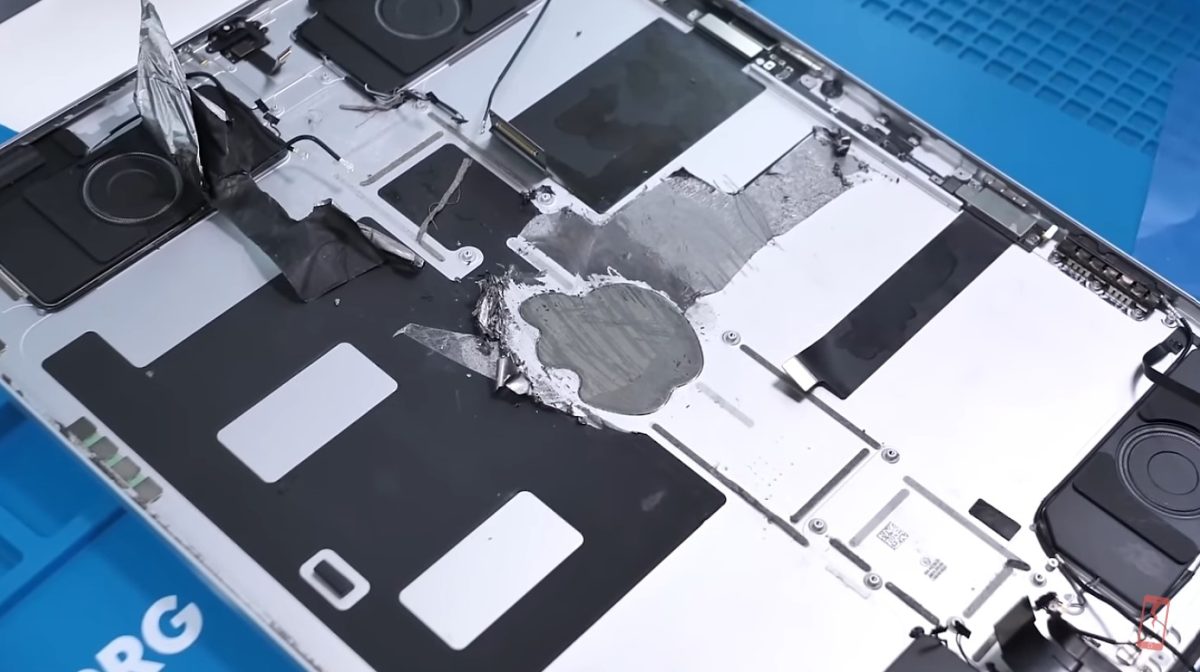
When slimming down its devices, Apple is faced with the challenge of maintaining functionality while enhancing or preserving the slimline aesthetic. One significant discovery from the teardown is the function of the Apple logo on the new iPad Pro. Traditionally just a design feature, the logo now plays a crucial role in the device’s thermal management. Underneath this iconic symbol lies a copper layer, which aids in heat dispersion in conjunction with a graphite sheet found within the chassis. This strategic placement allows for an improvement of thermal performance by approximately 20 percent, as the logo is situated directly over the new M4 chip, actively conducting and releasing heat.
Strategic Battery Placement and Capacity
The internal design of the M4 iPad Pro showcases a dual-battery system on either side, which is likely intended to enhance the ergonomic balance of the device. The total capacity of the batteries amounts to 39.99Wh or 10,209 mAh, ensuring that the tablet runs as long as the preceding mini-LED model.
Component Layout and Repair Considerations
The layout of the components within the M4 iPad Pro suggests a precise and compact assembly, typical of Apple products. The teardown demonstrates that disassembling the tablet is manageable, indicating favorable repair prospects for certain parts. Components unscrew and connectors disengage without an excessive challenge. This indicates the potential for easier repairs. Nonetheless, components that are soldered directly onto the motherboard may pose difficulty or impossibility in terms of replacement.
Focused Innovation on User Experience
As an improvement for user comfort and experience, Apple repositioned the Face ID and front-facing camera to the right side of the device, resulting in a more intuitive location for these features. Additionally, the iPad Pro’s magnets, which secure accessories such as the Apple Pencil Pro and the Magic Keyboard, have been redesigned to ensure better functionality and attachment.
In summary, the M4 iPad Pro teardown provides a glimpse into Apple’s continuous effort to marry form with function. Despite the challenge of housing state-of-the-art technology within an ultra-thin device, the company manages to do so while also considering factors such as heat management, battery life, and repairability. This attention to internal detail often goes unnoticed by users who mainly engage with the interface and design of the product but is key in providing a seamless and enjoyable user experience. As we anticipate further in-depth evaluations, these initial insights indicate that Apple remains committed to pushing the envelope in personal computing devices.