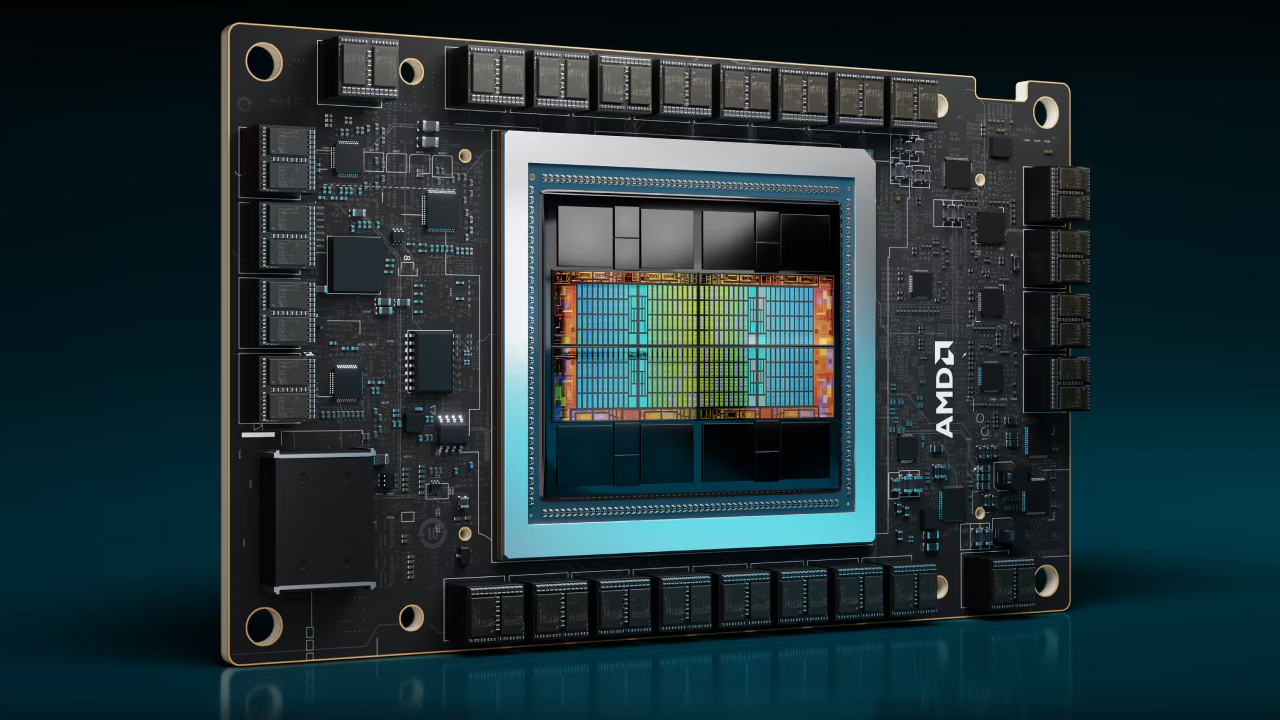
A newly discovered patent filed by AMD in December 2022 has hinted at a significant shift in the design of its mainstream RDNA GPUs. The patent details an approach that diverges from current mainstream gaming GPU structures, suggesting that AMD might be considering a sophisticated multi-chiplet design reminiscent of what’s already in use in their Ryzen processors and data center graphics cards.
AMD’s patent showcases a GPU configuration that leverages three chiplets, which can operate in one of three distinct modes. This design proposes an adaptive architecture potentially offering more versatility than existing mainstream solutions.
Modes of Operation in AMD’s Triple-Chiplet Design
The first mode, known as the “single GPU” mode, mirrors the conventional operation seen in most mainstream GPUs today, where the chiplets function collectively as a cohesive processing entity, sharing resources to tackle graphical tasks.
The second mode, referred to as “independency mode,” stands out by enabling each chiplet to operate autonomously, taking on different roles to optimize performance. In this mode, one of the chiplets would serve as a front-end die, overseeing the scheduling of tasks.
Arguably the most innovative mode described in the patent is the “hybrid mode.” Hybrid mode envisages a scenario where chiplets work both independently and synergistically, harmonizing the benefits of both the single GPU and independency modes. This mode is designed to optimize resource utilization and scalability, potentially improving efficiency and performance.
Challenges and Potential for AMD’s Innovative GPU Design
Despite the promise shown in the patent documents, producing GPUs with such an intricate triple-chiplet design poses challenges. High costs are anticipated, given the need for advanced manufacturing equipment and sophisticated design processes. The patent doesn’t commit to a timeframe or guarantee that this technology will make its way to market—it merely opens a window into AMD’s research and development endeavors.
Conclusion
The exploration of a three-chiplet GPU architecture is an example of how companies like AMD are pushing the boundaries of technological innovation. While this impressive design might not hit the shelves immediately, it represents a potential leap forward in GPU architecture. For gamers and professionals alike, it’s a glimpse into a future where flexible and powerful GPUs could offer unprecedented levels of performance and efficiency.
As the tech industry continues to evolve, and patents like this one come to light, the prospect of more adaptive and advanced GPUs becomes a tantalizing possibility for the future of computing.
We encourage readers to stay tuned for more news and analysis on textit{“cutting-edge developments in graphics processing technology”}. Your enthusiasm for technology news is highly appreciated!