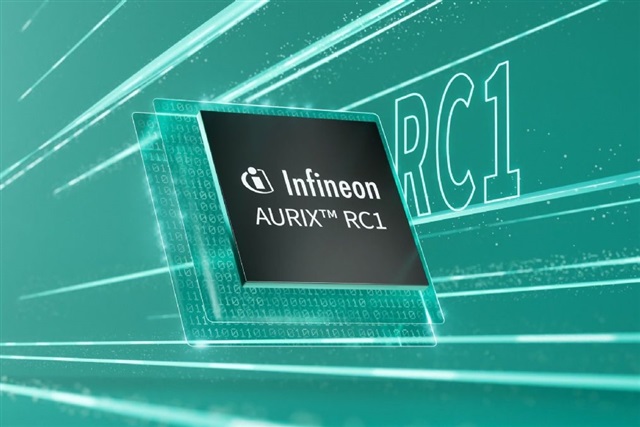
Infineon Unveils AURIX RC1, Its First RISC-V Microcontroller Platform for Cars, Robotics, and Industry
Infineon Technologies is taking a major step into the future of embedded computing with the launch of AURIX RC1, its first microcontroller platform based on the RISC-V instruction set. Designed for flexibility and long-term scalability, AURIX RC1 aims to support a wide range of applications, from compact embedded controllers to advanced real-time computing systems used in vehicles, robotics, and industrial automation.
The key advantage of AURIX RC1 is its use of a single, scalable instruction set. By building around RISC-V, Infineon can create a platform that reaches across multiple performance levels without forcing developers to switch architectures. This can help reduce software complexity, speed up development, and make it easier for companies to reuse code across different product lines.
For the automotive sector, AURIX RC1 could play an important role in the growing shift toward software-defined vehicles. Modern cars increasingly depend on powerful, reliable microcontrollers to manage real-time tasks, safety functions, electric powertrains, and connected systems. A RISC-V-based platform gives automakers and suppliers more room to scale their designs as vehicle electronics become more complex.
The platform is also positioned for robotics and industrial use cases. Robotic motion controllers, factory automation systems, and smart industrial equipment all require precise real-time control, dependable processing, and efficient power usage. With AURIX RC1, Infineon is targeting these demanding environments while offering a common foundation that can support both small controllers and more advanced computing needs.
RISC-V has gained attention across the semiconductor industry because of its open and adaptable nature. Instead of being limited to a fixed proprietary architecture, chipmakers can use RISC-V to build processors tailored to specific workloads. For customers, this may lead to more flexible hardware choices and longer-term platform stability.
AURIX RC1 reflects Infineon’s strategy to create a microcontroller family that can serve several high-growth markets at once. As vehicles, robots, and industrial machines become more intelligent and software-driven, scalable processor platforms are becoming increasingly important. By introducing its first RISC-V-based MCU platform, Infineon is positioning itself for the next generation of real-time embedded systems.
With AURIX RC1, Infineon is not just launching a new microcontroller platform. It is signaling a broader move toward scalable, flexible computing for automotive, robotics, and industrial applications where reliability, performance, and software efficiency matter most.