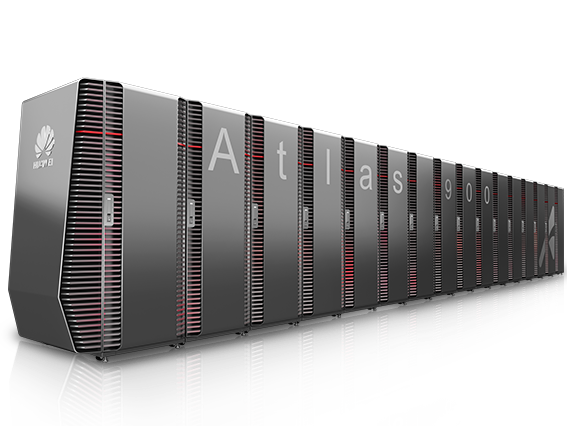
Huawei is making significant waves in China’s AI landscape with its recent unveiling of the CloudMatrix 384 at the World Artificial Intelligence Conference (WAIC) in Shanghai. This powerhouse is designed to supercharge large-scale model training and offers a competitive alternative to high-end systems like Nvidia’s GB200 NVL72.
The CloudMatrix 384 is equipped with 384 Ascend 910C accelerators, all connected through an innovative “super-node” interconnect. This setup compensates for individual device throughput with impressive aggregate performance, reportedly even outperforming Nvidia’s platform on certain benchmarks. While exact performance figures were not disclosed at the conference, experts point out that Huawei is focusing on optimizing bandwidth and latency rather than just raw processor power.
This launch comes at a crucial time as US export restrictions have limited China’s access to Nvidia’s swiftest GPUs. Huawei steps into the gap by providing domestic cloud providers and research institutions with home-grown solutions, sidestepping licensing issues that stall many local chip designers.
Huawei’s founder, Ren Zhengfei, acknowledges that the Ascend chips may not match their US counterparts in raw power, but emphasizes the importance of mathematical optimization and cluster computing to bridge performance gaps in practical applications. With an impressive annual R&D budget of around ¥180 billion (about US$25 billion), Huawei is dedicating a substantial portion to theoretical research beyond Moore’s Law.
The extent to which CloudMatrix 384 will achieve commercial success depends on a mix of factors including pricing, software development, and the evolving cloud procurement policies in Beijing. Nonetheless, this development highlights how rapidly China’s AI hardware ecosystem is shifting towards indigenous solutions, focusing on system-level innovation rather than individual chip performance.