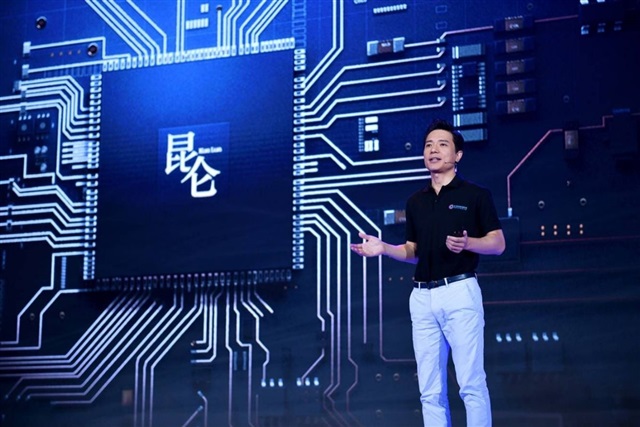
Compute is the new currency of generative AI, and the race to scale is intensifying. As top-tier AI chips become harder to obtain under tightening export controls, China’s biggest tech players are pivoting fast. Instead of waiting for premium hardware to flow, they’re pooling what they have and building around it—from elastic cloud platforms to vast supernode clusters designed to squeeze more performance out of every available accelerator.
At the center of this push are companies such as Baidu and Huawei, which are leaning into scale-out infrastructure to keep large language models and multimodal systems on track. The strategy is straightforward: if you can’t scale up with the most advanced single chips, scale out by linking thousands of capable processors into one high-throughput fabric. Done right, these supernodes can deliver the compute density needed for training and serving cutting-edge AI, even when access to the latest silicon is constrained.
What is a supernode cluster and why it matters
– It’s a high-density compute cluster that interconnects large numbers of accelerators, CPUs, and memory pools into a single logical resource.
– The architecture emphasizes fast interconnects, smart scheduling, and advanced parallelism to distribute training and inference workloads efficiently.
– Instead of relying on a handful of ultra-powerful GPUs, it orchestrates many mid- to high-tier chips to achieve comparable aggregate performance.
For generative AI workloads—especially training large language models—bandwidth, latency, and software optimization are as critical as raw FLOPS. That’s why the effort goes far beyond hardware. Engineers are tuning every layer of the stack to extract more from existing components:
– Model and pipeline parallelism to split massive models across nodes
– Mixture-of-experts and sparsity to reduce active computation per token
– Quantization and pruning to cut memory footprints and speed up inference
– Compiler-level optimizations and custom kernels to maximize throughput
– Intelligent schedulers that pack jobs to minimize communication overhead
Cloud platforms are the other pillar. By offering AI as a service, providers can virtualize scarce compute and allocate it dynamically across customers. That means startups, research labs, and enterprises can access training-grade clusters on demand, while providers maintain high utilization and better amortize costs. Expect more full-stack AI services: data pipelines, fine-tuning suites, vector databases, and deployment toolchains tailored for industry-specific use cases such as finance, retail, manufacturing, and healthcare.
The advantages of this approach are clear
– Supply resilience: Less exposure to single-vendor, high-end chip shortages
– Cost control: Scale-out designs can be more economical per unit of performance
– Faster time-to-market: Cloud access and managed pipelines shorten development cycles
– Strategic autonomy: Greater control over the AI stack, from data centers to frameworks
But it’s not without trade-offs. Supernode clusters face challenges that demand deep engineering:
– Network bottlenecks: High-performance interconnects and topology-aware scheduling are essential
– Software complexity: Achieving linear scaling across thousands of devices isn’t trivial
– Energy and cooling: Dense clusters push power envelopes, driving adoption of liquid cooling and advanced power management
– Mixed hardware fleets: Balancing performance across different chip generations and vendors adds orchestration overhead
Why this matters for the global AI landscape
– It keeps the pace of model development and deployment high despite export restrictions, preserving momentum in generative AI research and commercialization.
– It accelerates innovation in software efficiency, which benefits the entire ecosystem—leaner models, better compilers, and smarter runtimes often outlast any single generation of chips.
– It nudges the market toward heterogeneous compute, where multiple accelerator types coexist, encouraging broader competition and ecosystem diversity.
What to watch next
– Larger, regionally distributed supernode rollouts that stitch together data centers for national-scale compute grids
– New domestic accelerators optimized for training and inference, with tighter integration into local software stacks
– Breakthroughs in networking and memory technologies that reduce communication overhead for trillion-parameter models
– Enterprise adoption curves as more companies shift from pilot projects to production AI built on cloud supernodes
The bottom line is simple: generative AI growth is constrained by compute, and the smartest players are rewriting the playbook. By leaning into cloud AI platforms and supernode clusters, China’s tech leaders are turning a chip shortage into a systems and software opportunity. If they continue to scale infrastructure while wringing more efficiency from every layer of the stack, they can keep training frontier models, serve them at scale, and stay competitive in the global AI race—no matter how tight the chip market gets.