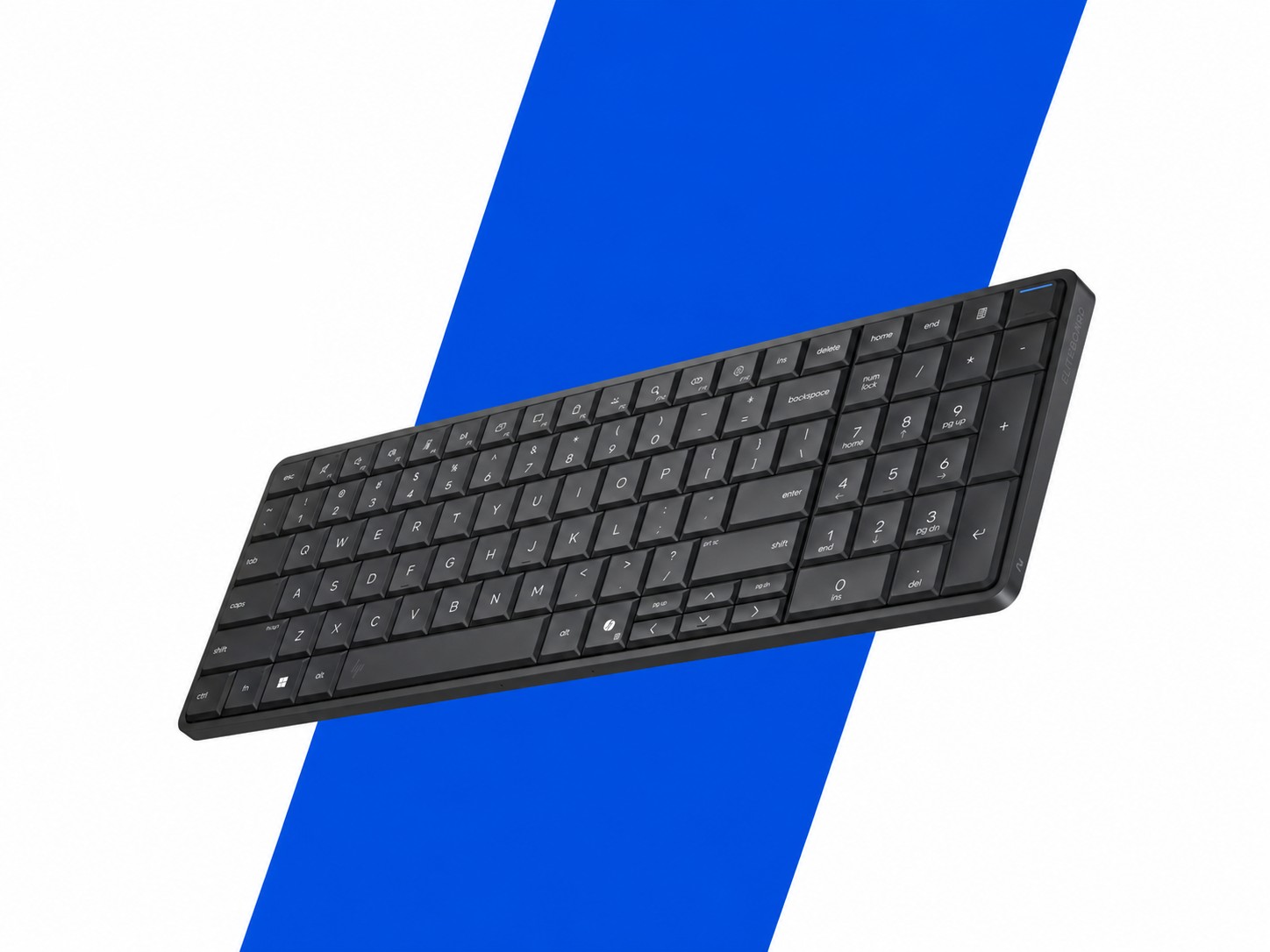
HP EliteBoard G2a turns a compact keyboard into a full desktop PC with AMD Ryzen AI power
HP has introduced the EliteBoard G2a, a refreshed keyboard PC that squeezes a complete Windows desktop into a slim, full-size keyboard. The new model keeps the same compact design as the previous generation but upgrades the hardware with newer AMD Gorgon Point processors, giving the device more performance for productivity, AI workloads, and everyday business use.
The idea is simple but unusual: instead of placing a mini PC behind a monitor or under a desk, HP builds the entire computer directly into the keyboard. Connect it to a compatible USB-C monitor, add power, and the setup is ready to run like a traditional desktop. It is a space-saving concept aimed at offices, shared workstations, reception desks, education environments, and anyone who wants a clean desk with fewer cables and less clutter.
The HP EliteBoard G2a starts at $3,028 in the United States. The entry configuration includes an AMD Ryzen AI 5 PRO 435 processor, 16 GB of RAM, and a 512 GB SSD. HP also offers a version with a detachable USB4 cable, which starts at $3,053. For buyers who want more performance, the higher-end configuration comes with an AMD Ryzen AI 7 PRO 450, 32 GB of RAM, and a 512 GB SSD. That model starts at $4,167 with an integrated cable or $4,191 with the detachable-cable option.
One of the biggest upgrades in the EliteBoard G2a is its move to AMD’s newer Ryzen AI PRO chips. The Ryzen AI 5 PRO 435 model includes Radeon 840M graphics, while the Ryzen AI 7 PRO 450 version steps up to Radeon 860M graphics. Both processors include a 50 TOPS NPU, allowing the system to handle local AI tasks more efficiently. That makes the EliteBoard G2a suitable for Copilot+ PC features and AI-assisted workflows without relying entirely on cloud processing.
Despite packing a complete PC inside, the EliteBoard G2a remains impressively compact. It measures 14.1 x 4.7 x 0.7 inches and weighs just 1.49 pounds. The top side looks like a modern low-profile keyboard, complete with a full-size layout, number pad, function row, and a dedicated Copilot key. Underneath the keyboard housing, HP has fitted the motherboard, storage, memory, and cooling hardware. Ventilation openings on the bottom help manage heat inside the compact chassis.
HP has also designed the system with some upgradeability in mind. Users can upgrade the RAM and SSD, and the keyboard itself can be replaced if needed. That is an important feature for business buyers, as it can extend the usable life of the device and make maintenance easier compared with many ultra-compact systems.
Connectivity is more focused than generous. The EliteBoard G2a connects to a USB-C monitor through USB4, which handles display and data over a single cable. There is also an additional 10 Gbps USB-C port that can be used for accessories or a second display. However, the system does not include USB-A ports or a built-in Ethernet jack. Wireless connectivity is handled by Wi-Fi 7 and Bluetooth 6.0, giving the keyboard PC access to the latest wireless standards.
The lack of legacy ports may be a drawback for users with older peripherals, but HP appears to be targeting modern workspaces built around USB-C monitors, wireless accessories, and cloud-connected workflows. For those environments, the EliteBoard G2a offers a very clean setup: one keyboard, one monitor, and minimal cable clutter.
The HP EliteBoard G2a is now available to order in the United States and the United Kingdom through HP’s official store. Pricing starts at $3,028 in the US. In the UK, the base model is listed from £2,317.82 before discounts, with a current promotional price of £1,379.99. The UK base configuration includes 24 GB of RAM.
With its compact design, AMD Ryzen AI PRO processors, Wi-Fi 7 support, and built-in Copilot+ PC capabilities, the HP EliteBoard G2a stands out as one of the most unusual business desktops on the market. It is not a budget device, but for organizations that value clean workspaces, simplified deployment, and modern AI-ready hardware, this keyboard-sized PC could be a compelling alternative to a traditional mini desktop.