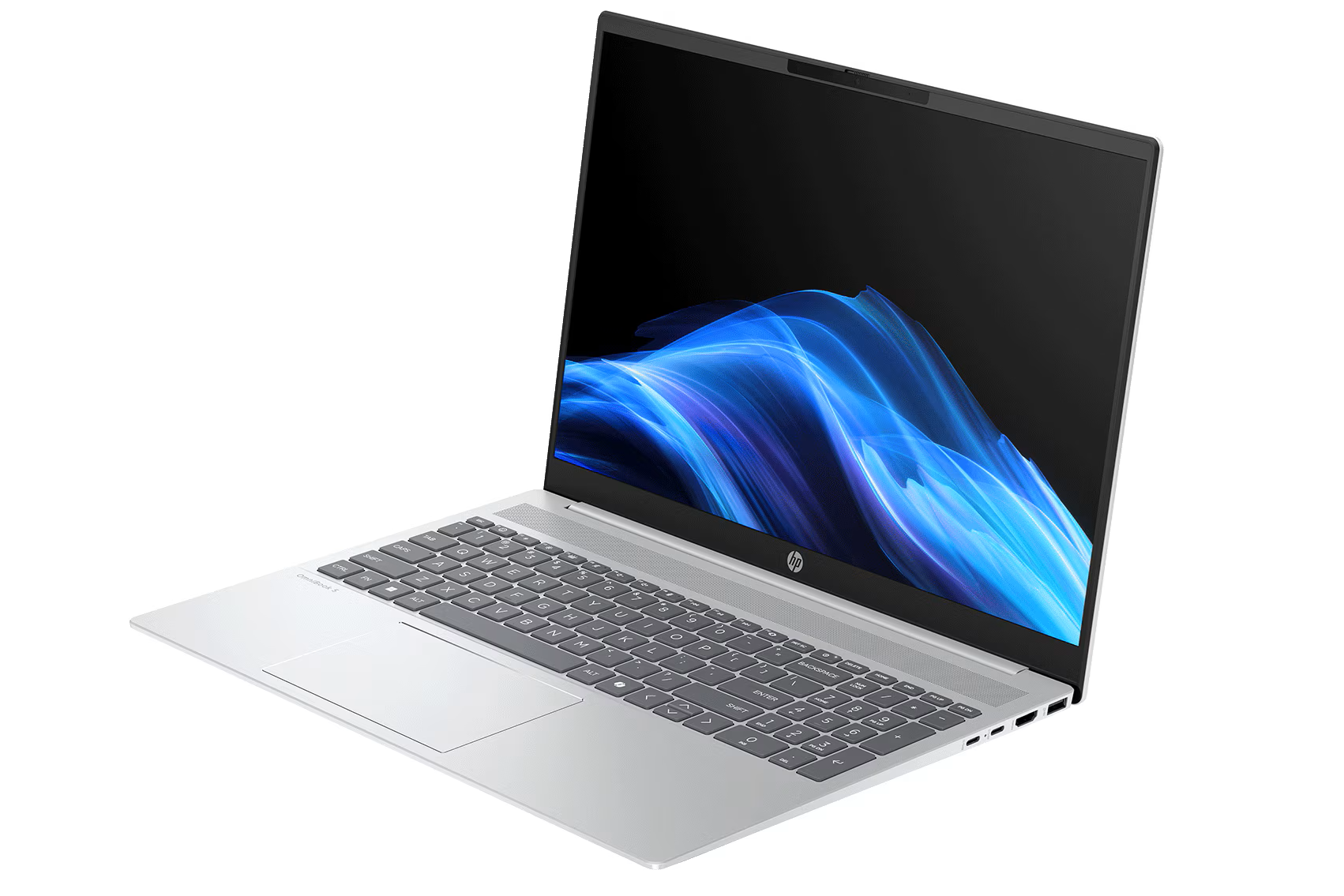
Two popular 16-inch laptops are going head-to-head in real-world testing, and the results paint a clear picture of what you’re actually getting for performance, graphics, and efficiency. On one side is the HP OmniBook 5 16-af1037nr powered by an Intel Core Ultra 7 255U with an Arrow Lake 4-core integrated GPU. On the other is the Dell 16 Plus featuring the Intel Core Ultra 7 256V paired with Intel Arc 140V graphics. If you’re trying to decide which 16-inch laptop offers better everyday speed, stronger gaming results, and smarter power use, these benchmark numbers help cut through the marketing.
Sustained CPU performance under heavy load is a good place to start, because it shows how a laptop behaves when you’re compiling code, exporting video, or running long productivity sessions. In a Prime95 stress test using an external monitor, both machines delivered very similar average results. The HP OmniBook 5 16 averaged 38.2, with observed values ranging from 33.4 up to 66.3. The Dell 16 Plus averaged 39.1, ranging from 34.2 to 58.7. In plain terms: for extended CPU-only stress, they’re extremely close, with the Dell slightly ahead on average.
Looking at CPU benchmark performance in Cinebench R15 Multi (again using an external monitor), the Dell held a small advantage. The HP OmniBook averaged 49.7 (range: 32.3 to 66.1), while the Dell averaged 51.2 (range: 34.4 to 58.1). That’s not the kind of gap most people will feel in everyday web browsing or office work, but it can matter if you’re consistently pushing multi-core workloads.
Cinebench R23 Multi results show the HP OmniBook 5 16 averaging 37.1, with a range between 29.8 and 66.0. The key takeaway here is that performance can swing depending on sustained boost behavior and thermal headroom, which is exactly why stress and looped benchmarks are useful when comparing thin-and-light 16-inch laptops.
Where things become more noticeable is graphics and gaming performance. In a 1280×720 FurMark 1.19 GPU stress test (external monitor), the Dell 16 Plus posted a much stronger average of 40.2 (range: 31.8 to 46.3). The HP OmniBook averaged 30.6 (range: 29.2 to 34.2). That’s a meaningful difference if you care about GPU-heavy tasks or want smoother frame rates in games, creative apps, or accelerated workflows that lean on integrated graphics.
That advantage carries into actual gameplay testing. In Cyberpunk 2077 at FHD Ultra with no FSR (external monitor), the HP OmniBook 5 16 averaged 35.9 fps (range: 35.3 to 36.7). The Dell 16 Plus averaged 38 fps (range: 36.2 to 41.1). Both results are in the “playable but demanding” zone for a modern AAA title at high settings, but the Dell’s Arc 140V graphics clearly provide more headroom. Even a small bump in average fps can translate to fewer dips and a steadier feel during action-heavy scenes.
Power efficiency at idle is another important factor for people who care about battery life and quiet operation. Here, the Dell 16 Plus again comes out ahead. In an Idle 1-minute test (external monitor), the HP averaged 4.87 (range: 3.93 to 7.1), while the Dell averaged 3.83 (range: 3.37 to 5.43). Lower idle power generally hints at better efficiency when you’re doing light tasks—think email, documents, and streaming—though real battery life will still depend on the display, battery size, and tuning.
So what does all of this mean if you’re shopping for a 16-inch laptop right now? If your priority is CPU performance for everyday productivity, both the HP OmniBook 5 16 and Dell 16 Plus are closely matched, with the Dell holding slim leads in several CPU-focused averages. But if graphics performance matters—whether for casual gaming, GPU-accelerated creative work, or simply getting better frame rates at the same settings—the Dell 16 Plus with Arc 140V shows a clearer advantage across GPU stress testing and a demanding real game benchmark. Add in its lower idle power draw, and it looks like the more balanced option for people who want stronger graphics and potentially better efficiency without giving up much on CPU performance.
If you share the full text of the original post you want rewritten (not just the chart data), I can produce a more complete, search-optimized rewrite that keeps the same intent while making it read like a polished buyer’s guide.