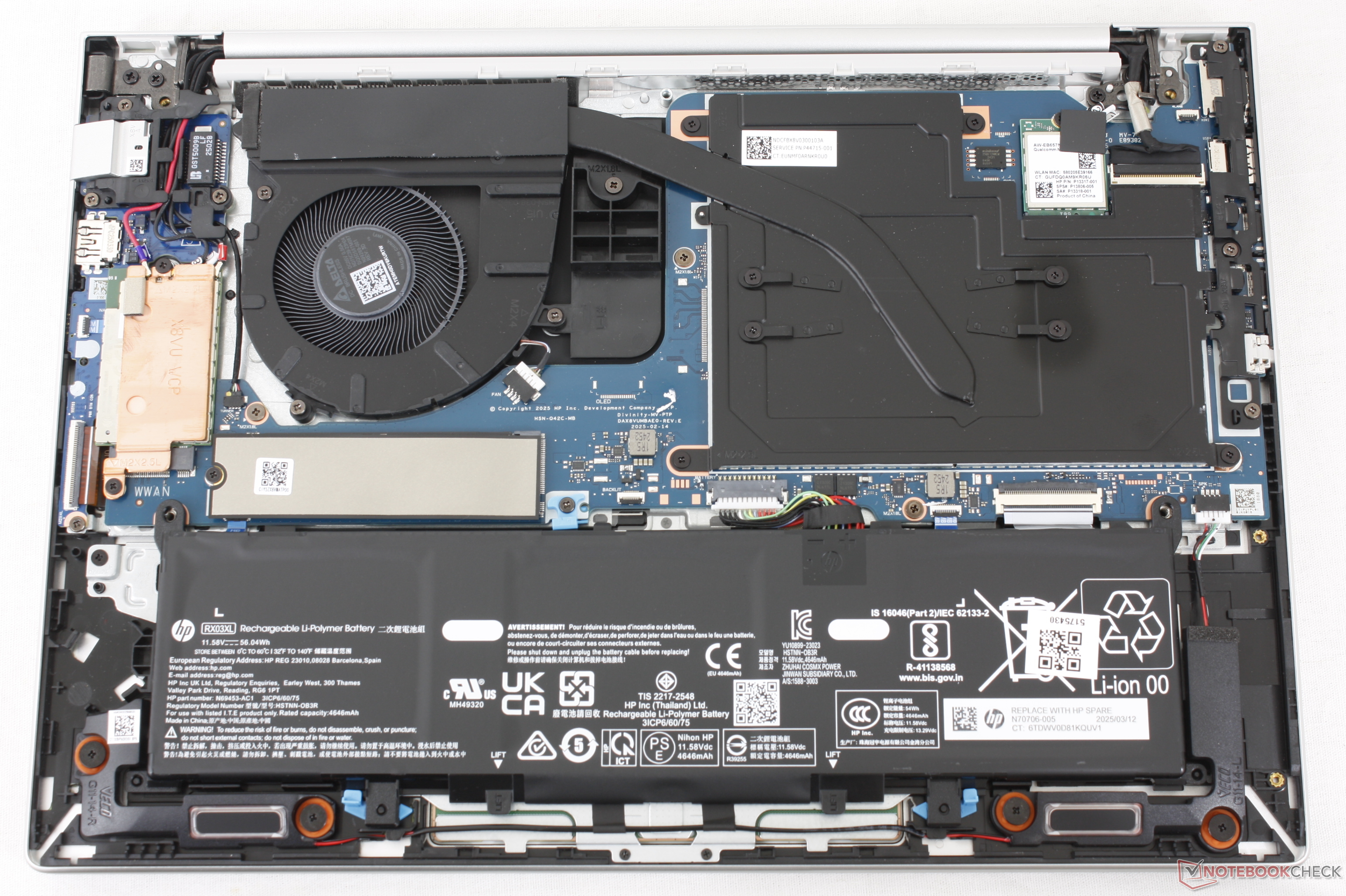
Windows on ARM laptops have built a reputation for stretching battery life further than many traditional Intel- or AMD-powered notebooks, and the newest Qualcomm Snapdragon models are pushing that advantage even more. A fresh example is HP’s EliteBook 6 G1q 14, a business-focused 14-inch laptop that delivers nearly 16 hours of continuous Wi‑Fi web browsing from a relatively modest 56 Wh battery.
That result stands out because 56 Wh is not a particularly large battery for a modern productivity laptop. Yet with the Snapdragon X Plus platform inside, this EliteBook manages to outlast many other 14-inch EliteBook configurations on the market. In comparison, older EliteBook models running previous-generation processors—such as the EliteBook 840 G9 or EliteBook 645 G9—often struggle to reach the 10-hour mark in similar browsing-style use, highlighting how much CPU efficiency can influence real-world runtime.
It’s also worth noting that Qualcomm isn’t the only one making progress. Newer Intel laptop chips are also showing major efficiency gains. For instance, HP’s EliteBook X G1i 14 AI can run the same kind of Wi‑Fi browsing test for more than 18 hours at the same 150-nit screen brightness level. However, that longer runtime comes with a trade-off: the EliteBook X includes a battery that’s about 21 percent larger, which can add weight and cost. In other words, the EliteBook 6 G1q 14’s near-16-hour showing is especially impressive because it’s achieved with a smaller battery pack.
For buyers comparing premium business laptops, this is the key takeaway: if all-day unplugged productivity is a priority, the HP EliteBook 6 G1q 14 and other Snapdragon X Plus Windows laptops are proving that long battery life doesn’t necessarily require a huge battery—just a highly efficient platform. At the same time, the latest Intel-based alternatives are becoming more competitive, especially in configurations that pair improved efficiency with larger-capacity batteries.


