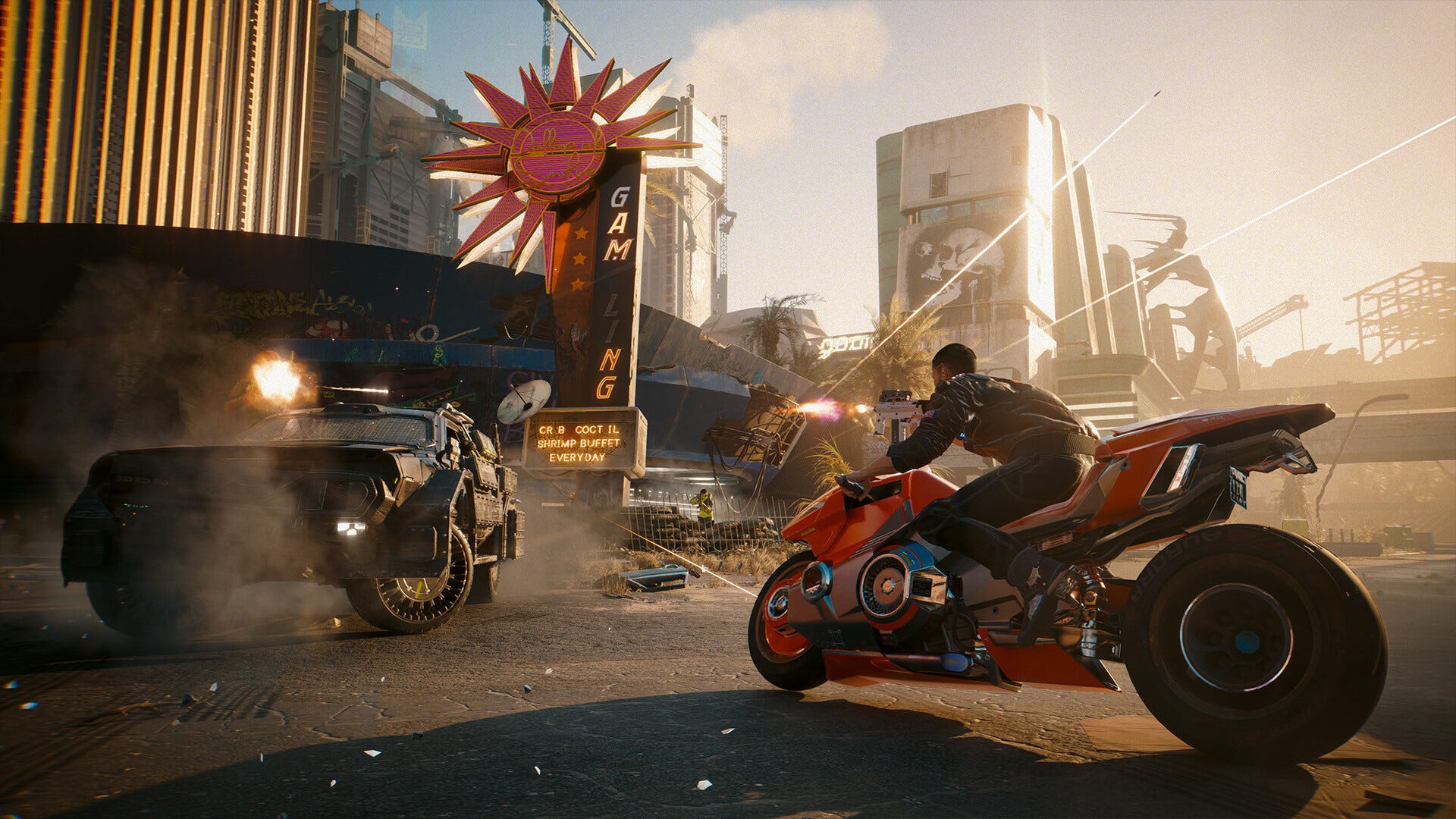
CD Projekt RED’s Cyberpunk 2077 has had a tumultuous journey since its initial release. However, the development of Cyberpunk 2077’s expansion, Phantom Liberty, has been hailed as a turning point for the game, with the update earning critical acclaim in 2023. The expansion, which was designed with the mindset of creating a sequel, featured significant improvements and new content that revitalized the game’s experience for players.
Game director Gabe Amatangelo, who took the helm in spring 2021, attributes the success to the focus on refining game mechanics, enhancing the AI, the police system, and ensuring the activities in Night City were more integrated and impactful. The expansion required a concerted effort and investment, with CD Projekt RED dedicating an impressive $63 million and the collaborative power of around 400 in-house developers as well as additional support from external studios and contractors.
The development ethos for Phantom Liberty placed a premium on the talent and teamwork within the studio. By adopting a more autonomous structure, where creative freedom was encouraged and the need for constant oversight was reduced, developers could innovate and directly contribute to harmonizing the game elements. Amatangelo places great emphasis on cross-disciplinary collaboration, which he believes improves the efficiency and coherence of content creation in-game.
Furthermore, the creation process also aimed to strike a balance in work hours, alternating intense periods with lighter ones, which could potentially serve as a blueprint for managing crunch time in future projects. This approach might have implications for the video game industry, where crunch culture is a pressing concern.
CD Projekt RED is also broadening its development capabilities, with plans to open a new studio in Boston. This strategic move is aimed at tapping into North American talent while ensuring seamless collaboration between the U.S. and European offices. The establishment of this new studio hints at an ambition to enhance and expand upon the Cyberpunk universe, even as Phantom Liberty was intended to be the culmination of Cyberpunk 2077 updates.
However, patches continue to be released, such as the functional metro system in the 2.1 update and custom paint jobs for cars in patch 2.11. These updates reflect the team’s ongoing commitment to enriching the gaming experience.
The evolution within CD Projekt RED, highlighted by the reception and achievements of Phantom Liberty, carries promising implications for the future of the Cyberpunk series and sequels. Game development practices, the empowerment of creative talent, and the approach towards expansions can serve as critical lessons for the industry as a whole. As Phantom Liberty sets a precedent, fans may anticipate that subsequent entries in the Cyberpunk saga will not only inherit its triumphs but also exhibit further innovation and refinement that respond dynamically to player feedback and developmental insights.As the gaming industry evolves, so do the relationships between industry giants, their employees, and emerging technologies. Workers within the gaming sector continue to rally for better conditions, as clearly evidenced by the recent formation of the Activision Quality Assurance United group. This group, the largest gaming worker union in the United States, has been established with the support of the Communication Workers of America. Microsoft’s recognition of this 600-person tester union, which spans across California, Minnesota, and Texas, marks a historic move, given that the company had no unions across any of its businesses for the first four decades of its existence.
In the wake of unionization, significant shifts have occurred within the industry’s landscape, changing the game for many companies and workers alike. Sadly, not all developments are positive: Deviation Games, the studio that received backing from Sony PlayStation to create an original game, has reportedly shut down. Furthermore, discussions about the future of well-known platforms and franchises are underway; former Activision CEO Bobby Kotick has shown interest in acquiring the powerful social media platform TikTok amidst governmental scrutiny, and the Battlefield franchise is experiencing a change in direction with the departure of DICE’s creative director, Craig Morrison.
Union concerns are not limited to quality assurance testers; voice actors in the industry are reportedly facing a potential strike in response to the rising use of AI, with a 50% chance or greater of it occurring in the near future. Meanwhile, WB Games is set to surprise fans with the full release of its free-to-play platform fighter, Multiversus, marking a return after its public beta closure over a year ago.
Nintendo, always a notable player in the gaming arena, is fuelling fan excitement with the announcement of Paper Mario: The Thousand Year Door and Luigi’s Mansion 2 HD remakes for the Switch. These games are set for release on May 23 and June 27, 2024, indicating that Nintendo aims to continue its game-a-month release strategy. This raises anticipation for what the company has planned for the latter half of the year, as that period is traditionally reserved for its headline titles.
Speculation about a new Switch successor model has diminished, with reports suggesting that a potential launch would not take place until March 2025 or later. Additionally, hopes for a major Pokémon release in late 2024 seem unfounded, with the next significant franchise sequel, Pokémon Legends: Z-A, set for 2025. Nintendo’s Metroid Prime 4 remains an enigma — first announced in 2017 and undergoing a development reboot in early 2019, its release date remains “TBA.”
Gamers can expect further revelations from Nintendo by June, as the company typically holds an online showcase to outline its release schedule for the remainder of the year. In the realm of film, Nintendo enthusiasts can also look forward to a sequel to The Super Mario Bros. Movie, premiering on April 3, 2026, signaling the brand’s continued expansion beyond gaming. These developments illustrate the dynamic nature of the gaming industry, where technological innovation, worker rights, and corporate strategy constantly intersect and reshape the landscape.