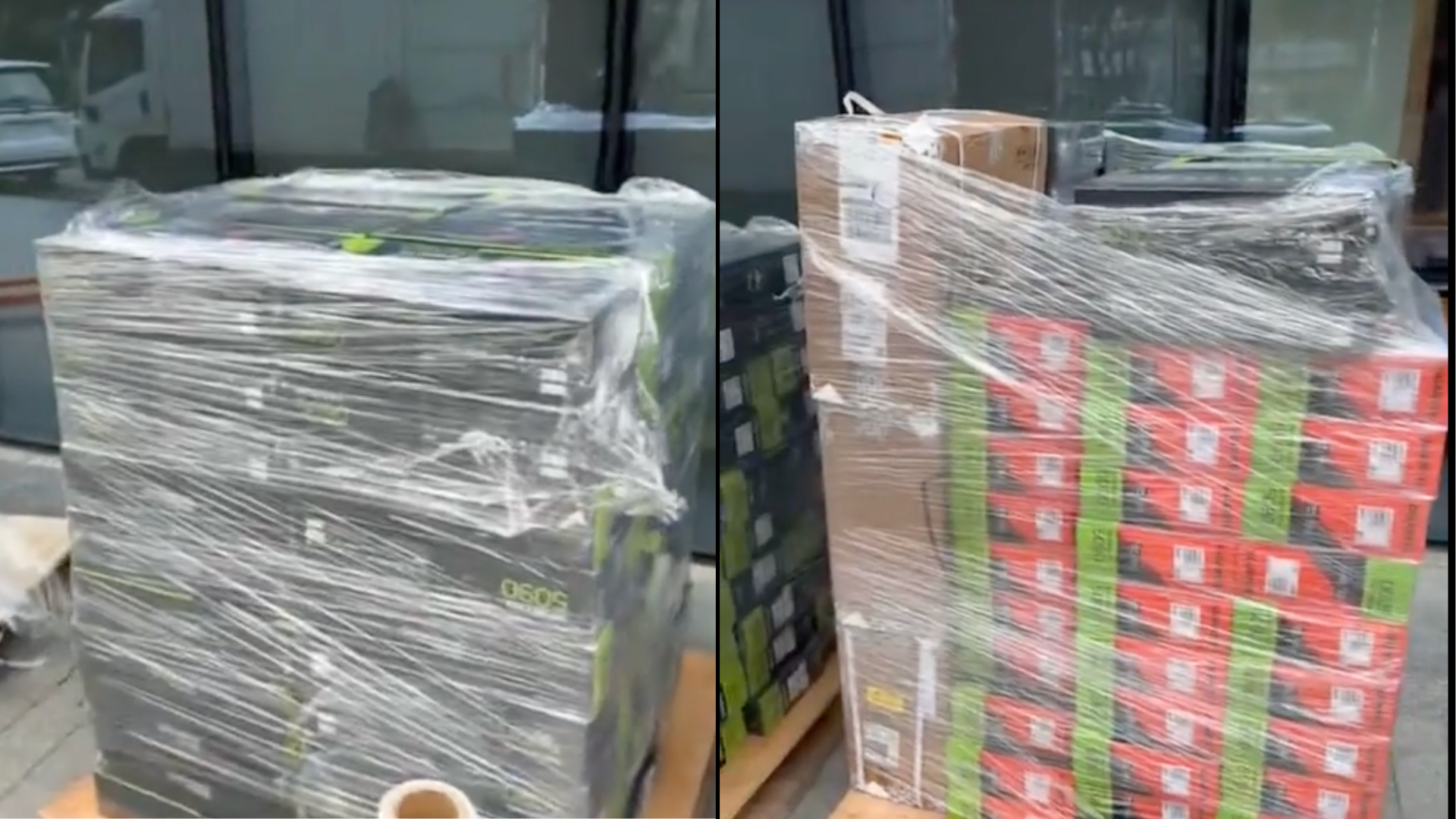
Big batches of NVIDIA GeForce RTX 5090 graphics cards are reportedly showing up in China again, fueling fresh questions about how the country continues to obtain top-tier hardware despite ongoing US export restrictions.
The latest chatter started after a community post claimed a sizable shipment of RTX 5090 GPUs was spotted in China, with models appearing to come from major add-in-board partners like MSI and Gigabyte. Observers also pointed out a key detail: the packaging reportedly doesn’t include a “v2” label, which has been associated with versions allowed for export into China. That has only intensified speculation that these are standard RTX 5090 units arriving through indirect channels.
While some argue the cards themselves aren’t “banned” inside China, the bigger issue is that US-based companies and partners generally can’t export certain high-performance hardware directly to the region under current rules. In practice, one commonly discussed workaround is routing products through countries that aren’t covered by the same restrictions. Southeast Asian hubs such as Malaysia and Singapore are frequently mentioned in these conversations as potential transit points.
There are also other pathways Chinese firms have used to keep modern compute flowing. One widely discussed method is the “rental compute” approach, where companies access high-end GPU power through external data centers or third-party services rather than importing the hardware directly. When combined with global gray-market sourcing, it creates multiple avenues for cutting-edge GPUs to reach buyers who want them most.
A major reason the RTX 5090 is so attractive in China isn’t gaming—it’s AI. High-end consumer GPUs with large VRAM are extremely useful for AI training, inference, and other data-heavy workloads. Reports suggest some operations are even repurposing consumer graphics cards specifically for AI use, including reworking designs with more VRAM and shifting to blower-style cooling better suited for dense, server-like environments.
The ripple effect is being felt by gamers everywhere. As AI demand continues to absorb premium graphics cards, the RTX 5090 is already facing serious shortages. With limited stock and relentless competition from AI buyers, pricing pressure is expected to remain intense—some projections even suggest listings could climb toward $5,000 over time. For many PC gamers, that combination of scarcity and inflated pricing is making the RTX 5090 feel effectively out of reach in today’s market.