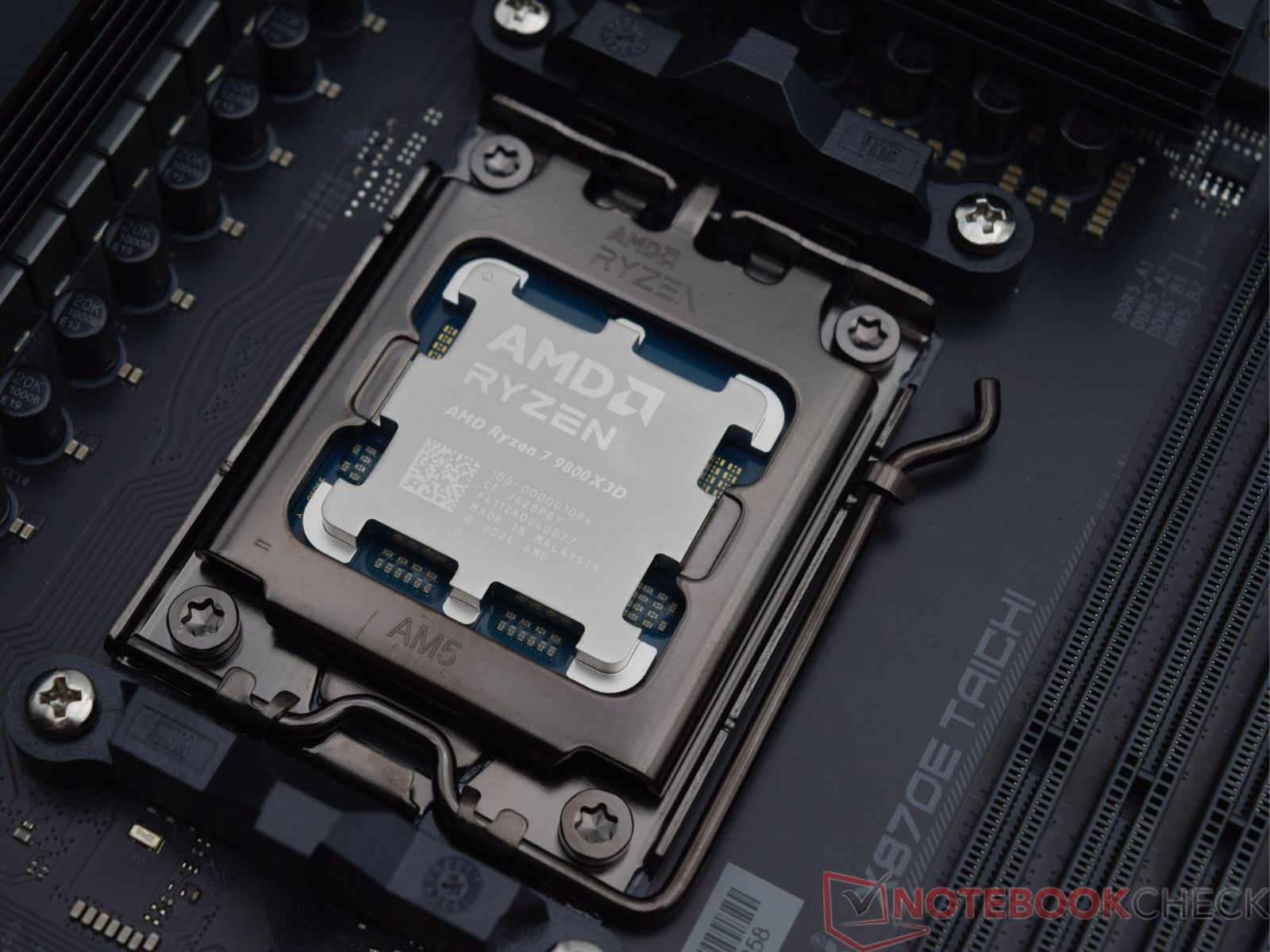
A fresh leak is stirring up excitement around AMD’s upcoming Zen 5 X3D processors, with reports suggesting these chips have been demonstrated running extremely fast DDR5 memory. Importantly, this is a separate rumor from another recent claim that showed a Ryzen 7 9850X3D paired with 32GB of DDR5-9600. This new information points to even higher memory speeds and, more importantly, explains how AMD could realistically make that happen on X3D parts.
According to the source discussing the leak, the key factor isn’t simply “better binned” versions of existing silicon. Instead, the Zen 5 X3D CPUs are said to use a new CCD stepping. That matters because a stepping change typically indicates an updated revision of the chip design or manufacturing tweaks, which can improve stability, efficiency, and memory behavior beyond what you’d get from cherry-picking older dies.
On top of that, AMD is reportedly pairing these X3D models with hand-selected “golden sample” memory controllers. Combined with better production yields across Zen 5 and even late-stage Zen 4 output, the idea is that AMD now has enough consistently strong silicon to ship X3D processors with better memory controllers than standard non-X3D SKUs. If accurate, this could help explain why these chips may handle ultra-high DDR5 speeds more reliably than buyers might expect, especially given how memory controller quality can vary from one CPU to another.
When it comes to performance, expectations are being set carefully. No hard benchmark charts were shared, but the claim is that some workloads could see high single-digit gains. Think along the lines of an 8–9% improvement in certain scenarios, not across the board. The emphasis is that results will be workload-dependent: some games and multi-threaded applications may benefit nicely, while others might barely move. The takeaway is that faster memory support and improved silicon quality could translate into real-world gains, just not the kind that rewrites the performance charts overnight.
The leak also adds some broader context about AMD’s likely plans for CES 2026. A “new OEM strategy” is expected to be part of AMD’s messaging, with a major push for Gorgon Point—positioned in a similar way to how Hawk Point followed Phoenix. Even if the performance uplift ends up being modest, the bigger story could be how aggressively AMD works with laptop and prebuilt partners to get systems into the market quickly and at scale. As always, independent testing will be the real decider versus optimistic manufacturer presentations.
There’s also speculation that AMD may ramp up its push around Strix Halo sooner rather than later. The reasoning given is increased interest from OEMs compared to last year, better sales feedback from recognizable PC makers, and the possibility that some Strix Halo units were pre-produced with bundled RAM before supply constraints worsened. Adding fuel to that theory are rumors of future Strix Halo variants with higher core counts and more compute units—something that would be less likely if the platform weren’t meeting expectations.
Beyond CPUs and platform strategy, the wider discussion around these leaks touches on industry supply issues and other hardware chatter, including ongoing memory availability concerns, next-generation GPU supply rumors, and console timeline talk. Still, for PC enthusiasts, the headline remains the same: Zen 5 X3D may be shaping up not only as a gaming-focused upgrade, but also as a lineup with unusually strong memory support—potentially making high-speed DDR5 a more practical option for a wider range of buyers than before.