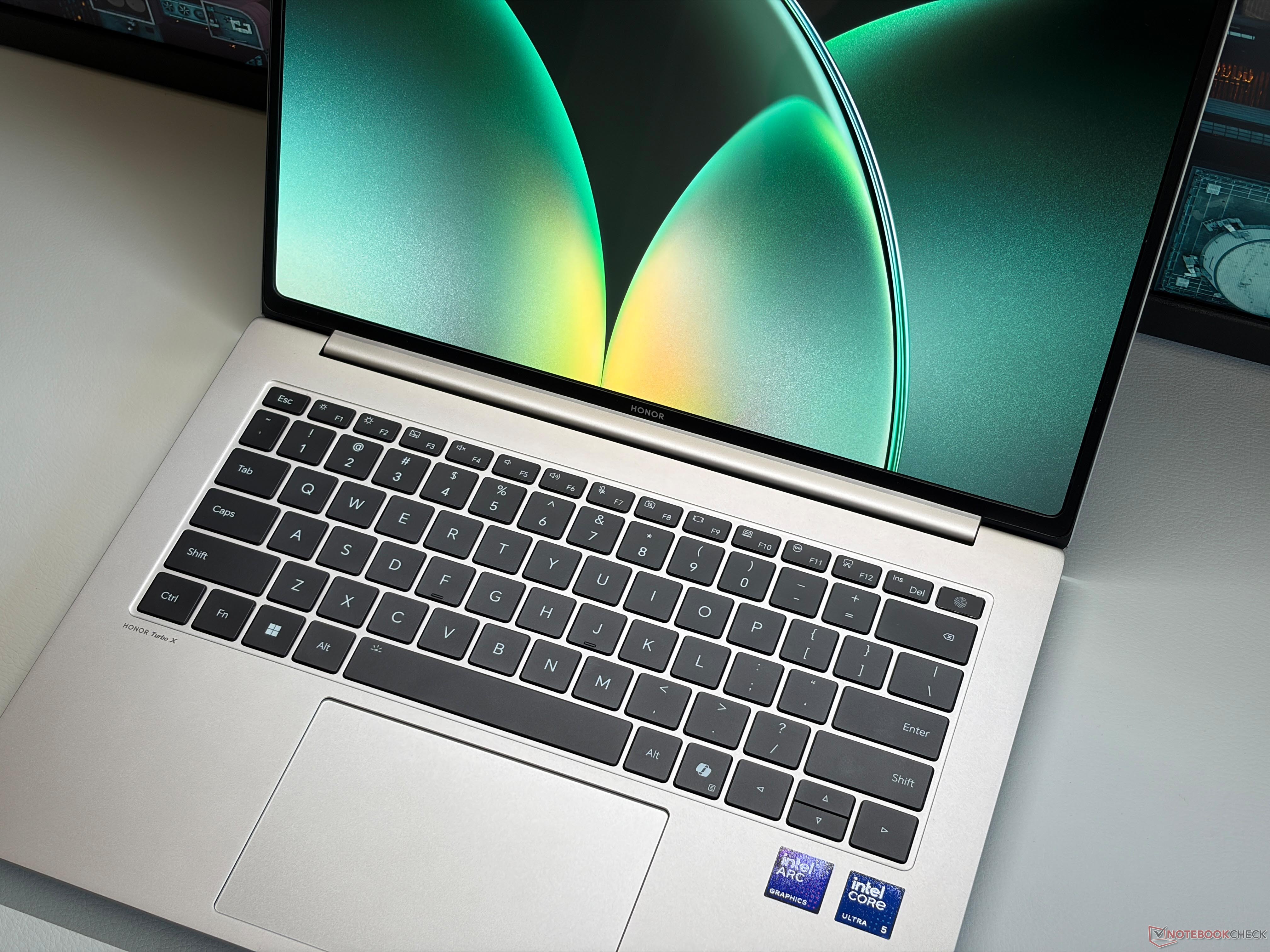
Honor MagicBook Pro 14 vs Apple MacBook Pro 14: OLED and Mini-LED go head-to-head
Picking between the Honor MagicBook Pro 14 and the Apple MacBook Pro 14 often comes down to the screen, and for good reason. These two laptops use very different display technologies—OLED on the Honor and Mini-LED on the MacBook Pro—but the good news is that both deliver a premium viewing experience that’s immediately impressive in day-to-day use.
At a glance, image quality on both machines looks excellent. Each display covers the full P3 color gamut, and both provide accurate color profiles for P3 as well as sRGB. That means whether you’re editing photos, watching high-quality video, or just want rich, consistent color across apps, both laptops are built to satisfy users who care about color accuracy. You also get a smooth 120Hz refresh rate on each, which helps scrolling, animations, and general motion feel noticeably more fluid.
Where they start to differ is in features and brightness. Honor adds a touchscreen to the MagicBook Pro 14, which can be a real advantage for people who like tapping through apps, navigating timelines, or making quick on-screen selections. Apple, meanwhile, offers a matte display option for those who want reduced glare—useful in bright rooms or when working near windows.
Brightness is the area where Apple clearly pulls ahead. The MacBook Pro 14 can reach up to 1,000 nits in SDR use when the brightness sensor is enabled, while the Honor tops out around 500 nits. In practical terms, Apple’s extra brightness makes content easier to view in challenging lighting and helps the screen maintain punch and clarity even when there’s a lot of ambient light.
The gap widens even more with HDR. Apple’s Mini-LED display can push up to 1,600 nits for HDR highlights, compared to roughly 770 nits on the Honor. That means HDR movies, streaming content, and high-dynamic-range video can look dramatically more intense and realistic on the MacBook Pro, with brighter specular highlights and more impactful contrast in HDR scenes. There’s also the broader point that HDR playback and tone mapping on Apple’s platform tends to feel more polished and consistent than what many users experience on Windows laptops.
Still, OLED brings real strengths that matter depending on what you do. The Honor’s OLED panel delivers faster response times, which can reduce motion blur and make fast-moving visuals look cleaner. OLED also avoids blooming—those halo-like effects that can appear around bright objects on darker backgrounds with certain backlit display designs—so high-contrast scenes can look more uniform.
In the end, both laptops offer top-tier color, smooth 120Hz performance, and strong overall image quality. If maximum brightness and standout HDR performance are your priorities, the MacBook Pro 14 has the advantage. If you value a touchscreen, quicker pixel response, and an OLED look with no blooming, the Honor MagicBook Pro 14 makes a compelling case.