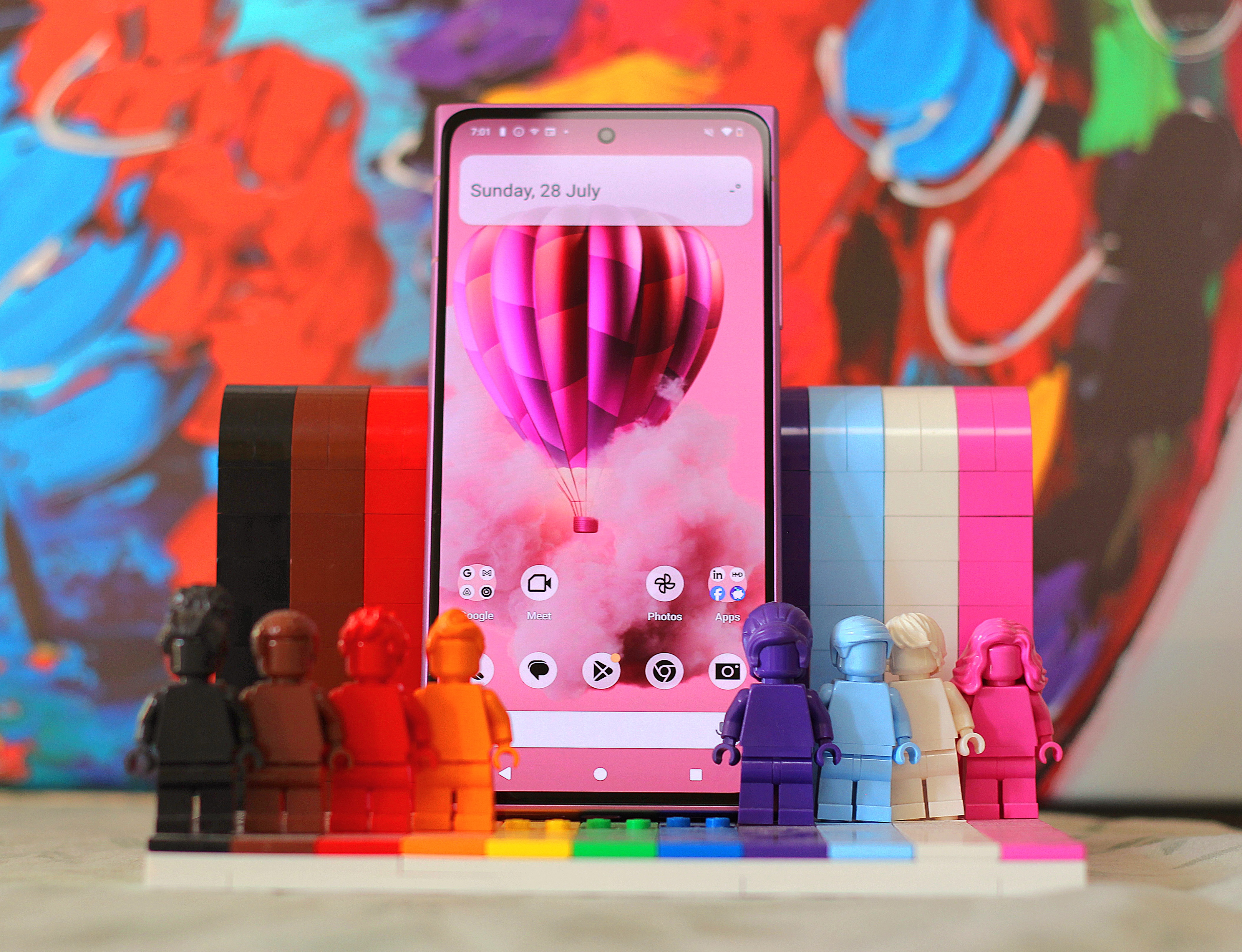
The smartphone market is flooded with mid-range options, and the HMD Skyline aims to set itself apart not just with its design but its focus on repairability. It sports the Snapdragon 7s Gen 2, a frequented choice in its category, yet comes with a slightly higher price tag compared to its counterparts.
Performance-wise, the HMD Skyline’s benchmarks put it lower on the spectrum. While it delivers a decent everyday performance capable of achieving 30 fps in less demanding games, it’s not designed for high-end gaming.
Memory speed is another aspect where the HMD Skyline falls a bit short when compared to rivals like the Google Pixel 8a, which comes equipped with faster memory chips. Despite that, Skyline’s UFS 2.2 storage does facilitate reasonably quick data transfers, offering a small advantage over lower-end models.
During intensive tasks, the HMD Skyline can warm up to 45.3 °C which is noticeable yet still under a concerning threshold. At this heat, a slight performance drop of approximately 5% may occur after extended periods of high use.
The device includes a modest speaker setup—with a speaker at the bottom complemented by the earpiece to create a stereo effect. While sound quality is average with adequate voice clarity and no distortion at high volumes, the overall audio experience may become muddled with complex tracks.
Fortunately, the Skyline offers versatility in audio connectivity. Users have the option to connect via USB-C or Bluetooth, with multiple wireless audio codecs available. This includes standards such as SBC, AAC, aptX (and HD), Adaptive, and Wireless as well as premium codecs like LDAC, LC3, and Opus, offering a rich selection for audio enthusiasts.
Battery life is essential for smartphone users, and the HMD Skyline’s battery is user-replaceable—a rarity in today’s market. Though it has a modest 4,600 mAh capacity resulting in a decent 14:27-hour lifespan in a WLAN test, this falls short by a few hours compared to others in its class. The absence of a charger in the box may be noted by some users; however, the phone supports 33-watt fast charging, reaching full capacity in about 1.5 hours, and it also supports wireless charging up to 15 watts.
In conclusion, the HMD Skyline is a phone that stands out with its repairable components and iconic design. It may not lead the pack in performance or memory speed, but it guarantees a daily driver that’s competent for basic tasks and delivers on user autonomy, particularly in battery replacement. This could be the mid-range smartphone for the environmentally conscious user who values longevity and sustainability in their devices.