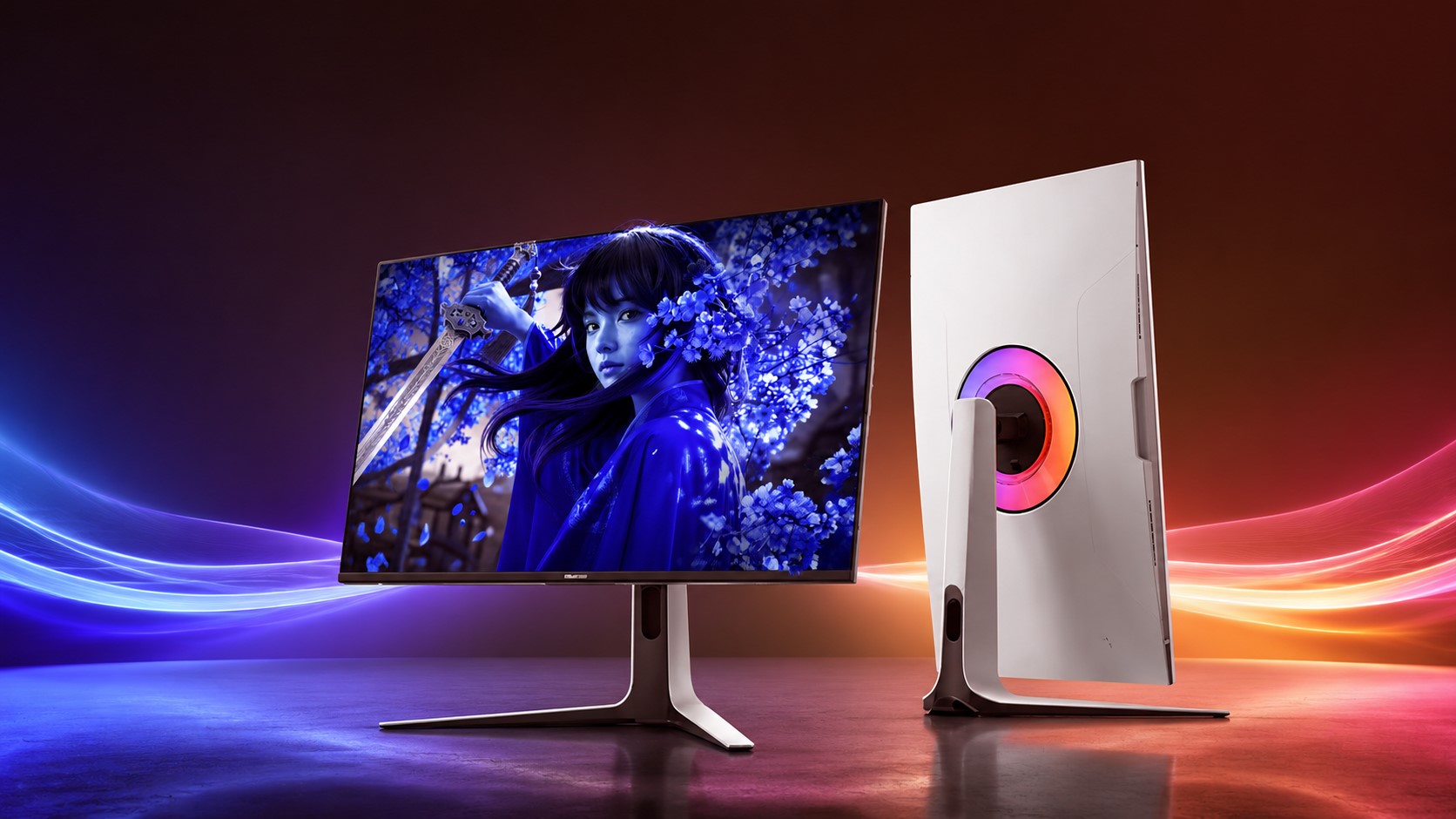
Hisense has unveiled the 32UX, a 32-inch 4K gaming monitor that stands out for one major reason: it is being presented as the world’s first RGB Mini LED monitor. While OLED displays continue to dominate the premium monitor conversation, Mini LED technology is advancing quickly, and RGB Mini LED could become one of the most exciting display upgrades for gamers, creators, and HDR enthusiasts.
The Hisense 32UX brings technology often associated with high-end televisions into a desktop monitor format. It features a 4K resolution and a 180Hz refresh rate, placing it firmly in the premium gaming monitor category. That combination makes it suitable for sharp visuals, smooth motion, and immersive gameplay, especially for users with powerful gaming PCs or next-generation hardware setups.
What makes this monitor especially interesting is its RGB Mini LED backlight. Traditional LCD monitors usually rely on white or blue LED backlighting, with filters, quantum dots, or phosphor conversion used to produce red, green, and blue colors. Standard Mini LED displays improve this by using much smaller LEDs and more local dimming zones, which can lead to better contrast, deeper blacks, and higher brightness.
RGB Mini LED takes the idea further. Instead of relying only on conversion layers to create color, it uses red, green, and blue Mini LEDs directly in the backlight system. This could allow the display to deliver richer colors, stronger HDR performance, and improved color volume compared with conventional Mini LED monitors.
The Hisense 32UX is rated for up to 2,000 nits of peak brightness, which should make HDR content look more impactful. Bright highlights, detailed reflections, and vibrant scenes in games and movies may appear more realistic, especially in well-lit rooms where lower-brightness displays can struggle. For HDR gaming, this level of brightness could be one of the monitor’s strongest advantages.
Another key appeal of the 32UX is that it may offer some of the visual benefits people associate with OLED displays, such as strong contrast and premium image quality, while avoiding the common concern of OLED burn-in. That could make it attractive to users who spend long hours gaming, editing videos, working with static desktop elements, or using creative software.
For content creators, the promise of improved color performance and high brightness could make the Hisense 32UX a compelling option for HDR workflows, video editing, and visual design. For gamers, the 4K resolution, 180Hz refresh rate, and advanced backlighting system suggest a monitor built for both visual quality and smooth performance.
However, this is not a budget display. The Hisense 32UX launched in China at 9,999 yuan, which is roughly $1,475. That puts it above many high-end 4K gaming monitors, including several premium OLED and QD-OLED models. At that price, buyers will likely expect exceptional HDR performance, excellent local dimming, strong color accuracy, and low input lag.
Even with the high price, the Hisense 32UX represents an important step for monitor technology. RGB Mini LED could become a major competitor to OLED if it can deliver vibrant color, extreme brightness, strong contrast, and long-term durability in one package.
For now, the Hisense 32UX looks like a bold new entry in the high-end gaming monitor market. If RGB Mini LED performs as promised, it could mark the beginning of a new wave of premium displays aimed at users who want stunning HDR visuals, fast refresh rates, and impressive brightness without the risks associated with OLED panels.


