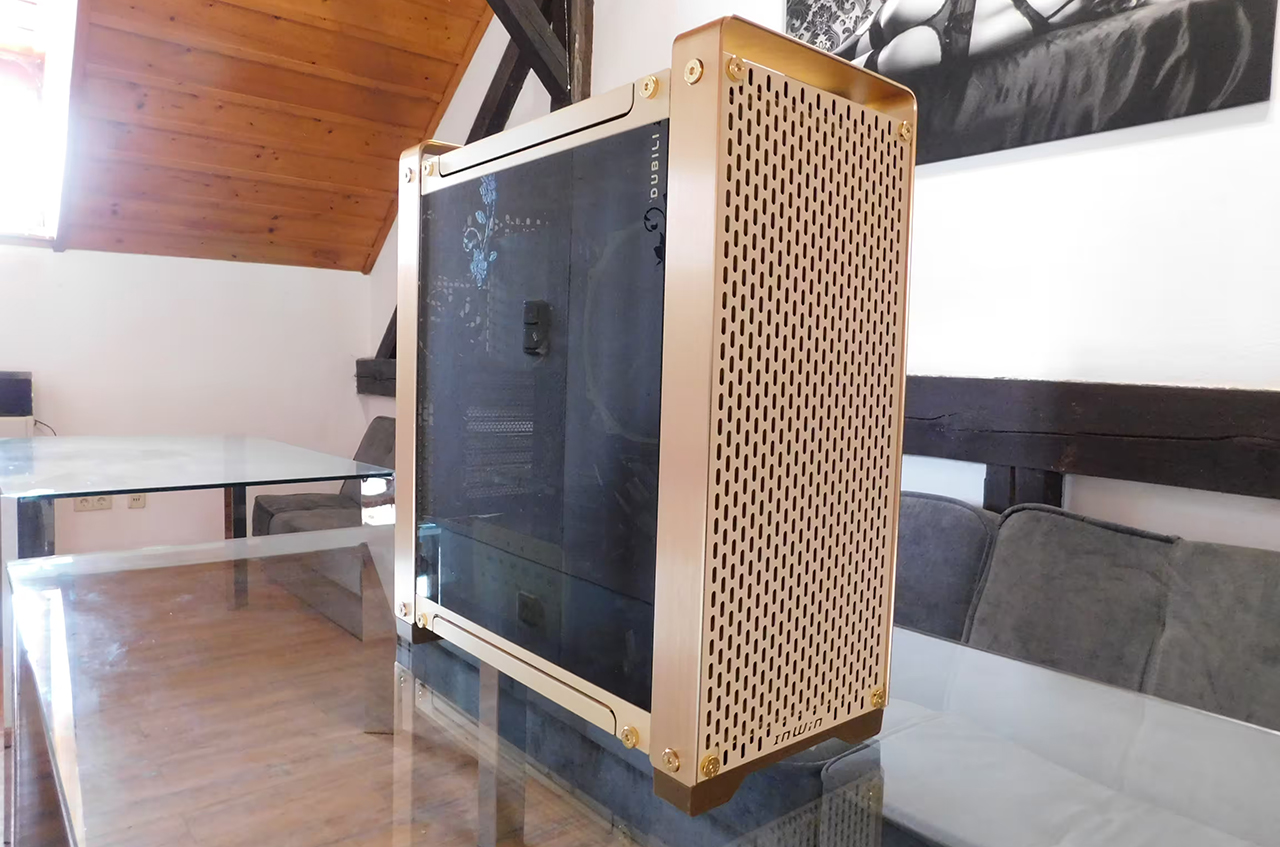
The AI technology landscape is rapidly expanding, prompting companies to innovate with powerful hardware capable of keeping up with cutting-edge applications. One such innovation comes from GPTshop, which has unveiled a high-end AI workstation PC, integrating Nvidia’s advanced Grace Hopper Superchip technology.
The highlight of GPTshop’s offering is within its inaugural configuration that boasts the Nvidia Grace Hopper GH200 CPU, which possesses 72 cores, alongside the robust H100 Tensor Core GPU. Designed for lightning-fast computations, this system offers users an impressive 576 GB of swift-access memory, with a collaboration of 480 GB LPDDR5X and 96 GB HBM3 memory modules.
In a significant move, GPTshop has priced this AI behemoth starting at $43,500, suggesting an elevation in the kind of performance and capabilities it brings to the market.
With accessibility to such a powerful workstation once limited to cloud systems, data centers, and servers, the release signifies a notable shift. Demanding professionals can now acquire this technology for local workstations. The provided spec sheet reveals a programmable thermal design power (TDP) ranging from 450 watts to 1,000 watts, showcasing the system’s adaptability to various power requirements. Flaunting impressive compute metrics, such as 3,958 TOPS INT8 and teraFLOPS performance across FP8 to FP64, this AI workstation sets a new bar for computational power.
In addition to the immediate availability of this powerful workstation, GPTshop has teased the future arrival of another system that will feature an enormous 624 GB of total memory, which includes 144 GB of the newer HBM3e technology. Prospective buyers can also look forward to different editions with air and liquid cooling options, providing flexibility for users depending on their cooling preference and performance needs.
The announcement hints at GPTshop’s commitment to furnishing the AI industry with top-tier hardware solutions, tailor-made for handling sophisticated AI algorithms and workloads—the kind which have become indispensable across various sectors and research fields.
As the AI technology sphere continues to grow, these advancements represent significant strides forward, offering professionals the tools necessary to push the boundaries of machine learning, data analysis, and scientific research.


