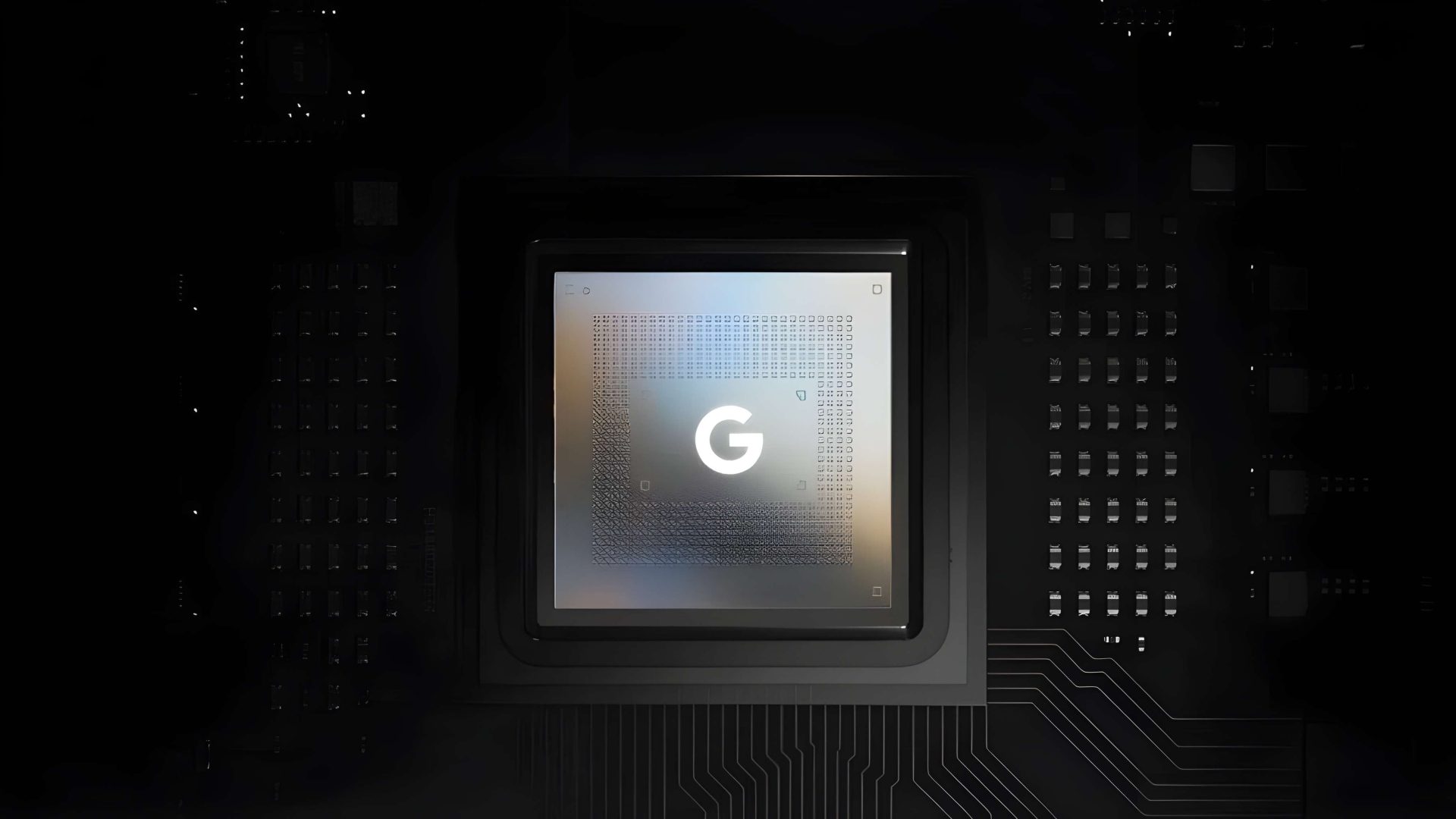
Google Tensor G6 for Pixel 11: 2nm Efficiency, Dual TPU AI Power, and a Surprisingly Old GPU Design
Google’s next major smartphone chip, the Tensor G6, is already shaping up to be one of the most interesting mobile processors expected for 2026. Internally known as “Malibu,” the chip is likely to power the Pixel 11 series and continue Google’s familiar strategy: prioritize AI, camera processing, security, and real-world efficiency over raw benchmark dominance.
Based on current information, the Tensor G6 may not be built to chase the highest gaming scores. Instead, Google appears to be focusing on cost control, battery life, and on-device artificial intelligence. That approach could make the chip controversial, especially because its GPU is reportedly based on an older design. Still, if Google’s upgraded TPU and image-processing hardware deliver as expected, the Tensor G6 could be a very capable processor for everyday Pixel users.
The biggest upgrade may come from TSMC’s 2nm process
The Google Tensor G6 is expected to be manufactured on TSMC’s N2 2nm process. That alone would mark a major step forward from the Tensor G5, which is believed to use TSMC’s 3nm technology.
Google is not expected to use the more expensive N2P process, which is said to offer an additional 5 percent to 10 percent performance improvement over standard N2. Choosing the regular N2 node suggests that Google is trying to balance performance gains with manufacturing cost.
Even without N2P, the move to 2nm should bring meaningful efficiency improvements. For Pixel 11 users, that could translate into better battery life, improved thermal behavior, and more consistent performance during AI tasks, camera use, video recording, and multitasking.
Tensor G6 CPU may use a 7-core layout
One of the more surprising changes expected with the Tensor G6 is its CPU configuration. While the Tensor G5 reportedly uses an 8-core CPU, the Tensor G6 may move to a 7-core setup.
The rumored CPU layout includes:
1 ARM C1-Ultra core clocked at 4.11GHz
4 ARM C1-Pro cores clocked at 3.38GHz
2 ARM C1-Pro cores clocked at 2.65GHz
On paper, moving from eight cores to seven may sound like a downgrade. However, the full story depends on core architecture, clock speeds, power efficiency, and how Google tunes the chip for Android and Pixel-exclusive features.
The single high-performance C1-Ultra core could handle demanding tasks, while the C1-Pro cores manage a mix of sustained performance and efficiency. Google may be trimming the CPU core count to reduce die size, lower costs, and improve power management. This would fit the company’s broader Tensor strategy, which has often focused less on maximum CPU output and more on specialized processing.
The GPU choice could be the most debated part of Tensor G6
The most talked-about part of the Tensor G6 is likely to be its graphics processor. Current reports suggest that Google may use an Imagination PowerVR CXTP-48-1536 GPU.
The reason this stands out is that the underlying GPU family traces back to a design first introduced several years ago. That has led to concern that the Tensor G6 may not deliver flagship-level gaming performance when compared with rivals using newer GPU architectures.
However, there is an important detail: the GPU is expected to be a CXTP variant. The “P” is believed to point toward improved power efficiency, similar to newer efficiency-focused GPU designs from Imagination. If that proves accurate, Google may be using a refreshed version of an older graphics architecture rather than simply adopting an unchanged legacy GPU.
Even so, the decision suggests that Google is not targeting the most aggressive mobile gaming segment with the Tensor G6. Instead, the company may be optimizing for cost, battery life, camera workloads, display rendering, and general Android smoothness.
For casual gaming, streaming, social media, photography, and AI features, the GPU may still be perfectly adequate. But users who expect the Pixel 11 to compete directly with the strongest gaming phones may want to keep expectations realistic.
Dual TPU design could be the real star
The Tensor G6 is expected to feature a dual-TPU setup codenamed “Santafe.” This could become one of the chip’s most important upgrades.
The rumored design includes a main custom TPU for heavy AI workloads and a nano-TPU for lighter AI tasks. This two-part approach could allow the Pixel 11 to process artificial intelligence features more efficiently, depending on the complexity of the task.
The larger TPU would likely handle demanding features such as advanced generative AI, real-time image processing, voice features, camera enhancements, and on-device machine learning. The smaller nano-TPU could take care of simpler background tasks while using less power.
This matters because modern smartphones are becoming increasingly AI-driven. Features like live translation, smarter photo editing, voice recognition, call screening, image enhancement, and contextual assistance all benefit from dedicated AI hardware. If Google’s dual-TPU design works well, it could help the Tensor G6 stand out even if its GPU is not the most powerful on the market.
Titan M3 security chip expected
Security has always been a key part of Google’s Pixel hardware, and the Tensor G6 is expected to continue that focus with a new Titan M3 security chip.
Google’s Titan security coprocessors are designed to protect sensitive user data at the hardware level. That includes encryption keys, biometric data, secure boot processes, and other privacy-focused protections.
For users, this means the Pixel 11 series could offer stronger protection against certain types of attacks while keeping personal data more secure. As smartphones store more financial, biometric, and identity-related information, hardware-level security is becoming increasingly important.
New ISP and GXP could improve Pixel 11 camera performance
The Tensor G6 is also expected to include a new Image Signal Processor codenamed “Metis,” along with a Graphics eXtension Processor unit.
Together, the ISP, GXP, and TPU could play a major role in the Pixel 11 camera experience. Google’s Pixel phones are known for computational photography, and the Tensor G6 may push that even further.
Potential improvements could include faster image processing, better low-light photography, improved HDR, more advanced portrait effects, enhanced video stabilization, and quicker AI-powered editing. The chip may also improve hardware-accelerated image handling, making the camera feel faster and more responsive.
This is where Google may be placing its biggest bet. Rather than competing only through traditional CPU and GPU power, the Tensor G6 could be designed to make the Pixel 11 smarter, faster, and more capable in the areas where Pixel phones are already strong.
Memory and storage support
The Tensor G6 is expected to support LPDDR5X RAM. However, rising memory prices could make this a significant cost factor for Google.
In early 2026, mobile-focused LPDDR5 memory pricing was already elevated, and estimates suggest costs may rise further in the second quarter of 2026. This growing pressure, sometimes described as memory-driven chip inflation, may explain why Google appears to be making cost-conscious design choices elsewhere in the Tensor G6.
For storage, the chip is expected to support UFS 3.1 and UFS 4.0, depending on the Pixel 11 model. Google may skip UFS 5.0 support for now, though there is a small possibility that UFS 4.1 support could be included.
If Google reserves faster storage for higher-end Pixel 11 models, it could use storage speed as another way to separate standard and Pro variants.
Tensor G6 cost and Pixel 11 launch timing
The exact manufacturing cost of the Tensor G6 is not yet known. For comparison, the Tensor G5 reportedly cost Google around $65 per unit. With higher memory prices and a newer 2nm manufacturing process, the Tensor G6 may end up costing more.
That said, Google’s rumored choices, including the 7-core CPU and refreshed GPU design, suggest the company is trying to prevent costs from rising too sharply.
The Tensor G6 is expected to debut with the Google Pixel 11 series, which is currently anticipated around August 2026.
Final thoughts
The Google Tensor G6 may not be a traditional flagship chip built purely for maximum CPU and GPU performance. Instead, it appears to be a carefully balanced processor focused on AI, security, camera processing, efficiency, and cost control.
The rumored use of TSMC’s 2nm N2 process could deliver major efficiency gains, while the dual-TPU design may give the Pixel 11 a strong advantage in on-device AI features. The older GPU foundation may raise questions, especially for mobile gamers, but Google could be betting that smarter processing matters more to most users than peak graphics power.
If the Pixel 11 delivers better battery life, improved AI features, faster camera processing, and stronger security, the Tensor G6 could still be a major step forward for Google’s smartphone strategy.