Google Pixel 11 Pro Fold durability test raises concerns despite tougher redesign
Google’s Pixel 11 Pro Fold arrives with big promises. The company says its 2026 foldable is thinner, lighter, and three times more durable than the previous generation. On paper, that sounds like a major step forward for Google’s foldable phone lineup. But a recent durability test suggests the new Pixel foldable may still have a serious structural problem in one of the most important areas of the device.
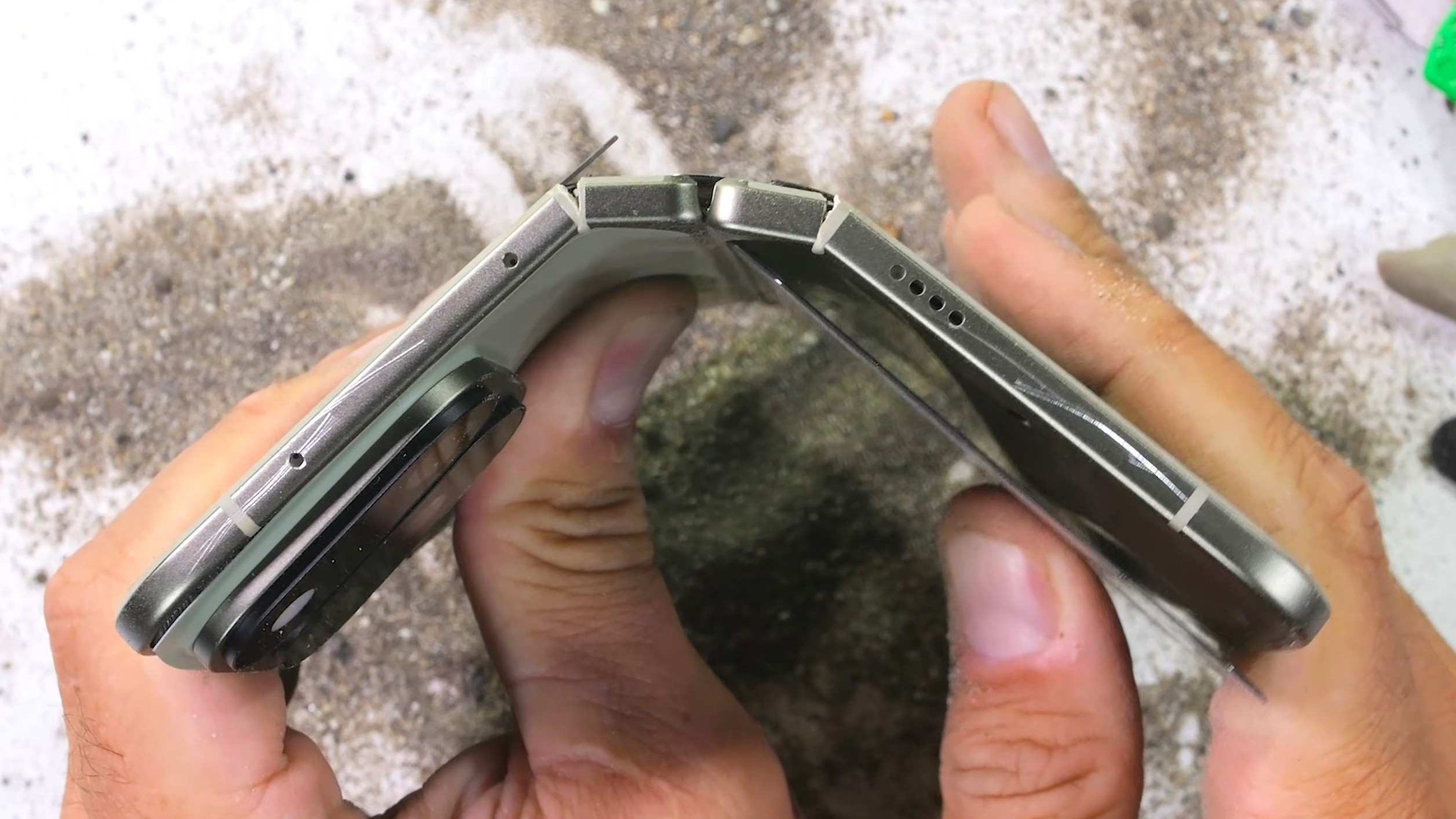
The biggest concern appears to be the placement of the antenna lines. These lines are typically among the weakest points in a phone’s frame, and on the Pixel 11 Pro Fold, they sit close to the hinge area. That is exactly where a foldable phone needs the most strength. Since the hinge is the central stress point during folding, unfolding, and bending pressure, any weakness near that section can make the entire structure more vulnerable.
During the bend test, the Pixel 11 Pro Fold failed in a way that suggests Google’s hardware design still has room for improvement. While the company has clearly tried to make the device slimmer and more refined, the test highlights how difficult it is to balance thinness, weight reduction, and durability in a foldable smartphone.
The result is especially disappointing because other modern foldable phones have shown that slim designs can still be strong. Recent foldable devices from competing brands have survived similar bend tests, even with extremely thin bodies. That makes the Pixel 11 Pro Fold’s failure more noticeable, particularly because Google marketed this model as significantly stronger than before.
One unusual detail from the test was the behavior of the front display glass. Instead of cracking under pressure, it detached as a single piece. That is not something commonly seen in durability tests and may point to differences in how the phone is assembled. Whether that is better or worse in real-world use depends on the situation, but it certainly makes the Pixel 11 Pro Fold stand out during teardown analysis.
The teardown also revealed that Google uses a different hinge design from some of its major competitors. Rather than a more modular approach, the Pixel 11 Pro Fold appears to rely on a less service-friendly hinge structure. That could matter for repairs, long-term maintenance, and overall durability, especially on a device where the hinge is one of the most important components.
There are still some positives. The phone includes a vapor chamber to help manage heat from the Tensor G6 chip. Thermal control is especially important in a foldable phone because internal space is limited, and heat buildup can affect performance, battery life, and comfort during gaming, video recording, or multitasking. A vapor chamber should help the Pixel 11 Pro Fold maintain steadier performance under heavier workloads.
However, the durability test also shows that the Pixel 11 Pro Fold shares many of the same weaknesses as other foldable smartphones. Even with an IP68 rating, dust and dirt can still find their way into the hinge area. Over time, that debris may create noise, friction, or possible long-term wear. This remains one of the biggest challenges for foldable phone durability in general.
The flexible inner display is another expected weak point. Like most foldable screens, it can be scratched by fingernails, which means users still need to treat it with care. Foldable display technology has improved over the years, but it remains softer and more delicate than traditional glass-covered smartphone screens.
The back panel of the Pixel 11 Pro Fold is made from plastic rather than glass. While that may feel less premium to some users, it does come with a practical advantage: it is less likely to shatter if the phone is dropped. For a large foldable device, that could be a meaningful benefit in everyday use.
Overall, the Google Pixel 11 Pro Fold appears to be a more advanced and refined foldable than its predecessor, but the durability test raises important questions. The thinner and lighter design is appealing, and the improved cooling system is a welcome upgrade. Still, the structural weakness near the hinge could be a major concern for buyers who expect a premium foldable phone to survive daily stress.
For users interested in the Pixel 11 Pro Fold, the takeaway is simple: this is a sleek and powerful foldable with some smart improvements, but it may not be the durability champion Google claims it to be. Anyone planning to buy one should handle it carefully, keep dust away from the hinge, and consider using strong protection to reduce the risk of damage.