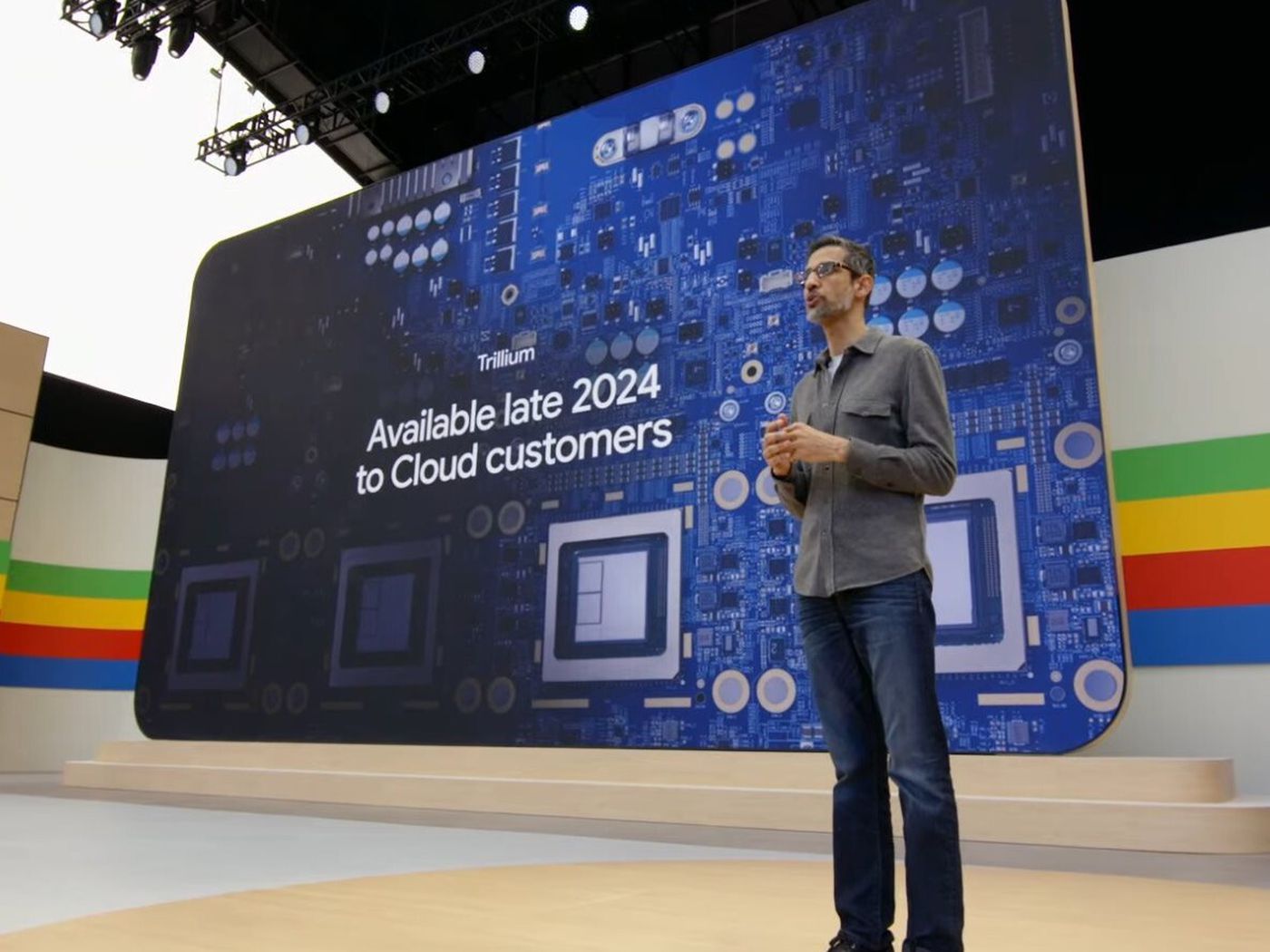
Google, the tech powerhouse known for its relentless advancement of artificial intelligence technologies, has recently unveiled the latest addition to its hardware lineup, the Trillium TPU, which belongs to their sixth generation of cloud TPUs. Additionally, Google has shared exciting plans for the future implementation of NVIDIA’s Blackwell AI servers, setting the stage for notable advancements in AI capabilities by early 2025.
During a recent I/O event that buzzed with mentions of AI, Google further cemented its dedication to the field of artificial intelligence. Attendees experienced firsthand the incorporation of AI features into popular services like Gmail and Google Photos. Following this trend, Google emphasized the importance of robust hardware to support AI innovations by announcing the new Trillium TPU.
The Trillium TPU: A Glimpse Into Google’s Hardware Elevation
Based on information shared by Google, the Trillium TPU is primed for exceptional performance, boasting an impressive 4.7-fold increase in peak compute performance over its predecessors. The advancements do not stop there—the TPU also doubles the capacities of High Bandwidth Memory (HBM) and the bandwidth of data interconnection. These enhancements enable a more efficient operation of Google’s AI models and workflows.
Energy efficiency has also received significant attention with the Trillium TPU. These new TPUs claim to be 67% more power-efficient, paving the way for their widespread deployment across data centers. With the integration of the Trillium TPU into Google’s AI Hypercomputers, Google aims for streamlined model training and optimized performance. This hardware upgrade aligns with collaborations like those with Hugging Face, which simplify the processes for developers utilizing Google Cloud’s AI infrastructure.
Jeff Boudier, Head of Product at Hugging Face, shares enthusiasm for the upcoming sixth-generation Trillium TPUs, anticipating that the open source AI community will benefit immensely from the substantial performance gains per chip. Hugging Face plans to make these capabilities accessible to AI builders through its new Optimum-TPU library.
Google’s Future Vision With NVIDIA Blackwell Integration
Google’s ambitions extend beyond its own Trillium TPUs. The tech giant is poised to include NVIDIA’s cutting-edge Blackwell architecture in its suite of AI offerings. Blackwell stands out for its potential to escalate compute performance drastically, and Google’s early access to this technology highlights the strategic partnerships at play.
The integration of Blackwell GPUs into Google’s cloud server solutions indicates Google’s commitment to establishing a leading edge in AI hardware. However, the availability of this potent combination of TPUs and Blackwell-powered servers is projected for early 2025, marking a future milestone in Google’s AI journey.
As Google incorporates the most powerful Trillium TPUs alongside NVIDIA Blackwell’s architecture, it’s clear that a new era of AI computing is on the horizon. For Google, which is rapidly advancing in the integration of generative AI into widespread consumer experience and pushing the boundaries of AI model development, such hardware enhancements are essential. The improvements signal not only progress within Google’s ecosystem but also present a leap forward in the global AI landscape, enabling new possibilities and efficiencies in AI applications.